Top Posts
Quechua Travel Words: Useful words for a great...
Tour Arequipa: The fascinating stone city of Choqolaqa
Tour Arequipa: Stunning Salinas and Aguada Blanca N.R....
Protecting Our Planet Starts with You – 9...
8 highlights of Arequipa – Tips to enjoy...
FOOD in Arequipa: 8 delicious Dishes that Are...
Embroidery in the Colca Valley a Cultural Heritage...
The interdimensional gate Aramu Muru. Fascination & mystery.
Pacaya Samiria Reserve: A world destination not to...
Tambopata National Reserve: How to visit this amazing...
  • Go to Giardino Tours
  • English
  • Español
Giardino Tours Blog
TRANSFORMING TRAVELS INTO MEMORABLES STORIES
Author

Giardino Tours

Giardino Tours

Peru Great Destinations

Amazing Tour Maras Salt ponds in Cusco (Virtual)

by Giardino Tours February 15, 2021

Salineras of Maras is among the most spectacular sights in Cusco area, with thousands of salt pans that have been used for salt extraction since Inca times.

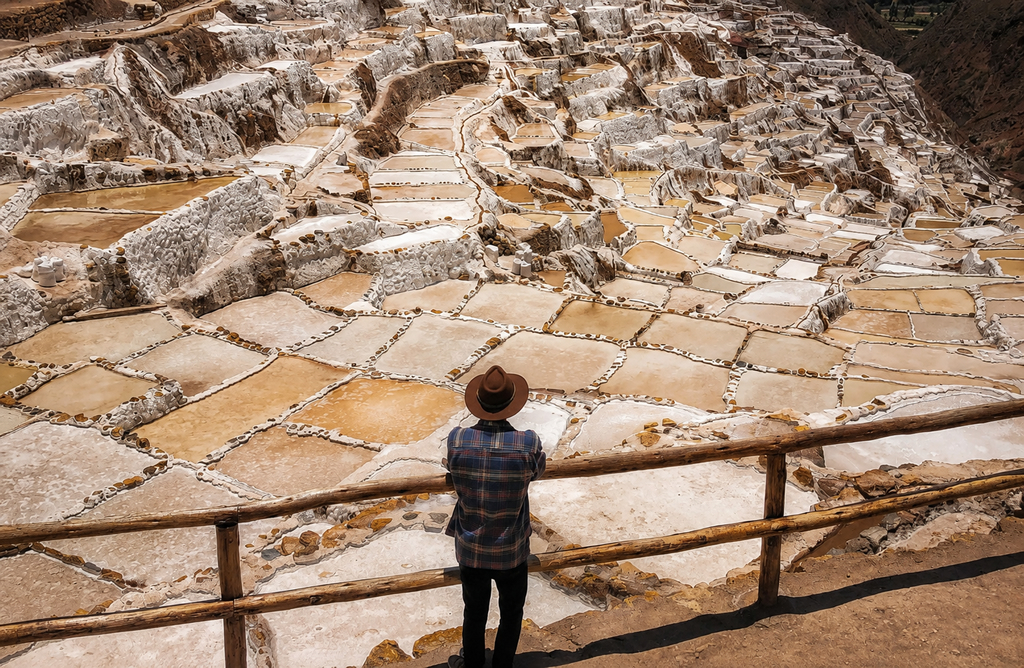
Since pre-Inca times, salt has been obtained in Maras by evaporating salty water from a local subterranean stream. The highly salty water emerges at a spring, a natural outlet of the underground stream. The flow is directed into an intricate system of tiny channels constructed so that the water runs gradually down onto the several hundred ancient terraced ponds.

Almost all the ponds are less than four meters square in area, and none exceeds thirty centimeters in depth.

All are necessarily shaped into polygons with the flow of water carefully controlled and monitored by the local workers.

Maras Salt Ponds

The Salt Mines of Maras are located 50 km in the northeast of Cusco city, at an altitude of 3,200 m.a.s.l.  The salt mines themselves are constituted by a set of approximately 4,500 salt wells placed in the form of stepped terraces in the middle slope of the hill Qaqawiñay.

This hill has slopes of 20 degrees of inclination to the bottom of the gorge on the left bank of the Salineras stream, with dimensions that vary around 5 linear meters, occupying a total area of approximately 1.5 to 2 hectares (Silva Guerra, 2006:).The terraces are formed by retaining walls of irregular stone seated with mud mortar, forming dikes that delimit the wells as small reservoirs of approximately 5m2. The conduction system of the saltwater from its catchment, is done through a main irrigation channel, which branches out into several small channels that feed the wells. The conduction and maintenance of the saltwater channel is associated with a path that is assumed to be of prehispanic origin due to its layout and characteristics.

This technology is similar to that of irrigation in prehispanic agricultural terraces characterized by the conduction and equitable distribution of water. The upper part of the salt mines crosses a road, from the prehispanic time, in the direction of the K’arachaka (Half Moon) bridge. From this road, there are several branches for the circulation between the wells. The set of wells and canals is in perfect continuous operation from the pre-Inca period to the present (Silva, 2007:18).

It is notorious the very particular effect and its great landscape value that the set of stepped wells produces, being perceived as the total of numerous white, creams or browns squares, arranged with particular order.They followed the topography of a slope of the Qaqawiñay hill, most of them looks flooded with water and other dry with salt on its surface, where the particular configuration of the set and the chromatic contrast with the natural environment provided with low shrub vegetation stand out.The salt production takes place once a month and is marked by the calendar of the seasons of the year. Thus, in the dry season (from May to October) the accumulation of salt is fast, there is greater production, and a better quality of salt is obtained with a “white or pink color that characterizes commercially this salt”.
In the salt extraction and elaboration process predominate the traditional social relationships of communitarian type, keeping till the present its traditional way.

When and how to book Salinas de Maras

The best time to visit in in the dry Season (from March to October) and is the most recommended.  If you prefer  an organized tour,  in every Cusco travel agency you will find offers for a Day Tour of the Sacred Valley, that include a visit to the Salineras de Maras or organized Tours to visit Maras and Moray (Group tours).

The area of Maras is located near to the Sacred Valley of the Incas; which makes it perfect for personalized activities in private Tours from Cusco or from Sacred valley such and Full day  bikes excursions, hikings and customized tours with visit to Moray remains and then keep traveling to Machu Picchu.

The entrance fee to Maras is S/. 7 soles per persons (USD2,5) :)Curious about this magnificent destination?

Come to Perú!

Giardino Team!@Giardinotoursperu

#ItravelwithGiardino ‘OnetripManyExperiences[vc_gmaps link=”#E-8_JTNDaWZyYW1lJTIwd2lkdGglM0QlMjIxMDAlMjUlMjIlMjBoZWlnaHQlM0QlMjI0ODBweCUyMiUyMHNyYyUzRCUyMmh0dHBzJTNBJTJGJTJGcG9seS5nb29nbGUuY29tJTJGdmlldyUyRjJ4eE0wNllDdGQtJTJGZW1iZWQlM0ZjaHJvbWUlM0RtaW4lMjIlMjBmcmFtZWJvcmRlciUzRCUyMjAlMjIlMjBzdHlsZSUzRCUyMmJvcmRlciUzQW5vbmUlM0IlMjIlMjBhbGxvd3ZyJTNEJTIyeWVzJTIyJTIwYWxsb3clM0QlMjJ2ciUzQiUyMHhyJTNCJTIwYWNjZWxlcm9tZXRlciUzQiUyMG1hZ25ldG9tZXRlciUzQiUyMGd5cm9zY29wZSUzQiUyMGF1dG9wbGF5JTNCJTIyJTIwYWxsb3dmdWxsc2NyZWVuJTIwbW96YWxsb3dmdWxsc2NyZWVuJTNEJTIydHJ1ZSUyMiUyMHdlYmtpdGFsbG93ZnVsbHNjcmVlbiUzRCUyMnRydWUlMjIlMjBvbm1vdXNld2hlZWwlM0QlMjIlMjIlMjAlM0UlM0MlMkZpZnJhbWUlM0U=” title=”Maras Virtual”]

2 FacebookTwitterPinterestEmail
Peru Great Destinations

Enigmatic Sillustani & best way to book a Tour

by Giardino Tours February 15, 2021


Walking and exploring among the imposing Chulpas of Sillustani is undoubtedly one of the most fascinating experiences on the region of Puno close to Lake Titicaca .

The stillness and beauty of Lake Umayo and the rugged landscape at almost 4000 meters above sea level, contribute to creating this enigmatic atmosphere that is part of the environment where an ancient culture also developed.


Chullpas de Sillustani

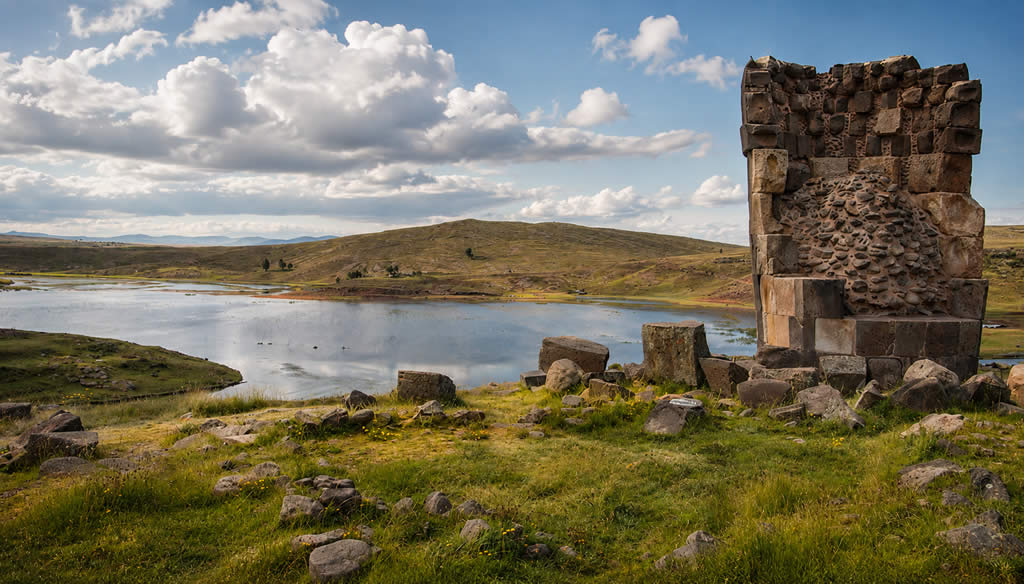
About 34 km from the city of Puno are these fascinating pre-Inca funerary monuments. In them the ancient Peruvians of this area buried their nobles to give them eternal rest. The so-called “Chullpas” are volcanic stone towers that resemble an inverted cone. The stone material was brought from nearby quarries and even today, there are around 90 of these chulpas or “ayawasis” in this archaeological complex that is scattered on a large hill, from where you can see the landscape next to the icy lake.

These monuments not only served to preserve the body of a “great lord”, but also showed the respect that inspired his memory or the “ayllu” to which he belonged. The corpse of the “noble”, belonged to an authority, curaca or priest, was previously mummified and placed in a fetal position. Next to it, gold and silver artifacts, utensils and ceramics were frequently buried. The tallest tower in the archaeological complex is the so-called “chullpa del lagarto”, 12 meters high. This complex was declared a cultural heritage of the nation in 2003.

Within the same area of ​​the archaeological complex you can visit the site museum. Where you can learn more about the ancient cultures that inhabited the area, among which the Kollas, Tiahuanacos and Incas stand out. In a few minutes the inhabitants of the town of Atuncolla also offer boat rides across the lake.


How to get to Sillustani?

It is recommended to depart from Puno by land. The archaeological complex is open from Monday to Sunday from 8:30 a.m. at 5:30 p.m. (referential) and the entrance costs approximately S / 5.50 soles, (approximately 2.00 US dollars). You can also start from Juliaca, which is about 40 km away. It is advisable and essential to have the tourist guide service since this service does not exist on site.


The best way to visit and used for many of the travelers visiting Peru is to drive to Sillustani and Puno city  after visiting the city of Arequipa and the Colca Canyon. Currently there is an excellent road that runs Arequipa – the Colca valley – to Sillustani – Puno.

The journey  offers a beautiful Andean landscapes, where you can take excellent photographs crossing the highlands by transport. On the route you can make stops to appreciate more the Andean lagoons and a variety of birds.
From Colca valley you will need about 5 hours of driving to reach the Sillustani complex. After the visit, the travelers are transferred to Puno city to rest at their hotel and continue their journey.

This option is ideal for those travelers who are traveling through southern Peru, as it optimizes their travel time (at least one day) by going directly from Colca to Sullustani and then to Puno.


But also you will find daily Tours to Sillustani leaving from Puno city at around 2:30pm and cost from S30 per peson (With  a Group). The round-trip takes about 3½ hours and allows you about 1½ hours at the ruins.

It is recommended to take the service also in private in order to enjoy more time exploring the ruins and surroundings.

TIPS: The chullpas are well preserved. The afternoon light is the best for photography.


Curious about this magnificent destination?

Come to Perú!

Giardino Team!


@Giardinotoursperu

#ItravelwithGiardino ‘OnetripManyExperiences


2 FacebookTwitterPinterestEmail
Culture & Traditions

Peru 2 love’s story tellings and myths

by Giardino Tours February 12, 2021

Love always contains a great mystery, because for each person, people and time love has been interpreted and manifested in different forms.

But today we are going to tell you about 2 romantic peruvian love’s story tellings related to ancient Peruvian traditions. These are popular stories in which fantastic or supernatural events are related, as if they were real events. Many of them are created by the community and are transmitted from parents to children, from generation to generation, that is why they are part of our culture and to the memory of Peruvians and are usually related to the beliefs and folklore of a certain region in Peru.

Love’s story tellings of Huascarán and Huandoy mountains.

This romantic love’s story telling takes place in time of the Inca Empire, when the people of Cusco expanded their dominions through the Callejón de Huaylas. In this region (located in Ancash) there are more than 20 snow-capped peaks that exceed 6000 m.a.s.l. and the highest mountain in Peru and the intertropical zone is the Huascarán.
The legend said that there was a laborious and peaceful tribe in “Callejon de Huaylas” where one day a very badly wounded soldier arrived with a message to the Great chief. The man informed that some warriors from Cusco had sacked his town without mercy and that they were heading towards the village.
Looking at the situation the great chief ordered his warriors to go in search of the leader of the Cusco army, proposing a peaceful negotiation. And so it happened. Days later, the soldiers returned to the tribe with a Cusqueño warrior “Huáscar”, the most recognized warrior of the invading tribe of Cusco.Shortly afterwards, someday the strong Huáscar met on his path a beautiful young woman with long black hair, big eyes and a beautiful smile; she was the daughter of the great chief of the tribe; her name was Huandy.


As in every romantic story, the warrior Huascar and the beautiful girl fell in love, but this was a “forbidden” love. So the lovers decided to run away together.

Furious for the offense realized by Huascar and his daughter, the Great Chief ordered their capture. Once in prison, the great Chief humiliated them in public and then tied them to wooden logs, placed in such a way that they could see each other as they died.

The warrior Huascar hoped that his people (the Incas) would arrive and rescue them. However, when the Cusco army arrived, they supported the decision of the Great chief.
Without hope and prisoner of great impotence, Huascar swore revenge on all of them and thus both lovers began to cry full of pain. The legend said that both lovers cried until they were completely dry. From the tears of Princess Huandy, Lake Chinancocha was formed, also known as “the female lagoon” and from the tears of Huáscar, Lake Orcococha, also known as “the male lagoon”. (Also known as Lagunas Llanganuco)
The god “Inti” (the Sun) observing what happened and in pain also, sent a lot of rain, thunder, lightning and hailstorm to all the area. The legend said that it was so much and for so long time that the bodies of the lovers were covered, thus forming the snow-covered mountain Huascarán (for Huáscar) and the snow-covered mountain Huandoy (for Huandy) .

This love’s story tellings said specially among the local people of the Callejón de Huaylas, that in 100 or 200 years the snow-capped mountains will remain without snow and Huáscar and Huandy will resurrect and meet again to live their love forever. (Cardenas, 2020)

Love’s story tellings of the Huacachina oasis – Ica

In the middle of the coastal desert of the Pacific Ocean, in the Ica region, there is a beautiful oasis “La Huacachina”. A Oasis of green waters and around which there is abundant vegetation composed of palm trees, eucalyptus and huarangos, the same that are used for migrant birds that usually pass through This region.  That makes it one of the most beautiful and striking tourist spots in Peru, however, its beauty also contains a myth related to unconditional and infinite love.
Huacachina,means the “crying woman” in the Quechua language. The legend said that in this lagoon an Inca princess named Huacca China was born (Her name means “the one who makes people cry.”).They said that the princess fell in love with a young warrior of the empire who died shortly after they met. It is said that when the princess was informed of the tragedy, she went to the place where they had met for the first and c and cried intensely; then, while crying, she looked through her hand mirror and saw young man who was looking at her; the young man tried to get closer to her, but she got scare and began to run through the desert.According to legend, her clothes shaped the dunes that surround the oasis and the mirror got broken, giving shape to the lagoon.

After that the princess enters the lagoon and becomes a mermaid and the tradition tells that this mermaid appears every night on full moon to sing old songs to her lover.

Apart for knowing now these love’s story tellings, for sure now when you travel to Huaraz (Ancash) or to the Huacachina Oasis, you will look at every detail with different eyes …

And perhaps through the eyes of those “lovers”.


GIARDINO TEAM@GiardinoToursperu

#ItravelwithGiardino #OneTripManyExperiences
2 FacebookTwitterPinterestEmail
Culture & TraditionsTravel Tips

Colca Sour: An unique Cactus cocktail

by Giardino Tours February 11, 2021

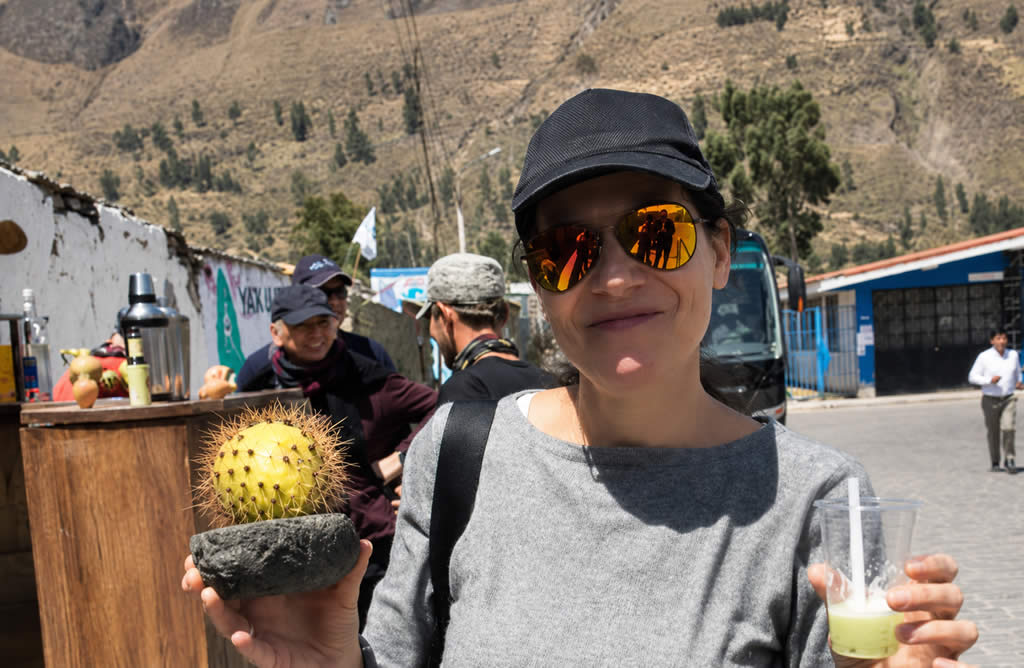
Do you know that an enjoyable drink called “Colca Sour” is the Colca Canyon version of the Pisco Sour? Yes right! ? And the big difference is that instead of lime juice the locals use the Sancayo juice.

Sancayo; also called sanky, is “the forgotten fruit of the Incas.” It is an incredibly sour local cactus fruit that was used by the Incas as a hunger suppressant, replenisher, and medicinal aid to reduce problems associated with the gastrointestinal tract.But today the “colca sour” has become the official drink of Caylloma province! You will have the opportunity to enjoy it on the second day of our excursion to the Colca valley.

Properties make the “Sancayo Cactus (sanky) attractive for every person, especially as its vitamin C levels are 10 times that of oranges.

Preparation of Colca Sour

If you want to know or learn how to prepare this unique drink “Colca Sour”; then you need to learn an easy “formula”: 1+1+3 … That means:

  • 1 ounce fresh squeezed Sancayo juice.
  • 1 ounce simple syrup
  • 3 ounces pisco.

Add also:

  • 1 egg white
  • Ice cubes

Mix up the pisco, syrup, sancoya juice and egg white.
Add ice and shake well.

An then.…. SALUD!

Description of fruit

Sanky cactus fruit is small to medium in size, averaging 10-12 centimeters in diameter, and is round to oval in shape. The rind is firm, green with some brown markings, and smooth at the surface with many thin, long spines that extend around the entire fruit. Underneath the rind, the juicy pulp is clear to white and contains many small black seeds. Sanky cactus fruit has a mucilaginous, crunchy texture and contains a low amount of sugar creating an acidic, tart, and slightly sour taste.

Seasons/Availability

Sanky cactus fruit is available in the summer through fall.

Current Facts

Sanky cactus fruit, botanically classified as Corryocactus brevistylus, grows on a fast-growing shrub with long stems that can reach over six meters in height and belongs to the Cactaceae family. Also known as Zanki, Quitahambre, Sankay, Lemon cactus fruit, and Guacalla, Sanky cactus fruit grows on the wild Sancayo cactus and can be found along the rocky mountain slopes of the Andes in Peru and Bolivia. Once used by the Incas, Sanky cactus fruit is an ancient fruit that is still consumed today in South America and is favored for fresh eating.

Todays is getting popular as official drink of the Colca valley as “Colca Sour”.

Nutritional Value

Sanky cactus fruit contains vitamin C, potassium, calcium, phosphorus, and some electrolytes.We keep you curious… 🙂

Life is soooo interesting!


Giardino Team!@GiardinoToursperu

#ItravelwithGiardino #OneTripManyExperiences
2 FacebookTwitterPinterestEmail
Culture & TraditionsPeru Great Destinations

Arequipa Tour: 2 surprising curiosities about this destination!

by Giardino Tours February 10, 2021

The famous “White City” of Arequipa enjoys Its own currency and special passport.

If you travel to Perú and you will visit the white city of Arequipa; you have to know that in “few cities of the world” there are people that love so much their land as the “Arequipeños”.

First you should know that those born in Arequipa are called “Characatos” and here we explain you why.

Characato is the name of one of the most popular and traditional districts of the city and is the origin of many customs and cultural expressions typical of the city. In Arequipa, it is considered that a “Characato” is a very hardworking person, who is always in a good mood and loyal to his traditions. Also this is a person that raises its voice to greet its friends and family or to welcome visitors and always offering, as an act of friendship, a glass of good Chicha (Typical Drink made of fermented corn).

Moreover, the characato is a person proud to have been born at the foot of not one, but three volcanoes: the Misti, the Chachani and the Pichu Pichu. “This is the reason why each characato (Arequipeño) is unique and special in the world” Then, you shouldn’t be surprised that the people born in Arequipa say that they don’t get angry, they, erupt as a volcano because in their veins flow “volcanic blood”

Another interesting detail is that the “Characato” is mainly manifested in the character of the “loncco”, a person that lives and work in the countryside of the city and speaks with a mixture of quechuismos (Quechua is the name of the Inca’s language) and barbarisms, which makes him a unique character in every sense.

Initially the expression “loncco” was used to point that work tools that had lost the edge of their edges. This word “Loncco” also began to be used to point out people who did not work well or were not so talented to work in the field. With the time that word “Loncco” became popular in Arequipa to point to the “chacarero” (Man who works in the field) a rude and tough man who lives in the countryside; a hardworking person that always speaks loudly.

Here some typical expressions of a “Loncco”
  • Alalau: Expression that means that it is very cold.
  • Acacau: when something burns or is very hot.
  • Atatau: Feeling that something produces disgust.
  • Calincha: A girl who behaves like a boy.
  • Chascoso(a): Someone who hasn’t combed his/her hair.

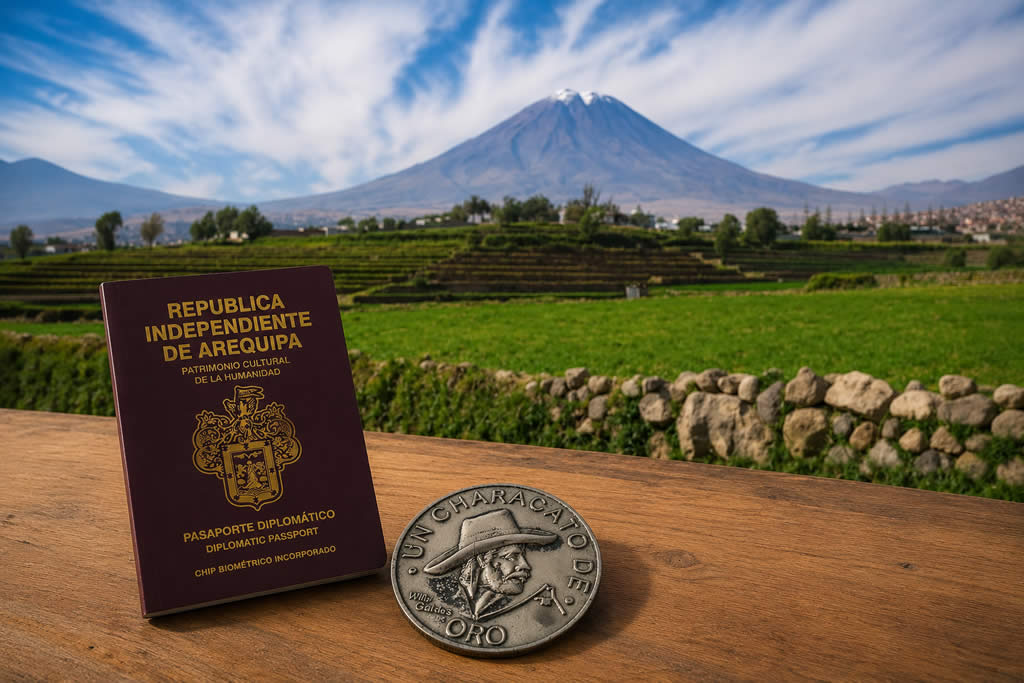
Seeing all these points doesn’t surprise too that Arequipa is the only city in Peru that has its own currency “the Golden Characato” and its own “Passport”. These two acts have no legal value in Peru but certainly allow us to understand the originality of the Arequipeños and this spirit to feel that they are unique.


The passport of the “Independent Republic of Arequipa” is one of the most requested souvenirs by national and international tourists and the “Characato de oro” permit us to enjoy a souvenir of a “currency” that “never devalues”.

The Arequipa Passport:

The Passport: The passport of the “Independent Republic of Arequipa” originated during the war Perú– Chile. At the time that Lima was occupied by the invading army, Arequipa city was declared capital of the Republic and immediately the passport was established as a security measure. But today the passport is a document without any legal value and is a souvenir where you can read inside of its pages funny and typical Arequipeño phrases. You can also custo

The “Characato de Oro”:

Details of the “golden characato”: The Golden Characato is a currency typical from Arequipa and was born as a sign of gratitude to all its visitors. It is printed with the figure of a “loncco” (Now you know what means “loncco”) and the Misti volcano. The “Golden Characato is so important for the locals that the first day that open to the market; the “Characatos” were sold out.
mize it by typing your name and personal data. They have become so famous and popular that it is already part of the local culture.As you see; Arequipa is not only a must-see destination in Perú for its beautiful colonial architecture, its incredible landscapes and its exquisite gastronomy; it offers an endless number of cultural traditions and the incomparable human warmth and hospitality of the characatos!

Ready to visit Arequipa?

We are waiting for you…. 🙂

@GiardinoToursPeru
#OneTripManyExperiences #TravelWithGiardino

2 FacebookTwitterPinterestEmail
Culture & Traditions

Peruvian Carnivals: Magic, culture & celebration

by Giardino Tours February 8, 2021

The month of February hosts a magic “party and joy” that is enjoyed not only in Peru, but in many countries of the world. Yes; you got it right! We are talking about “Carnival”; the party in which one can be, for a short period of time, whatever he wants to be.[vc_custom_heading text=”Carnivals in Perú.” font_container=”tag:h4|text_align:left|color:%23a82b26″ use_theme_fonts=”yes”]As you can imagine, this festival arrived in Peru with the Spanish people and has two very characteristic connotations, the first one is that of a “folk festival” and the other one is  “games with water and colors.” In most cases both are combined in a single celebration that begins in February and continues throughout the whole month.

Especially in Spanish colonial times, The Carnival was used for satire and parody. Authorities and slaves alike were represented with costumes and masks. Rosa María Acosta, author of “Urban Colonial Festivities (Lima-Cuzco-Potosí)”, has an interesting note; that the Carnivals also served to resolve pending disputes: “It was very common to see, the day after the carnivals, Spaniards and Indians lying together drunk on the ground,” she says.

This party was not limited to Spaniards and indigenous Peruvians;  “The carnival brought from Spain was quickly vindicated by the popular classes, and it was the black people; who were  the majority slaves in Lima at the end of the 18th century – who gave a festive traits with their dances and masks ”,  wrote the anthropologist Prof. Vilcapoma.[vc_custom_heading text=”El Diablo (The Devil)” font_container=”tag:h4|text_align:left|color:%23a82b26″ use_theme_fonts=”yes”]

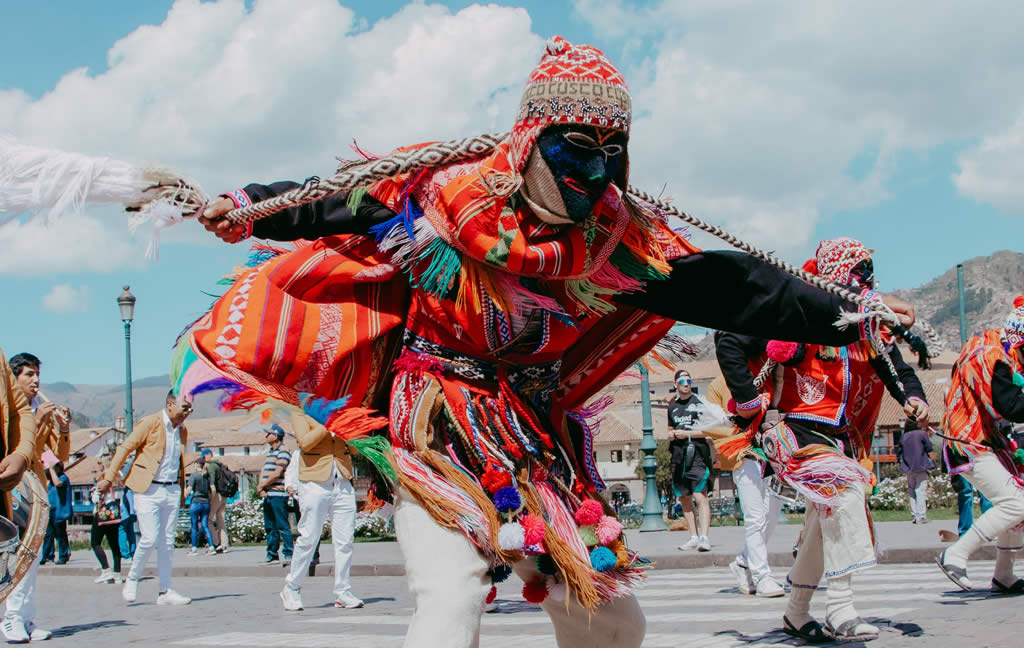
Foto: @mariano_fusero

A figure that stands out in Peruvian carnivals is the figure of the “Devil”. Looking at the processes and socio-cultural manifestations of the encounter of colonizers and indigenous people, it can be deduced how the image of the devil is simply a “collective composition” of the inhabitants of the New World, indigenous, black slaves and Spanish.  Another important fact is that it highlights the relationship between “idol and image” in the construction of new cultures in the new world, because this generated other “types of images”, fused images that at the same time re-structured the cosmo-vision, the worldview of both worlds.

There is a well-known song in Peru by the musical group “los morochucos” that expresses precisely this custom and is called “Son de los diablos (The Rhythm of the Devil)” with a text that says:“venimos de los infiernos

no se vayan a asustar

Con nuestros rabos y cuernos

que son sólo pa´ bailar.

Con nuestros rabos y cuernos,

que son sólo pá bailar.

Son de los Diablos son

y aquí vamos a bailar;”.“We come from hell

Do not be scared….

With our tails and horns

That are just for dancing.

With our tails and horns,

That are only for dancing.

In rhythm of the Devils are

And here we are going to dance”…[vc_custom_heading text=”Carnivals in the Andes of Peru.” font_container=”tag:h4|text_align:left|color:%23a82b26″ use_theme_fonts=”yes”]These festivities not only stayed in the capital, they were popular throughout the Peruvian territory, and definitely in the Andean areas of Peru highlights for its fusion with the spirituality of the Andean people. It can be said that this European custom has been merged with the traditional harvest festivals in Peru, known as Pukllay, which in Quechua means “games”. For José Carlos Vilcapoma, historian and anthropologist specialized in the Andean tradition, other names are: Chimaycha, Huayllacha, Capac Pucuy and Huaylas.

In fact, Vilcapoma recalls that the first reference is found in Francisco de Ávila’s manuscript, probably from 1598, where he mentions some dances called “huayllas”. In 1966, José María Arguedas, in the translation entitled “Gods and men of Huarochirí”, identifies these dances as the harvest festivities that are celebrated in the Mantaro Valley.

Among the most representative carnivals in Peru we have:

[vc_custom_heading text=”Feast of the Virgin of Candelaria in Puno city (Fiesta de la Virgen de la Candelaria)” font_container=”tag:h5|text_align:left|color:%23a82b26″ use_theme_fonts=”yes”]Image: @chambiperuskaThis grandiose celebration takes place in the city of Puno -on the shores of Lake Titicaca- between February 1 and 14 of each year, with the second day of the month as its central date. Before the party, there is a period called “novenario”, in which the assistants dedicate themselves to decorating the temple of the Virgin, located in front of the Plaza de Pino. The celebration begins at 4 am on the first day of the month with the so-called “albas” or early morning.

Hundreds of people fill the main streets of the city to observe the numerous groups that parade in the middle of a great artistic setting and also to venerate the image of “Mamacha Candelaria”, patron saint of Puno, who goes out in procession.

The festival concludes with the farewell or Cacharpari, in which the Virgin, located at the door of the temple, greets the crowd and says goodbye to all people until the following New Year. In addition to the Great Parade and the processions, the people in this party enjoy the contests of native dances such as the Diablada, and dances with typical costumes that are celebrated during the following days.[vc_custom_heading text=”Carnival in Arequipa City” font_container=”tag:h5|text_align:left|color:%23a82b26″ use_theme_fonts=”yes”]Image: @_julia_shine_To the rhythm of Andean music such as the huayno, the White City of Arequipa receives hundreds of people every year between February and March to celebrate its traditional carnival.

The festival begins in the Plaza de Armas with the appearance of the main character: Ño Carnavalón, king of the party who represents sarcasm and irony, and who takes the opportunity to ridicule at times the behavior of the people around him. At the end of the party, the burial of the also called “King Momo” takes place amidst music and traditional dances. Other activities that are part of Carnival party in Arequipa is the work at the Conservatory, in which renowned anthropologists share memories and chronicles about the history of Arequipa, as well as the awarding of the bet mask and the election of the Carnival Queen.[vc_custom_heading text=”Carnival in Cusco city” font_container=”tag:h5|text_align:left|color:%23a82b26″ use_theme_fonts=”yes”]Image: @geramagneThe Imperial City is also filled with party and joy with water, foam, flour and colors to the rhythm of folk music performed by various bands and orchestras. Likewise, the groups of dancers with their colorful coach and their hosts dressed in typical costumes of the region are appreciated.

The popular “Yunzas” are also part of the Cusco carnival; these are trees adorned with gifts and surprises that the locals plant in the center of the party and then push it down and distribute the presents. At night, people walk and get together at the “food fairs” to try the delicious and traditional dishes of the area such as Cuy chactado, Puchero and Frutillada (an ancestral drink of the region based on fruits).[vc_custom_heading text=”Carnival in Cajamarca” font_container=”tag:h5|text_align:left|color:%23a82b26″ use_theme_fonts=”yes”]Image: @sorayavaleria29The city of Cajamarca is known as the Capital of the Peruvian Carnival. The city enjoy 2 weeks of dances between the months of February and March to the rhythm of the music and the colors of the comparsas. Among them, the troupe of King Momo or Ño Carnavalón stands out, who is received with honors to later be veiled and buried. This giant doll represents “goodbye to bad energy”, so people celebrate its passage with talcum powder and painting colors in faces.

It is one of the most anticipated, representative and joyful festivals in Peru, where the entire Cajamarca people participate with an agenda full of cultural, entertainment and competition activities. During the days of festivities there are competitions of couplets (sung verses), patrols and parades; we enjoy the the allegorical “Corso” (Parade) and a beauty contest is realized among the women of the five neighborhoods of the city in order to choose the Queen of the Carnival.In conclusion; the Peruvian Carnivals are the reunion with the roots and with the community. It is usually celebrated in the month of February and is a good pretext for Peruvians to be able to thank for the common good and the favors granted, as well as a reason to show the world the best of art and dancing of each Peruvian region.

Very interesting to know is also, that this celebration is unique in each city of Perú and alternates processions, fairs, parades and luxury gastronomy, as a sample of the living heritage of Peruvian culture. It is the result of centuries of miscegenation between Hispanic, African and indigenous customs.

In addition; there is not a week, when Peruvians are more willing to celebrate their culture, through their multiple dances, gastronomy, games and colorful clothing as in “Los Carnavales”.

Ready to celebrate Carnival in Peru?
Let Peru be the experience of your life!

#TravelwithGiardino #OneTripManyExperiences
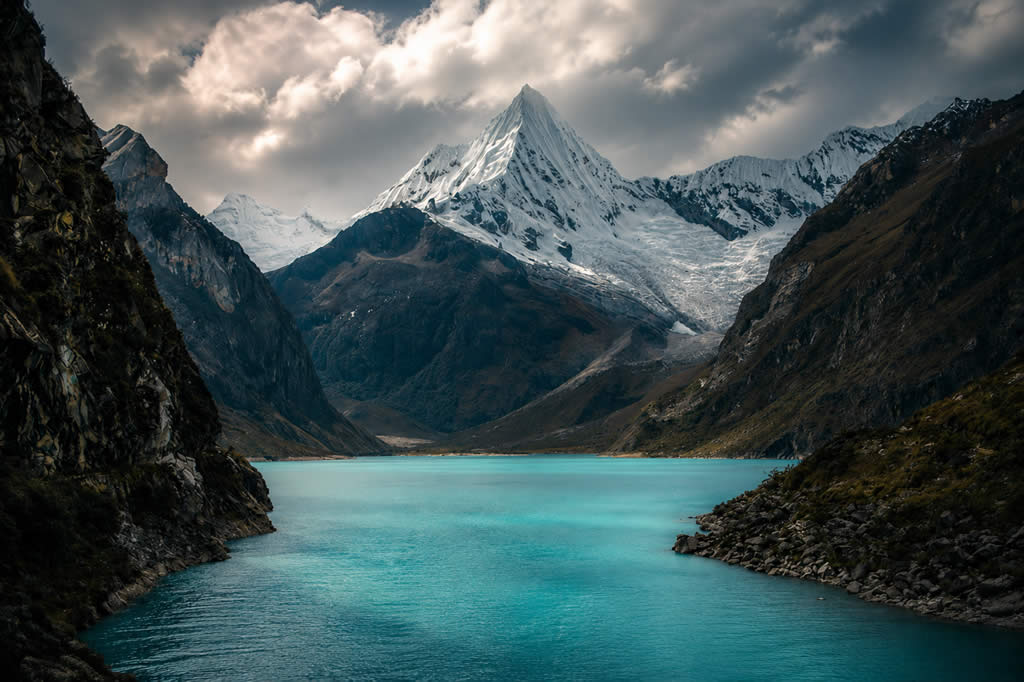
Foto cabecera: Municipalidad provincial de Cajamarca

Source:

Ferrucci, F. (febrero de 2014). Historia del carnaval. (N. Martinez, Entrevistador)

Promperu: Carnavales más representativos.

joinnus. (30 de enero de 2018). Estos son-los-carnavales-que-no-te-puedes-perder-en-febrero.

BBVA: Carnavales en el Perú, de la sátira y la abundancia.

2 FacebookTwitterPinterestEmail
Video

Video images – Discover Peru

by Giardino Tours February 4, 2021

Travel with us!

We are here to help you to Discover PERU

Our goal is to elaborate programs that allow travelers to enjoy the experience matching their specific travel requirements, interests and passions. Our services include day and multi-day tours, personal assistance and a quick follow-up on all types of requests.

Contact us and start to plan your amazing trip to Peru!1

1 FacebookTwitterPinterestEmail
Travel Tips

Peru Trip: Altitude mountain sickness and 6 easy tips to avoid it

by Giardino Tours February 4, 2021

Altitude Mountain sickness Called “Soroche” in Peru is the most common sickness that affects more than 50 percent of people who ascend higher than 8,000 feet (2,400 meters) in a relatively short time span.  It’s caused by the lower levels of oxygen in the air at high elevations; your lungs can’t take in as much oxygen as they’re used to and your heart and lungs have to work harder to keep your blood oxygenated.

Symptoms of acute Altitude mountain sickness include:
  • Dizziness.
  • Headaches.
  • Dehydration.
  • Feeling tired.
  • Loss of appetite.
  • Sleep issues.
  • Nervousness.
  • Heavy breathing.
  • Increased cardiac rhythm.
  • Digestive issues.
How to prevent Altitude Mountain sickness:
  • Hydration is important. It is recommended to drink at least 2 or 3 liters of water a day to help your body acclimatize.
  • Eat healthy and consequently. You may experience loss of appetite but your body needs energy; carbohydrates such as pasta, bread, potatoes, fruits and flour based products will
    help stabilize your energy levels.
  • Avoid alcohol, coffee, sodas, salt and unhealthy food.
  • Your body needs generally about 3 to 5 days to acclimatize above 2500 meters of altitude (8000 ft.).
  • Resting is important. Pillows to sleep at a 30 degrees angle is recommended.
  • Coca leaves, although illegal in the US, help a lot improving your condition in altitude. You can either chew it or drink it in a tea. A cup or two in the morning will already help a lot.
0 FacebookTwitterPinterestEmail
Peru Great DestinationsTravel Tips

Cusco Tour: 3 differences between Machu Picchu, Mountain & Huayna Picchu

by Giardino Tours February 4, 2021

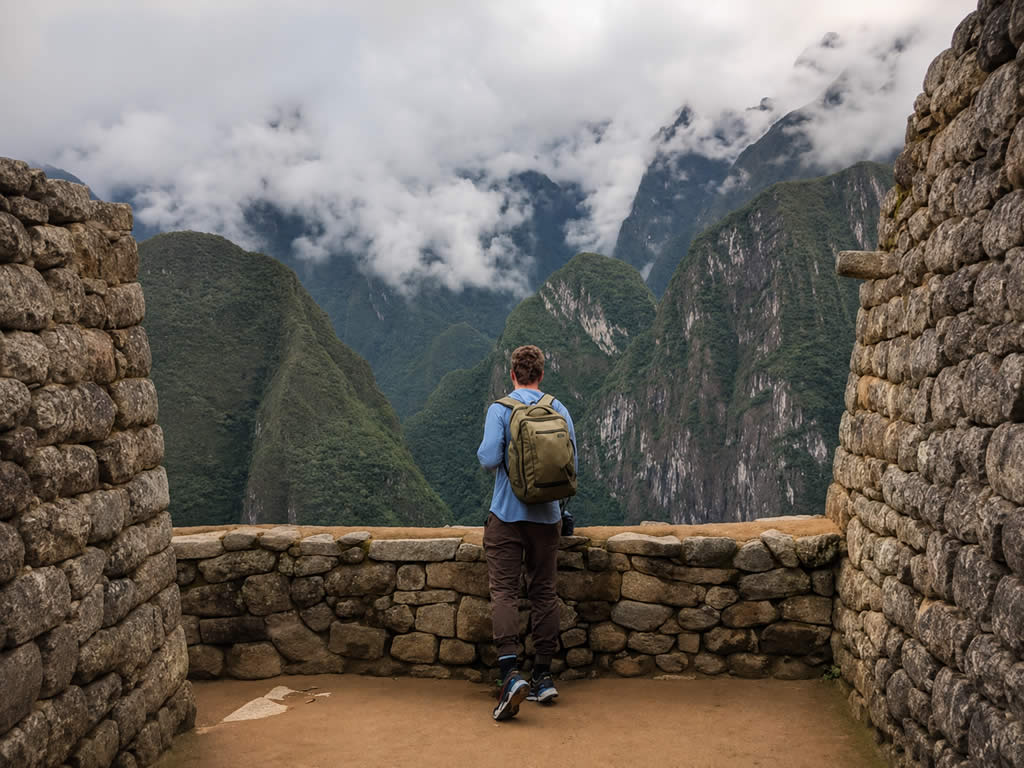
Today there are different concepts about entrances when you want to visit Machu Picchu that oft lead to some confusion to our travelers, here we explain you the differences:[penci_fancy_heading _text_align=”left” p_title=”Citadel or Sanctuary (LLaqta):” turn_on_title=”yes” _title_typo=”font_family:%3A” _title_fsize=”20px” _subtitle_typo=”font_family:%3A” _desc_typo=”font_family:%3A” title_color=”#3cc154″][/penci_fancy_heading]The Citadel or Sanctuary of Machu Picchu, are the Inca ruins itself, this is what we see in all pictures, that have made this Peruvian attraction so famous. There are buses from Machu Picchu Pueblo that take you to the entrance of the Sanctuary, where you will check your entrance ticket according to your booked schedule.
The citadel is located to 2.490 meters high and takes the name of the “Mountain” where it is located; in other words, the name of the “citadel itself“ still unknown.[penci_fancy_heading _text_align=”left” p_title=”Huayna Picchu Peak:” turn_on_title=”yes” _title_typo=”font_family:%3A” _title_fsize=”20px” _subtitle_typo=”font_family:%3A” _desc_typo=”font_family:%3A” title_color=”#3cc154″][/penci_fancy_heading]The famous Huayna Picchu peak is one of the mountains that is located in front of Machu Picchu citadel, and which can be climbed using a path that departs from the Citadel itself.
At the top there are some ruins and you will have an amazing view of the citadel and the area and if you want more, there is also another trail up to the temple of the moon.
This mountain is located to 2,720 mts and is only allows the entry of 400 people per day, in two groups of 200 persons (07:00 AM and 10:00 AM). For this reason the tickets must be bought in advance. The ascent takes approximately two hours, and the trail to the temple of the moon, or the Great Cavern, are about 4 hours.

Some facts:

  • It is known as the ‘Young Mountain’. Walking along its trails is recognized as one of the most incredible short walks on the planet.
  • The trails are steep and narrow. They were built on one side of the mountain. They can be terrifying for people afraid of heights.
  • If you suffer from vertigo or acrophobia, it’s best to avoid to walk to this mountain.

[penci_fancy_heading _text_align=”left” p_title=”Machu Picchu Mountain:” turn_on_title=”yes” _title_typo=”font_family:%3A” _title_fsize=”20px” _subtitle_typo=”font_family:%3A” _desc_typo=”font_family:%3A” title_color=”#3cc154″][/penci_fancy_heading]Now you know that the “Inca city” is located on the mountain of Machu Picchu at 2,490 meters; but the mountain has an altitude of 3.061 meters. So now you have the possibility to walk to the TOP of the Mountain “Machu Picchu”.
From there the view is also spectacular and has the big advantage that allow 600 persons per day in 2 time schedule 09:00AM and 10:00AM, still not so popular as Huayna Picchu peak so the tickets do not run out so fast; but an incredible view is guaranteed.[penci_fancy_heading _text_align=”left” p_title=”¿Aguas Calientes = Machu Picchu Pueblo?” turn_on_title=”yes” _title_typo=”font_family:%3A” _title_fsize=”20px” _subtitle_typo=”font_family:%3A” _desc_typo=”font_family:%3A” title_color=”#3cc154″][/penci_fancy_heading]Aguas Calientes, currently known as Machu Picchu Pueblo; It is the nearest town to the ruins. This town can only be reached by train or by walking. This is the town where the trains arrive from Cusco or Ollantaytambo for the tour to Machu Picchu, there are hotels for visitors, restaurants and you can do some shopping.
Now! From Machu Picchu Pueblo are the departures of the buses that drive up to Citadel, This drive takes about 20 to 25 minutes. Machu Picchu Pueblo is located at 2,040 meters and its name before (Aguas Calientes = Hot water) comes from the hot springs that are close to the town.

Machu Picchu:

The citadel of Machu Picchu is maybe the main reason that thousands of visitor travel to Peru and also appears in the top destinations list by U.S. News.

It is ranked as the eighth best place to visit. Machu Picchu was discovered by Hiram Bingham in 19, the ruins are today part of the UNESCO World Heritage sites, and since 2007 is one of the New Seven Wonders of the world.

2 FacebookTwitterPinterestEmail
Peru Great Destinations

Colca Canyon Tour: Introducing the awesome Colca Canyon

by Giardino Tours February 4, 2021

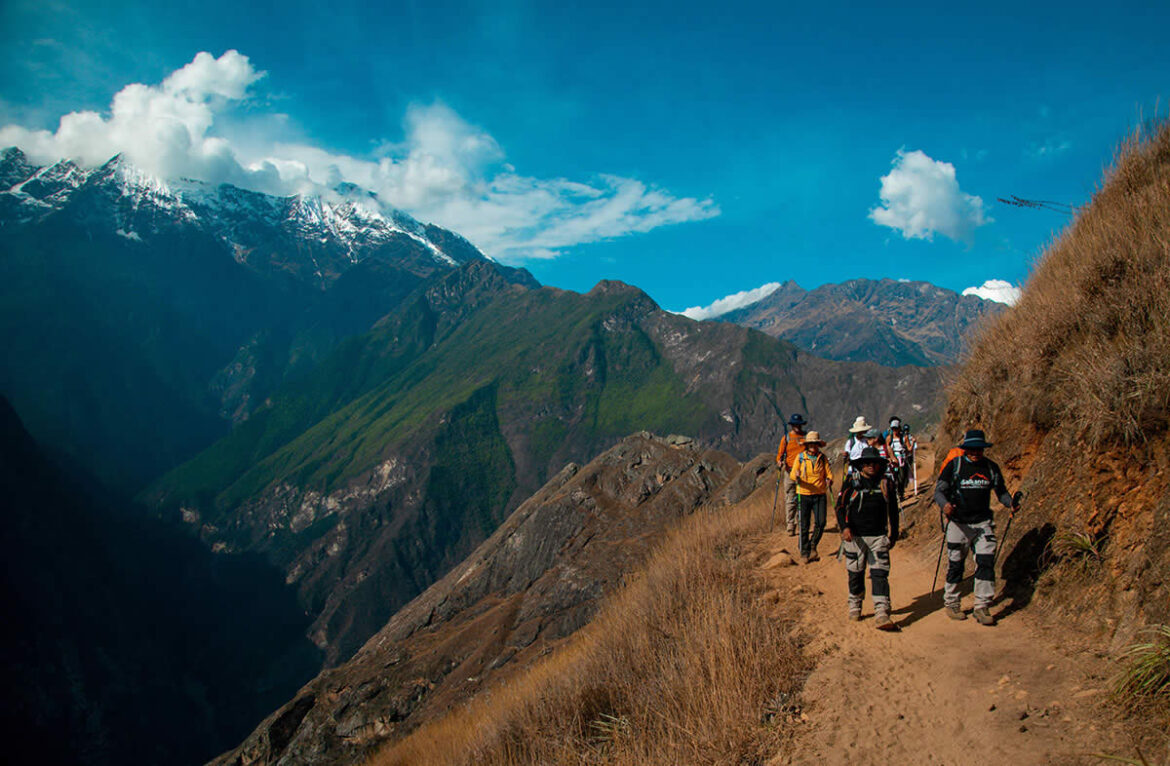
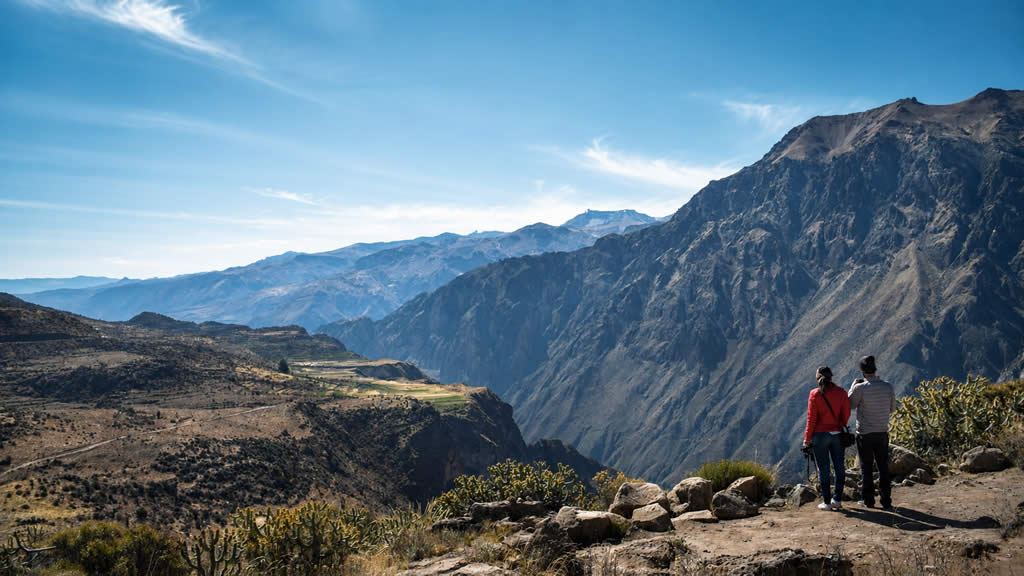
The Colca Canyon is one of the most scenic regions in Peru, a land of imposing snowcapped volcanoes, narrow gorges, artistically terraced agricultural slopes that predate the Incas, arid desert landscapes and vegetation, and remote traditional villages.

Some of Peru’s most recognizable wildlife, including llamas, alpacas, vicuñas are easy to find here. Also the canyon is home to the Andean condor (Vultur gryphus); here you will have the best chance to get of them amazing pictures!

The 120km-long “Cañón del Colca” is set among high volcanoes (6613m-high Coropuna and 6310m-high Ampato are the tallest) and ranges from 1000 mts. to more than 4160 mts. depth. For years there was raging controversy over whether or not this was the world’s deepest canyon with 4,160mts, but recently it ranked as the third one after Kali Gandaki in Nepal with 4,375 mts.Despite its depth, the Colca canyon is geologically young. The Colca river has cut into beds of mainly volcanic rocks, which were deposited less than 100 million years ago along the line of a major fault in the earth’s crust.

The climate is cool and dry on the plateau and slopes high above the Colca river.

The Colca Canyon is also synonym for extensive biodiversity, with an incredible flora and fauna. This special characteristic of the canyon occurs because Peru is located in the subtropical area of South America and it has a rugged geography, in addition, ocean currents and the air mass movements, create an incomparable ecological, climatic and geological variety.

This is a the reason of the importance of conserving the ecosystems that keep alive the variety of animals and plants that this canyon has, a true natural wonder.


The condors are best seen in the early morning and late afternoon when they are hunting. At this point the canyon floor is 3,960 feet (1,200 m). Also Viscachas (burrowing rodents closely related to chinchillas) are also common around the canyon rim, darting furtively among the rocks.

Cacti dot many slopes and, if they’re in flower, you may be lucky enough to see tiny nectar-eating birds braving the spines to feed. In the depths of the canyon it can be almost tropical, with palm trees, ferns and even orchids in some isolated areas.The La Calera natural hot springs are located at Chivay, the biggest town in the Colca Canyon. But you can also enjoy others hots springs with less visitors in other towns such as Yanque and Coporaque.
Festivals throughout the year, including the Wititi festival in Chivay, (December 8–) are a high light. The Wititi has been declared the dance most representative of the Arequipa region, and named as a “cultural heritage” of Peru.The Colca canyon is also well known for two forms of crafts: goods knitted from 100% baby alpaca fiber (hats, gloves, etc.), and a unique form of embroidery that adorns skirts (polleras), hats, vests, and other items of daily wear and use.

The local people (especially the women) are known for their highly decorative traditional clothing. The women’s dresses and jackets are intricately embroidered, and their hats are distinctive.
In the Chivay area at the east end of the canyon, the white hats are usually woven from straw and are embellished with lace, sequins and medallions. At the west end of the canyon, the hats are of cotton and are painstakingly embroidered.

The women don’t particularly enjoy being photographed, so always ask permission. And those who pose for photographs expect a tip.

Colca canyon Activities:

Fauna and Flora observations, Hiking, short walks, mountain biking, trekking, rafting, horseback riding, fishing, and sightseeing.

Organized tours to this destination have daily departures.

It is a destination for all type of travelers, from those who are looking for some relaxing days with luxury service (hotels 4* and 5 *), adventure lovers (because of the many activities that here can be done); classic travelers and family tours (organized tours with visit to all highlights, and family experiences with locals) to low budget travelers.Sources: Wikipedia, Lonely Travel, Promperu.

2 FacebookTwitterPinterestEmail
Newer Posts
Older Posts

More Articles/Más Artículos

  • Colca Canyon Tour: Introducing the awesome Colca Canyon
  • Cusco Tour: 3 differences between Machu Picchu, Mountain & Huayna Picchu
  • Peru Trip: Altitude mountain sickness and 6 easy tips to avoid it
  • Video images – Discover Peru
  • Peruvian Carnivals: Magic, culture & celebration
  • Arequipa Tour: 2 surprising curiosities about this destination!
  • Colca Sour: An unique Cactus cocktail
  • Peru 2 love’s story tellings and myths
  • Enigmatic Sillustani & best way to book a Tour
  • Amazing Tour Maras Salt ponds in Cusco (Virtual)
  • Facebook
  • Twitter

@2021 - All Right Reserved. Designed and Developed by PenciDesign


Back To Top
Giardino Tours Blog
  • Go to Giardino Tours
  • English
  • Español