
Top Posts
Cusco Tour: 3 differences between Machu Picchu, Mountain...
Quechua Travel Words: Useful words for a great...
Tour Arequipa: The fascinating stone city of Choqolaqa
Tour Arequipa: Stunning Salinas and Aguada Blanca N.R....
Protecting Our Planet Starts with You – 9...
8 highlights of Arequipa – Tips to enjoy...
FOOD in Arequipa: 8 delicious Dishes that Are...
Embroidery in the Colca Valley a Cultural Heritage...
The interdimensional gate Aramu Muru. Fascination & mystery.
Pacaya Samiria Reserve: A world destination not to...
  • Go to Giardino Tours
  • English
  • Español
Giardino Tours Blog
TRANSFORMING TRAVELS INTO MEMORABLE STORIES
Category:

Travel Tips

Culture & TraditionsTravel Tips

Colca Sour: An unique Cactus cocktail

by Giardino Tours February 11, 2021

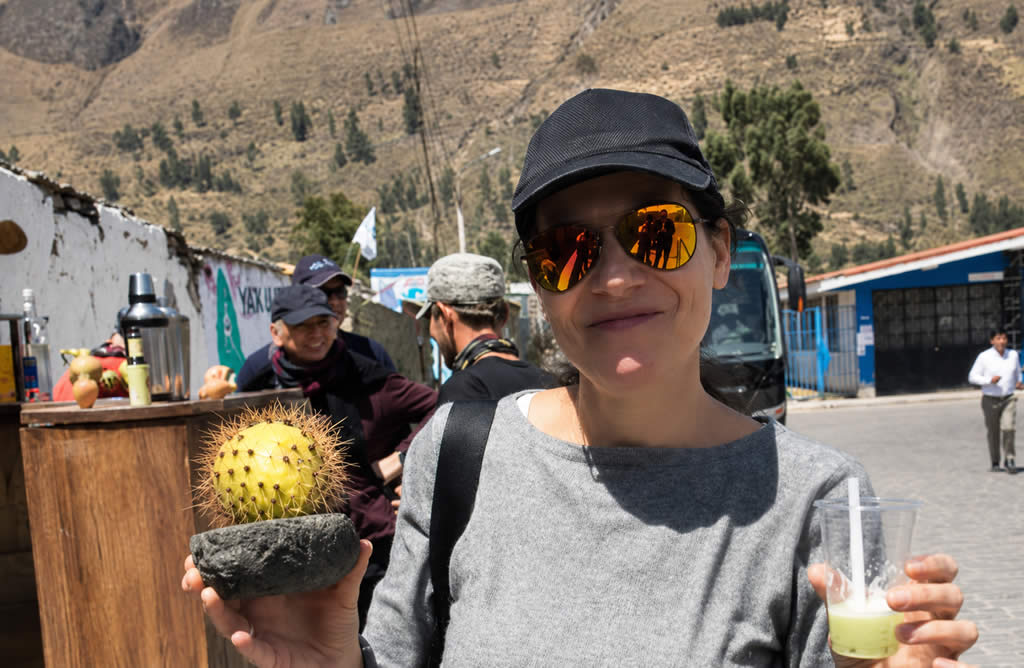
Do you know that an enjoyable drink called “Colca Sour” is the Colca Canyon version of the Pisco Sour? Yes right! ? And the big difference is that instead of lime juice the locals use the Sancayo juice.

Sancayo; also called sanky, is “the forgotten fruit of the Incas.” It is an incredibly sour local cactus fruit that was used by the Incas as a hunger suppressant, replenisher, and medicinal aid to reduce problems associated with the gastrointestinal tract.But today the “colca sour” has become the official drink of Caylloma province! You will have the opportunity to enjoy it on the second day of our excursion to the Colca valley.

Properties make the “Sancayo Cactus (sanky) attractive for every person, especially as its vitamin C levels are 10 times that of oranges.

Preparation of Colca Sour

If you want to know or learn how to prepare this unique drink “Colca Sour”; then you need to learn an easy “formula”: 1+1+3 … That means:

  • 1 ounce fresh squeezed Sancayo juice.
  • 1 ounce simple syrup
  • 3 ounces pisco.

Add also:

  • 1 egg white
  • Ice cubes

Mix up the pisco, syrup, sancoya juice and egg white.
Add ice and shake well.

An then.…. SALUD!

Description of fruit

Sanky cactus fruit is small to medium in size, averaging 10-12 centimeters in diameter, and is round to oval in shape. The rind is firm, green with some brown markings, and smooth at the surface with many thin, long spines that extend around the entire fruit. Underneath the rind, the juicy pulp is clear to white and contains many small black seeds. Sanky cactus fruit has a mucilaginous, crunchy texture and contains a low amount of sugar creating an acidic, tart, and slightly sour taste.

Seasons/Availability

Sanky cactus fruit is available in the summer through fall.

Current Facts

Sanky cactus fruit, botanically classified as Corryocactus brevistylus, grows on a fast-growing shrub with long stems that can reach over six meters in height and belongs to the Cactaceae family. Also known as Zanki, Quitahambre, Sankay, Lemon cactus fruit, and Guacalla, Sanky cactus fruit grows on the wild Sancayo cactus and can be found along the rocky mountain slopes of the Andes in Peru and Bolivia. Once used by the Incas, Sanky cactus fruit is an ancient fruit that is still consumed today in South America and is favored for fresh eating.

Todays is getting popular as official drink of the Colca valley as “Colca Sour”.

Nutritional Value

Sanky cactus fruit contains vitamin C, potassium, calcium, phosphorus, and some electrolytes.We keep you curious… 🙂

Life is soooo interesting!


Giardino Team!@GiardinoToursperu

#ItravelwithGiardino #OneTripManyExperiences
2 FacebookTwitterPinterestEmail
Travel Tips

Peru Trip: Altitude mountain sickness and 6 easy tips to avoid it

by Giardino Tours February 4, 2021

Altitude Mountain sickness Called “Soroche” in Peru is the most common sickness that affects more than 50 percent of people who ascend higher than 8,000 feet (2,400 meters) in a relatively short time span.  It’s caused by the lower levels of oxygen in the air at high elevations; your lungs can’t take in as much oxygen as they’re used to and your heart and lungs have to work harder to keep your blood oxygenated.

Symptoms of acute Altitude mountain sickness include:
  • Dizziness.
  • Headaches.
  • Dehydration.
  • Feeling tired.
  • Loss of appetite.
  • Sleep issues.
  • Nervousness.
  • Heavy breathing.
  • Increased cardiac rhythm.
  • Digestive issues.
How to prevent Altitude Mountain sickness:
  • Hydration is important. It is recommended to drink at least 2 or 3 liters of water a day to help your body acclimatize.
  • Eat healthy and consequently. You may experience loss of appetite but your body needs energy; carbohydrates such as pasta, bread, potatoes, fruits and flour based products will
    help stabilize your energy levels.
  • Avoid alcohol, coffee, sodas, salt and unhealthy food.
  • Your body needs generally about 3 to 5 days to acclimatize above 2500 meters of altitude (8000 ft.).
  • Resting is important. Pillows to sleep at a 30 degrees angle is recommended.
  • Coca leaves, although illegal in the US, help a lot improving your condition in altitude. You can either chew it or drink it in a tea. A cup or two in the morning will already help a lot.
0 FacebookTwitterPinterestEmail
Newer Posts
Older Posts

More Articles/Más Artículos

  • Colca Canyon Tour: Introducing the awesome Colca Canyon
  • Peru Trip: Altitude mountain sickness and 6 easy tips to avoid it
  • Peruvian Carnivals: Magic, culture & celebration
  • Arequipa Tour: 2 surprising curiosities about this destination!
  • Colca Sour: An unique Cactus cocktail
  • Peru 2 love’s story tellings and myths
  • Enigmatic Sillustani & best way to book a Tour
  • Amazing Tour Maras Salt ponds in Cusco (Virtual)
  • Tips for a Responsible Peru Travel Experience!
  • Colca canyon Travel Guide: 7 Questions about Colca Tours
  • Facebook
  • Twitter

@2021 - All Right Reserved. Designed and Developed by PenciDesign


Back To Top
Giardino Tours Blog
  • Go to Giardino Tours
  • English
  • Español