Top Posts
Cusco Tour: 3 differences between Machu Picchu, Mountain...
Quechua Travel Words: Useful words for a great...
Tour Arequipa: The fascinating stone city of Choqolaqa
Tour Arequipa: Stunning Salinas and Aguada Blanca N.R....
Protecting Our Planet Starts with You – 9...
8 highlights of Arequipa – Tips to enjoy...
FOOD in Arequipa: 8 delicious Dishes that Are...
Embroidery in the Colca Valley a Cultural Heritage...
The interdimensional gate Aramu Muru. Fascination & mystery.
Pacaya Samiria Reserve: A world destination not to...
  • Go to Giardino Tours
  • English
  • Español
Giardino Tours Blog
TRANSFORMING TRAVELS INTO MEMORABLE STORIES
Tag:

Remains

Culture & TraditionsFeaturedLake TiticacaPeru Great Destinations

The interdimensional gate Aramu Muru. Fascination & mystery.

by Giardino Tours June 21, 2021
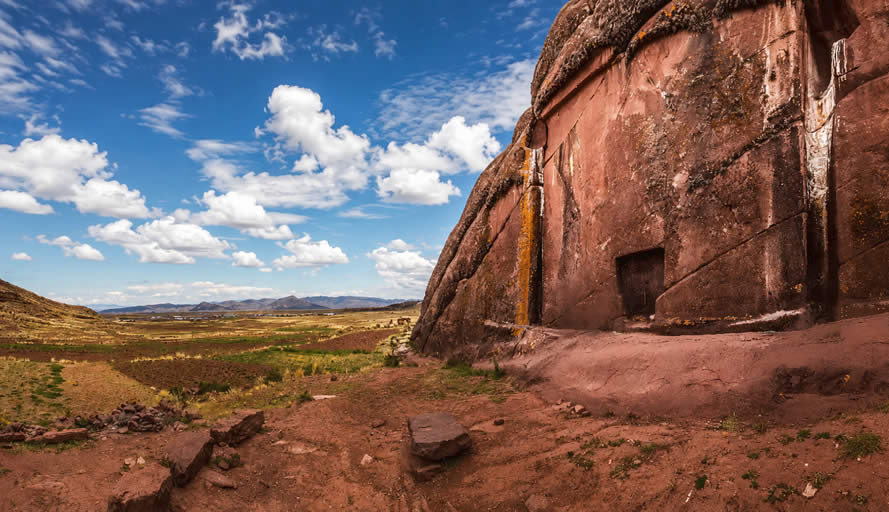
“A portal, that according to a legend allowed the Inca’s priests to be transported to different places of the Inca Empire and even to any place of  the world” The interdimensional gate Aramu Muru also known as: Hayu Marca means: “City of spirits or” Willka Uta: “Place of the sun or gate of the gods.”
Location:

“La Puerta” (The door) is located 35 kilometers from the city of Puno (Lake Titicaca area), in south area of the district of Ilave in the province of Collao and 1 hour and 10 minutes by car from Puno city. This enigmatic place It is located also near a fascinating stone forest and the terrain is cold and quite dry.

The portal has the shape of a square with 7 meters on each side and it is carved in a unique rock. So far no in-depth archaeological study has been conducted that can reveal the date when the first settlers began to consider this door “a sacred place”.

Data:

For many, Aramu Muru door is a place where a lot of energy is concentrated, our body and soul are immediately nourished, also you get a feeling of to be in a safe place, where the body feels free and all the pressures of that daily life go away.  A place where you encounter peace. For many people this is a good place to meditate on our daily and spiritual lives. To find the answers to many questions and return home with more hope and energy.

But lets us to talk a bit more about the legends of the area, that will lead us to understand why it is considered a mystical and special place.

According to story-telling and legends, when the Spanish arrived in the Inca empire, there was a priest named Aramu Muro, who belonged to the monastery of the 7 rays and was responsible for the initiation ceremony and worship of the God; The “Inti” (the Sun).

Legends said that Aramu Muru was the one who took the golden solar disk kept in Koricancha tempel (Sun tempel in Cusco) and fled from the Spanish conquers to some place save place in the Juli Province (Lake Titicaca). Then, he reached the sacred door and placed the Sun disk on the door, using it as a door key, and opened the door. After that, he cross the portal and disappeared behind it.Nowadays; locals carry out rituals of all kinds at the door of Aramu Muru, to ask for peace, to say thank you to the Gods or ask for hope.

Also the door is a very attractive spot for many esoteric groups, that visit the place hoping that maybe the door will be opened, and they have a chance to see a bit to the world of the Gods.

“The legend says that this door opens only for those people who are spiritually ready to connect to the spirit of Lake Titicaca.”

But without doubt, Aramu Muru is a place surrounded by mystery, where people comment that they have had sightings of strange lights and claim to have had visions of stars or columns of fire, or to have heard sounds and have even felt the presence of a tunnel behind the door.Interesting is also that just on the other side of the mountain, Archeologist have found the remains of what seems to be a tunnel that connected the cities of Tiahuanaco (Bolivia)  and Cusco city. They think that this tunnel was used by the Incas to move around the areas. According to Inca traditions and legends, this tunnel was built before the Inca empire arrive in the area, and only was used by the Incas.

The question is…  if the Incas were not the builders of this tunnel, then who were they?

There are many interesting and fascinating stories and legends that surround the mystical world of ancient Peru, such as the legend of Lake Titicaca, from where Manco Cápac and Mama Ocllo (Founders of the Inca empire) emerged and in which “La isla de la Luna” (Moon island) is located, in this island you will find similar doors.  Or the ceremonial center of “Ñaupa Iglesia” in Cusco city, in the province of Urubamba, where you can also find a similar wall or door and many rituals take place.

Certainly many questions that we cannot answer yet.

When to visit Aramu Muru?

The best time to visit Aramu Muru is in August because the earth is said to be more willing to accept offerings. But the truth is that July and August are the months where most people visit it to explore, make same hiking, rituals etc.So, what do you think?  Do you dare to visit places enclosed with so much mystery?

Whatever the reason is that you visit Aramu Muru, you will certainly be fascinated, for the natural beauty that surrounds Lake Titicaca, the varied geography, the legends or the spiritual energy that undoubtedly recharges us in this beautiful area of ​​Peru.

We are ready to take you on this adventure

And you?

We will wait for you!!!GIARDINO BLOG

#OneTripManyExperiences #ITravelwithGiardinoOther links:

Protecting Our Planet Starts with You – 9 Things You Can Do

Quechua Travel Words: Useful words for a great Peru experience

Tour Arequipa: The Cathedral & 5 curious facts that you should know
0 FacebookTwitterPinterestEmail
Peru Great Destinations

Chan Chan mud city, keeps surprising the world!

by Giardino Tours March 17, 2021

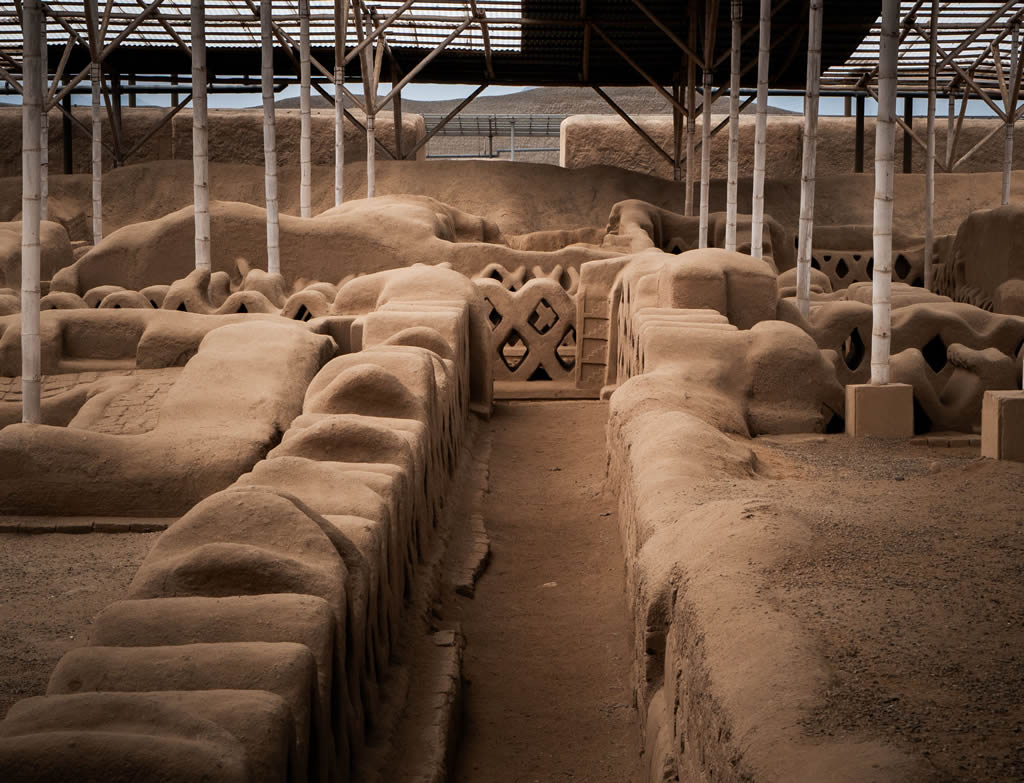
Chan Chan mud Citadel

We have been totally impressed with the ability of the Incas to create a citadel with exactly carved stones in which no card can enter between 2 stones, but …What do you think of a city before the Incas, made of clay with perfectly detailed friezes on its walls and maintained to this day?

“It came from the sea, it is not known from where, in a fleet of rafts, with all its court and warriors, it reached the north coast of what is now Peru, in the Moche valley and founded a kingdom. His name was Tacaynamo and he was the first ruler of Chan Chan, the most important city in Chimú. He had a son named Guacricaur, and Guacricaur had also a son he named Ñancempinco. There were ten kings of this dynasty. The last, Minchancaman was defeated by the Incas, who destroyed the city and divided the kingdom. “ –  (Anonymous, 1604)

So, tells the legend collected in the document “Anonymous History” written in 1604 by a Spanish chronicler, which narrates the founding of Chan Chan and the kingdom of Chimor.This admirable city is located in the Moche Valley in the department of La Libertad and is currently one of the most important architectural representations of pre-Inca history.

When the Chimú empire was subdued by the Inca Tupac Yupanqui, around 1470, Chan Chan was sacked and destroyed. When the Spanish arrived, the town was a practically abandoned ruin. So Diego de Almagro founded in 1534, a new town that he called Trujillo, in honor of Francisco Pizarro’s small homeland of Extremadura.

Chan Chan Citadel and its details

Chan Chan, declared a World Heritage Site by UNESCO in 1986 is the largest mud citadel in America covering an area of ​​approximately 20 square kilometers.  Chan Chan has impressed the whole world with its magnitude and all the history that each one of its walls and narrow passages can tell us!

Most tourists only know Nik An (downtown house, in Spanish), the only one of the ten walled complexes open to the public. However, the largest adobe city in America – and the second in the world – is much more than that.

In the whole area there are numerous huacas (Tempels) and palaces, among them the incredible Utzh An (big house), which hid for 800 years the 20 wooden sculptures that surprised the world in 2017, after their first exhibition.

When archaeologists recently excavated the ceremonial entranceway to an ancient palace in Peru, they were excited to discover a series of 750-year-old wooden “guardians” flanking the passage. But there was an even bigger surprise in store as the statues emerged from the dirt: termites had chewed through the 19 wooden bodies over the centuries, leaving in their place two-foot-high human figures fashioned at least partially—and in some cases perhaps almost completely —from centuries-old insect excrement.
– Article National Geopraphic – Ancient palace guards ‘preserved’ .

[vc_gallery interval=”0″ images=”2615″ img_size=”large” onclick=””][vc_gallery interval=”0″ images=”2616″ img_size=”large” onclick=””]Twenty wooden sculptures were buried under the sand that covered the entire Utzh An walled complex, from the years 1200 – 1350. It is the third time that figures of this type have been discovered; however, it is older and the representation attributed to it is also different.

In terms of ideology for the Chimú people, it seems that they are guardians. For those who enter to this site receive a visual impact from a wall that exceeds six meters high and the psychological impact, so the visitors realize that to the place they enter belongs to a very powerful being, so they must show humility and respect. –  Said Henry Gayoso – Representative of the project.

[vc_gallery interval=”0″ images=”2570″ img_size=”large”][vc_gallery interval=”0″ images=”2569″ img_size=”large”]

Chan Chan Architectural details:

Its name, which comes from the muchil Jang-Jang and means “sun-sun” and was home to about 60,000 inhabitants. It is important to know that until today that excavations have brought to light only a small part.

This huge city is made up of 10  citadels and pyramids, 9 of these citadels have similar characteristics, however the form of stratification so strong reflects that it is divided by different social classes,  for example, the main citadels are protected by high walls and they have a single access facilitating the control of those who entered and left.

Chan Chan & the figures on the walls:

The walls are adobe brick covered with a smooth surface into which intricate designs are carved. The two styles of carving design include a realistic representation of subjects such as birds, fish, and small mammals, as well as a more graphic, stylized representation of the same subjects.

The carvings at Chan Chan depict crabs, turtles, and nets for catching sea creatures (such as Spondylus. Chan Chan, unlike most coastal ruins in Peru, is very close to the Pacific Ocean. This suggests that their main economic activity was based on fishing.

The caballitos de totora and Huachanco:

Both in Moche ceramics and in some wall reliefs, figures have been found that look like curious slippers-shaped boats. They are the famous caballitos de totora, which continue to be made and use in the Huanchaco area, a beach area of ​​Trujillo city.

These “Totoras” have hardly changed shape in several thousand years. It is known that they were used for fishing, and are made with bundles of reeds of the same name, a natural material that cannot hold for long time. The famous explorer Thor Heyerdal tried to show that with rafts similar to these, its first settlers would have arrived from Peru to Easter Island, a thesis discarded by the scientific community.

Something that is irrefutable is that both the Chimú and the Incas mentioned their origin in a legend, that said that the founder of their people would have mysteriously arrived on a raft from the mists of the sea.

The Totora boats of Huanchaco are the main attraction of this town. Here on this beach you can also see surfers, fishermen, family vacationers, seafood restaurants, vendors, etc.

How you can visit the Citadel of Chan Chan?

To get to Chan Chan you must go to Trujillo city. From Lima you can take a Bus (9 hrs) or also by plain in direct flights.

Chan Chan is only 5 km from the city of Trujillo, so you can take a bus in the direction of the city of Huanchaco, but indicate that you want to get off at the stop closest to Chan Chan.

If you go by Taxi, we recommend you take a safe one or organize it with your hotel.

The most recommended and practical way is to take a full day Tour to Chan Chan that includes not only the visit to the citadel but also the Site Museum, the Huaca Arco iris, Huanchaco beach  and the temples of the Sun and the Moon. – In addition, an organized tour save a lot of time in your visits taking you to the most interesting places!Visit a program to Trujillo and Chan Chan  in this link.

🙂 We will be waiting for you!!!

Giardino Tours – Blog

#ITravelwithGiardino #OneTripManyExperiencesSource:

Andina. (19 de mayo de 20).  / Anonimo. (1604). Historia Anonima. / Reino Chimu; Peru: National Geopraphic / Vega, L. T. (2009). Arqueologia del Perú. /Arqueología Peru 2018


Other links of interest:

Quechua Travel Words: Useful words for a great Peru experience

Machu Picchu: Check these amazing secrets before the Tour

Cusco Tour: 3 differences between Machu Picchu, Mountain & Huayna Picchu1

3 FacebookTwitterPinterestEmail
FeaturedPeru Great DestinationsTravel Tips

Santa Catalina Monastery: What you need to know for your Tour in Arequipa

by Giardino Tours March 3, 2021
Have you ever heard of a city within a city?
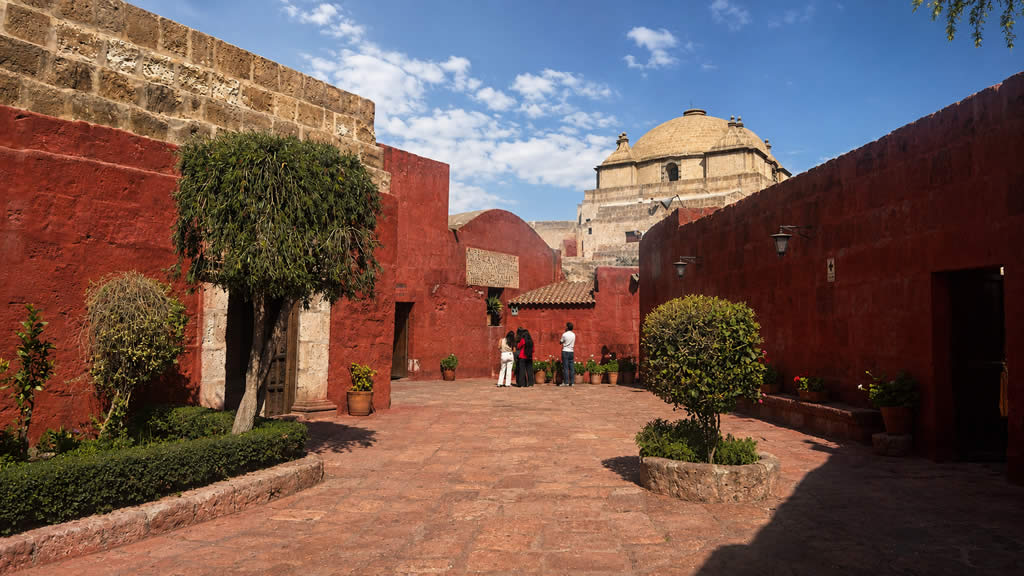
In Arequipa we find a clear example of this, an architectural wonder that captivates those who visit it.

“The monastery of Santa Catalina occupies a territory of 20,426 m2 and was opened on September 10, 1579, just 39 years after the foundation of Arequipa city”

This incredible monument is located in the historic center of Arequipa. It served as a cloister for Dominican nuns from the 16th to the 18th centuries, and still houses a small religious community today.

The complex is built from volcanic ashlar stone and is organized into cloisters, houses, patios, square, a gallery and a small chapel.

History

Viceroy Francisco Toledo granted the licenses for the foundation of the “Private Monastery of Nuns of the Order of Santa Catalina de Siena”, however the foundation was in charge of a person outside the religious sphere.

This person was María de Guzmán, widow of Don Diego Hernández de Mendoza, who donated all her properties in order to create the beautiful place that we  can enjoy now.

Today16 nuns still living in the Monastery, who offer advice, sell articles made by themselves and above all, they pray constantly for the peace of the world.

In 1944 the monastery was recognized by the National Institute of Culture as the national heritage of Arequipa and Peru, and in year 2000 it was also with Arequipa city recognized as a cultural heritage of humanity (UNESCO).

It should be noted that it was not until 1970 that the monastery was opened to the public. Its multiple restorations have made it one of the city’s greatest cultural attractions today.

The monastery of Santa Catalina is considered a citadel within another city, because in this there are: six streets, three cloisters, a square, the church, the gardens, the cells, the courtyard of silence, the kitchen, a laundry, the church , vaults and even a small exclusive cemetery for the nuns of the monastery.

“This convent should not be missed, even if it has had an overdose of colonial buildings. Occupying an entire block and guarded by imposing high walls, it is one of the most fascinating religious buildings in Peru ”- Lonely Planet.

Architecture

“When you walk through the monastery of Santa Catalina it is very clear to us why it is the main monument of Arequipa architecture”

The monastery clearly presents the three styles of architecture that we can find in Arequipa city, the baroque, neoclassical and neocolonial.  It was built using the volcanic stone of ashlar and joined by lime, sand and pozzolana.

When you are entering to the monastery, the intense colored walls stand out at first glance. According to the Architect Marizol Velasquez Gutierres (specialty in art), the color used in the architecture of the Santa Catalina Monastery is not the natural color of the material (ashlar stone), but the color based on pigments that has the property of changing its appearance (wall painting).

“According to its use, it can be classified as flat wall painting and decorative wall painting. In the Monastery of Santa Catalina  coexist both, inside and outside the spaces, which configure it as an urban complex “

The colors that we can find in the monastery are indigo, blue, predominantly in the cloister of the Naranjos, the red ocher color for most of the streets, the white color for the novitiate cloister and the interior of the cells, the color orange ocher for the entrance and the main cloister, among others.

Velasquez Gutierrez also indicates this image was not always the same over time, because the quality of the color allows changing the appearance of the architecture according to fashions, remodeling, extensions, maintenance and also for health reasons, as evidenced in the polychromies hidden in the walls.

On the other hand, the decorative wall paintings of the interiors contain religious and floral designs and are the result of technical, social, historical and environmental facts.

How to visit Santa Catalina Monastery:

From March 1 you can visit the monument in the following ways:

1.- Virtual Tour: Virtual Tour with 7 chapters about its history. You can book a virtual visit of the place through the official website of the Monastery of Santa Catalina.

It is a way to anticipate the excitement of your next visit in which you can directly appreciate the majesty of the place.

2.- Direct visit to the Monument: From March 1st you can visit the Monastery with a fixed date and hour using the service of booking of the Monastery website.

*If you want to book a specialized guide please call 958 348 214

Open: Monday to Saturday from 09:00 to 17:00. – * LAST ENTRY 4:00 p.m.

Closed to the public  Easter Friday, December 25 and January 1


IMPORTANT INFORMATION – COVID -19

The Monastery of Santa Catalina has developed a strict biosafety protocol, to enjoy a safe and pleasant visit. You can read all the protocolo here .

The sale of tickets will be online and with reservation of time. Payments can be made with Visa, Mastercard, American Express, Dinners Club, Unionpay and Maestro.

Giardino Tours Blog

@GiardinoToursPeru

#ITravelwithGiardino #OneTripManyExperiences


Sources

Gutierrez, M. V. (27 de Enero de 2020). Universidad Catolica San Pablo.
Monasterio de Santa Catalina. (septiembre de 2020). Monasterio de Santa Catalina.
Lonely Planet_ArequipaOther Links:

Colca canyon Travel Guide: 7 Questions about Colca Tours

Peru Private Tours: 7 fantastic reasons to take a Private Service

Arequipa Treasures: Salinas and Aguada Blanca National Reserve

5 FacebookTwitterPinterestEmail
Peru Great Destinations

Tour to Nazca lines: 6 real facts about the mysterious lines

by Giardino Tours February 22, 2021
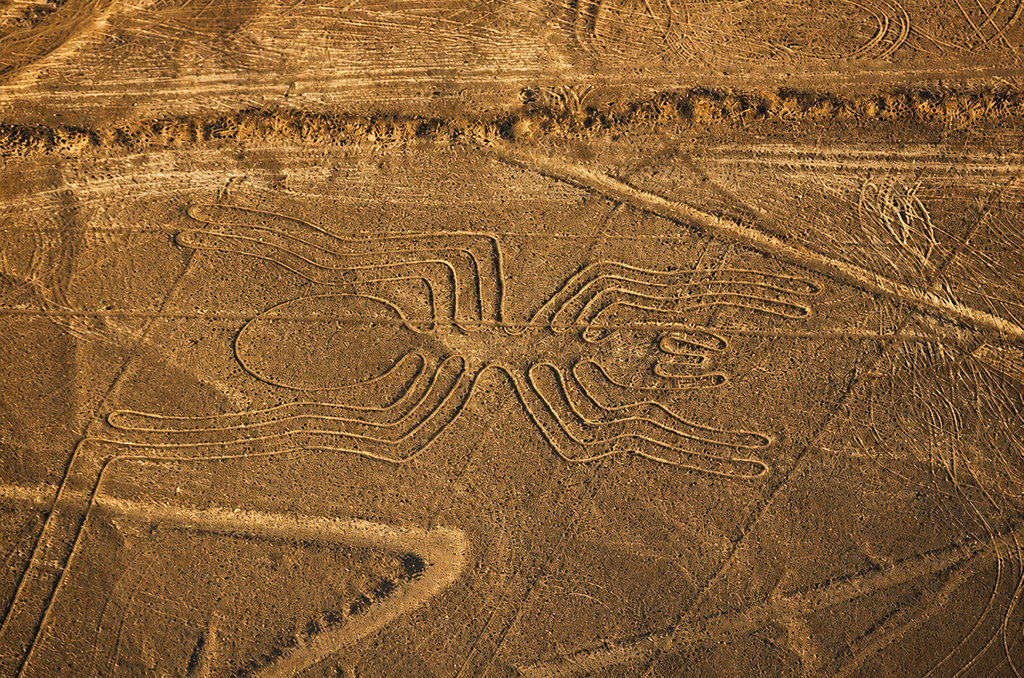
The Nazca lines are found in a region of Peru just over 200 miles southeast of Lima, near the modern town of Nazca.
In total, there are over 800 straight lines, 300 geometric figures and 70 animal and plant designs, also called biomorphs.
Some of the straight lines run up to 30 miles, while the biomorphs range from 50 to 1200 feet in length (as large as the Empire State Building).

Interesting 6  facts that you should know about the Nazca Lines

  1. More than 1,500 geoglyphs are known in Nazca so far. The lines and geometrical figures extend over 500 square kilometers in southern of Peru. The figures are up to 1.9 kilometers, the lines up to 10 kilometers.
  2. They were made in the period of 800 BC. to 650 AC and probably go back to the Paracas and Nazca people, lost cultures of Peru before Inca period.
  3. Actually, new drawings continues appearing. A cat drawing was only discovered on a slope in October 2020.
  4. A more recent hypothesis about the meaning of the lines assumes that the figures illustrate the request for rain. Argument: They show many animals that would not survive in the desert, but need jungle and water.
  5. The Nazca Lines are a major tourist attraction in Peru. The airport in Nazca was named in honor to Maria Reiche; a  German mathematician (Dresdren) who saved and studied the lines . Her small mud hut now houses the Maria Reiche museum.
  6. Joe Nickell, an American investigator, reproduced the figures in the early 21st century by using the same tools and technology that would have been available to the Nasca people. In so doing, he refuted the 1969 hypothesis of Erich von Däniken, who suggested that “ancient astronauts” had constructed the Lines.

[vc_gallery interval=”3″ images=”2103,2101,2105,2108,2107,1944,2106,2102,2104″ img_size=”large” css_animation=”fadeIn”]

How were Nazca’s lines made?

The lines are known as geoglyphs – drawings on the ground made by removing rocks and earth to create a “negative” image. The rocks which cover the desert have oxidized and weathered to a deep rust color, and when the top 12-15 inches of rock is removed, a light-colored, high contrasting sand is exposed.

Because there’s so little rain, wind and erosion, the exposed designs have stayed largely intact for 500 to 2000 years.

Scientists believe that the majority of lines were made by the Nazca people, who flourished from around A.D. 1 to 700.

Brief discovery details of Nazca Lines:

Toribio Mejia Xesspe, a Peruvian archaeologist, began a systematic study of the lines in 1926, but the geoglyphs only gained widespread attention when pilots flew over them in the 1930s. Experts have debated the purpose of the Nazca Lines since then.

In the late 1930s and early 1940s, American historian Paul Kosok studied the geoglyphs from the ground and air. On June 22, 1941, the American professor Paul Kosok was investigating one of the lines – just one day after the winter solstice – when at the end of the day he found himself at the foot of one of the lines.  Kosok looked up and realized that the sunset was in direct alignment with the line.

Kosok called the 310 square mile stretch of high desert “the largest astronomy book in the world”.

Kosok was followed by the German Maria Reiche, who became known as the “Lady of the Lines”. Reiche studied the lines for 40 years and fought unyieldingly for her theories on the lines’ astronomical and calendrical purpose (she received a National Geographic grant in 1974 for her work).

Reiche battled single-handedly to protect the site; she even lived in a small house near the desert so she could personally protect the lines.

New huge cat geoglyph was discovered on 2020

This particular geoglyph is a gigantic cat.  It measures at 37 metres long, and the lines are 10 inches wide! The enormous feline was found when workers were improving an access point for visitors to look out onto the hills.

The figure is actually older than some of the other geoglyphs in the area. It was discovered by a drone exploration covering the land.

How to visit Nazca?

To Nazca city you must arrive by bus. Buses depart from Lima every hour or so, take around seven hours (Depending oft he company) and the cost is about  US$35 to US$ 40 per person.[vc_gmaps link=”#E-8_JTNDaWZyYW1lJTIwc3JjJTNEJTIyaHR0cHMlM0ElMkYlMkZ3d3cuZ29vZ2xlLmNvbSUyRm1hcHMlMkZlbWJlZCUzRnBiJTNEJTIxMW0yOCUyMTFtMTIlMjExbTMlMjExZDE5ODY5MjUuNTM4NDE5MDc2MiUyMTJkLTc3LjEwODc2NTI3MTE1Nzk2JTIxM2QtMTMuNDMwMDI1MzUyNzc0MTQ4JTIxMm0zJTIxMWYwJTIxMmYwJTIxM2YwJTIxM20yJTIxMWkxMDI0JTIxMmk3NjglMjE0ZjEzLjElMjE0bTEzJTIxM2UwJTIxNG01JTIxMXMweDkxMDVjNWY2MTllZTNlYzclMjUzQTB4MTQyMDZjYjljYzQ1MmU0YSUyMTJzTGltYSUyNTJDJTI1MjBQZXJ1JTIxM20yJTIxMWQtMTIuMDQ2MzczMSUyMTJkLTc3LjA0Mjc1NCUyMTRtNSUyMTFzMHg5MTE0MWU0M2EwNjc2MmUzJTI1M0EweDY0ZTA4MzY0ZTg5MGVjMDIlMjEyc05hemNhJTI1MkMlMjUyMFBlcnUlMjEzbTIlMjExZC0xNC44MzU4Njg2OTk5OTk5OTklMjEyZC03NC45MzI3NTgzJTIxNWUwJTIxM20yJTIxMXNkZSUyMTJzdXMlMjE0djE2MTQyNjQzMTI4ODklMjE1bTIlMjExc2RlJTIxMnN1cyUyMiUyMHdpZHRoJTNEJTIyNjAwJTIyJTIwaGVpZ2h0JTNEJTIyNDUwJTIyJTIwc3R5bGUlM0QlMjJib3JkZXIlM0EwJTNCJTIyJTIwYWxsb3dmdWxsc2NyZWVuJTNEJTIyJTIyJTIwbG9hZGluZyUzRCUyMmxhenklMjIlM0UlM0MlMkZpZnJhbWUlM0U=”]Taking to the skies to see the lines:

Once in Nazca, there are only two options for viewing the amazing lines:

1.-  To climb the nearby observation tower.

2.- To take a fly over the lines. Flying is undoubtedly preferable as it offers a bird’s eye view of the most important etchings. (Attention: 30-minute flight consists of numerous sharp turns which leave most travelers feeling seriously nauseous). Take an anti-nausea tablet from a local pharmacy and try not to eat any big meals within a few hours of take off.

Early morning departures are best as there tends to be less turbulence and better visibility. The price is between 80 and 100 US $ for 30‘ minutes overflight, to which must be added a Airport tax fee S/. 25 soles (about US$8).

Visit the Museum

This is a great tip! We recommned to visit the two excellent local museums, the Casa-Museo Maria Reiche and the Museo Antonini, both provide detailed information about these ancient pre-Inca people and some of their possible motivations for drawing the lines.Sources:

Radio Nacional . (8 de junio de 2020). maria-reiche-la-mujer-que-barria-el-desierto Peru Travel: promperu Nasca Lines History: https://www.history.com/topics/south-america/nazca-lines BR Wisen: https://www.br.de/wissen/nazca-linien-peru-maria-reiche-frau-geschichte-frauengeschichte-102.html BBC: https://www.bbc.com/mundo/noticias-41474754 RTVE . (16 de Octubre de 2020). https://www.rtve.es/noticias/20201017/descubren-nuevo-geoglifo-forma-gato-lineas-nazca/2045941.shtml

4 FacebookTwitterPinterestEmail
Peru Great Destinations

Machu Picchu: Check these amazing secrets before the Tour

by Giardino Tours February 19, 2021


Machu Picchu:

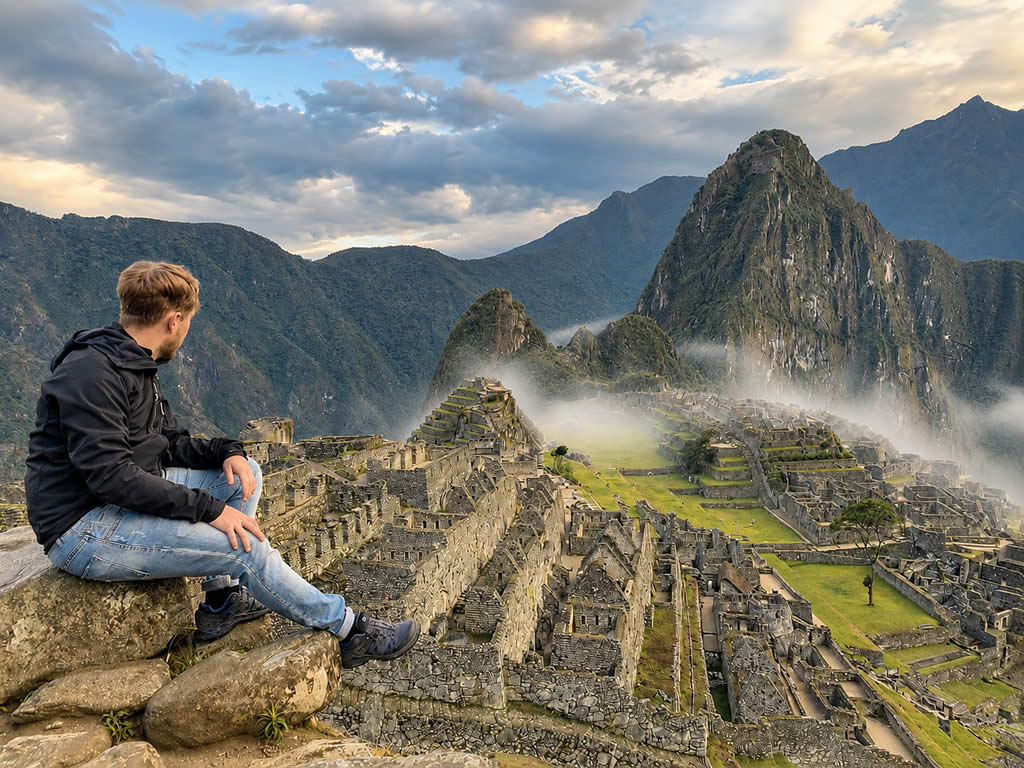
A stone city built on the top of an isthmus, between two mountains and between two geological faults, in a region subject to constant earthquakes and, above all, heavy rains all year round. No doubt that this city was a challenge for any master of engineering.

1.- Machu Picchu  It’s no stranger to earthquakes.


The stones in the most handsome buildings throughout the Inca Empire used no mortar. These stones were cut so precisely, and wedged so closely together, that a credit card cannot be inserted between them.

Aside from the obvious aesthetic benefits of this building style, there are engineering advantages.

Peru is a seismically unstable country—both Lima and Cusco have been leveled by earthquakes—and Machu Picchu itself was constructed atop two fault lines. When an earthquake occurs, the stones in an Inca building are said to “dance;” that is, they bounce through the tremors and then fall back into place.

Without this building method, many of the best known buildings at Machu Picchu would have collapsed long ago.


2.- Much of the most impressive stuff is invisible.


While the Inca are best remembered for their beautiful walls, their civil engineering projects were incredibly advanced as well. (Especially, as is often noted, for a culture that used no draft animals, iron tools, or wheels.)

The site we see today had to be sculpted out of a notch between two small peaks by moving stone and earth to create a relatively flat space. The engineer Kenneth Wright has estimated that 60 percent of the construction done at Machu Picchu was underground.

Much of that consists of deep building foundations and crushed rock used as drainage. (As anyone who’s visited in the wet season can tell you, Machu Picchu receives a lot of rain.)


3.- The location of Machu Picchu is not a coincidence


On Monday, 23 Sept. 2019, at the Geological Society of America Annual meeting in Phoenix, Rualdo Menegat, a geologist at Brazil’s Federal University of Rio Grande do Sul, will present the results of a detailed geoarchaeological analysis that suggests the Incas intentionally built Machu Picchu — as well as some of their cities — in locations where tectonic faults meet.

“Machu Pichu’s location is not a coincidence,” says Menegat. “It would be impossible to build such a site in the high mountains if the substrate was not fractured.”

Menegat found that these faults and fractures occur in several sets, some of which correspond to the major fault zones responsible for uplifting the Central Andes Mountains during the past eight million years.

Because some of these faults are oriented northeast-southwest and others trend northwest-southeast, they collectively create an “X” shape where they intersect beneath Machu Picchu.


4.- There’s more than one peak to climb


When you visit Machu Picchu for sure you want to visit also the Huayna Picchu peak (the small green peak, shaped like a rhino horn, that appears in the background of many photos of Machu Picchu.) but only  400 people are permitted to climb Huayna Picchu daily.

Almost no one bothers to ascend the pinnacle that anchors the opposite end of the site, which is usually called Machu Picchu Mountain. At 1,640 feet it is twice as tall, and the views it offers of the area surrounding the ruins—especially the Urubamba River winding around Machu Picchu like a coiled snake—are spectacular.


5.- There’s a secret temple.


Should you be one of the lucky early birds who snags a spot on the guest list to Huayna Picchu, don’t just climb the mountain, snap a few photos, and leave.

Take the time to follow the hair-raising trail to the Temple of the Moon, located on the far side of Huayna Picchu. Here, a ceremonial shrine of sorts has been built into a cave lined with exquisite stonework and niches that were once probably used to hold mummies.


6.- It has a great sense of orientation


There is solid evidence that the builders took into account astronomical and ritual criteria for the construction of Machu Picchu, according to studies by Dearborn, White, Thomson and Reinhard, among others.

Indeed, the alignment of some important buildings coincides with the solar azimuth during the solstices, in a constant and therefore not accidental way, with the rising and setting points of the sun at certain times of the year and with the peaks of the surrounding mountains.


Recent research has shown that the site’s location of many constructions of the Incas and the orientation of them, was strongly influenced by the location of nearby holy mountains, or Apus.


For example, an arrow-shaped stone atop the peak of Huayna Picchu appears to point due south, directly through the famous Intihuatana Stone, to Mount Salcantay, one of the most revered apus in Inca cosmology.


Giardino Tours /  Travel Blog


@Giardinotoursperu

#ItravelwithGiardino #OneTripManyExperiences


Sources:

National Geographic: Machu Picchu 10 secrets

Wikipedia: Machu Picchu

BBC News (Mitos y verdades de Machu Picchu)

La vanguardia: Machu Picchu en un lugar tan complicado

Science daily: Ancient Incan sanctuary intentionally built on faults


4 FacebookTwitterPinterestEmail
Peru Great Destinations

Enigmatic Sillustani & best way to book a Tour

by Giardino Tours February 15, 2021


Walking and exploring among the imposing Chulpas of Sillustani is undoubtedly one of the most fascinating experiences on the region of Puno close to Lake Titicaca .

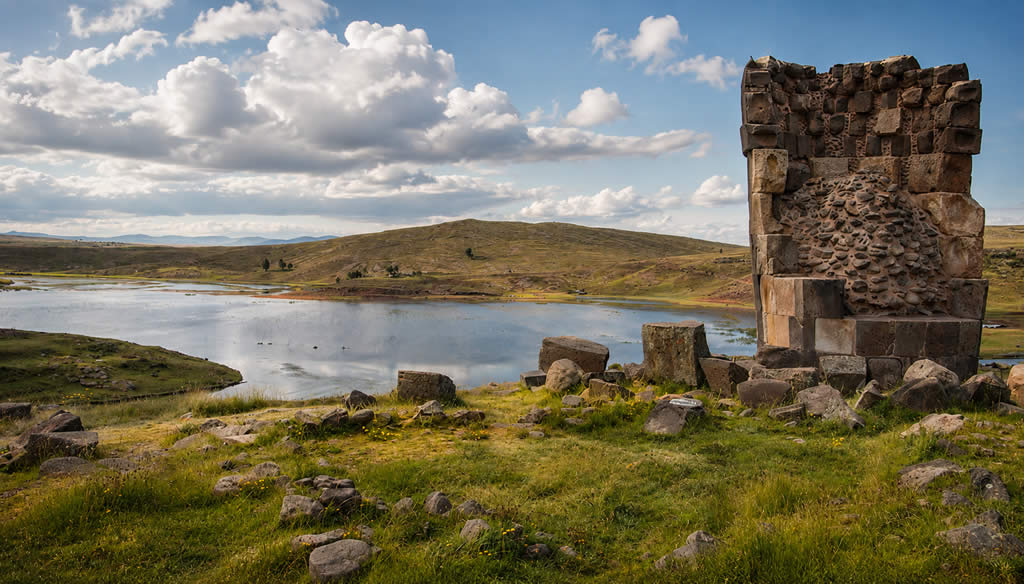
The stillness and beauty of Lake Umayo and the rugged landscape at almost 4000 meters above sea level, contribute to creating this enigmatic atmosphere that is part of the environment where an ancient culture also developed.


Chullpas de Sillustani

About 34 km from the city of Puno are these fascinating pre-Inca funerary monuments. In them the ancient Peruvians of this area buried their nobles to give them eternal rest. The so-called “Chullpas” are volcanic stone towers that resemble an inverted cone. The stone material was brought from nearby quarries and even today, there are around 90 of these chulpas or “ayawasis” in this archaeological complex that is scattered on a large hill, from where you can see the landscape next to the icy lake.

These monuments not only served to preserve the body of a “great lord”, but also showed the respect that inspired his memory or the “ayllu” to which he belonged. The corpse of the “noble”, belonged to an authority, curaca or priest, was previously mummified and placed in a fetal position. Next to it, gold and silver artifacts, utensils and ceramics were frequently buried. The tallest tower in the archaeological complex is the so-called “chullpa del lagarto”, 12 meters high. This complex was declared a cultural heritage of the nation in 2003.

Within the same area of ​​the archaeological complex you can visit the site museum. Where you can learn more about the ancient cultures that inhabited the area, among which the Kollas, Tiahuanacos and Incas stand out. In a few minutes the inhabitants of the town of Atuncolla also offer boat rides across the lake.


How to get to Sillustani?

It is recommended to depart from Puno by land. The archaeological complex is open from Monday to Sunday from 8:30 a.m. at 5:30 p.m. (referential) and the entrance costs approximately S / 5.50 soles, (approximately 2.00 US dollars). You can also start from Juliaca, which is about 40 km away. It is advisable and essential to have the tourist guide service since this service does not exist on site.


The best way to visit and used for many of the travelers visiting Peru is to drive to Sillustani and Puno city  after visiting the city of Arequipa and the Colca Canyon. Currently there is an excellent road that runs Arequipa – the Colca valley – to Sillustani – Puno.

The journey  offers a beautiful Andean landscapes, where you can take excellent photographs crossing the highlands by transport. On the route you can make stops to appreciate more the Andean lagoons and a variety of birds.
From Colca valley you will need about 5 hours of driving to reach the Sillustani complex. After the visit, the travelers are transferred to Puno city to rest at their hotel and continue their journey.

This option is ideal for those travelers who are traveling through southern Peru, as it optimizes their travel time (at least one day) by going directly from Colca to Sullustani and then to Puno.


But also you will find daily Tours to Sillustani leaving from Puno city at around 2:30pm and cost from S30 per peson (With  a Group). The round-trip takes about 3½ hours and allows you about 1½ hours at the ruins.

It is recommended to take the service also in private in order to enjoy more time exploring the ruins and surroundings.

TIPS: The chullpas are well preserved. The afternoon light is the best for photography.


Curious about this magnificent destination?

Come to Perú!

Giardino Team!


@Giardinotoursperu

#ItravelwithGiardino ‘OnetripManyExperiences


2 FacebookTwitterPinterestEmail

More Articles/Más Artículos

  • Colca Canyon Tour: Introducing the awesome Colca Canyon
  • Peru Trip: Altitude mountain sickness and 6 easy tips to avoid it
  • Peruvian Carnivals: Magic, culture & celebration
  • Arequipa Tour: 2 surprising curiosities about this destination!
  • Colca Sour: An unique Cactus cocktail
  • Peru 2 love’s story tellings and myths
  • Enigmatic Sillustani & best way to book a Tour
  • Amazing Tour Maras Salt ponds in Cusco (Virtual)
  • Tips for a Responsible Peru Travel Experience!
  • Colca canyon Travel Guide: 7 Questions about Colca Tours
  • Facebook
  • Twitter

@2021 - All Right Reserved. Designed and Developed by PenciDesign


Back To Top
Giardino Tours Blog
  • Go to Giardino Tours
  • English
  • Español