Top Posts
Cusco Tour: 3 differences between Machu Picchu, Mountain...
Quechua Travel Words: Useful words for a great...
Tour Arequipa: The fascinating stone city of Choqolaqa
Tour Arequipa: Stunning Salinas and Aguada Blanca N.R....
Protecting Our Planet Starts with You – 9...
8 highlights of Arequipa – Tips to enjoy...
FOOD in Arequipa: 8 delicious Dishes that Are...
Embroidery in the Colca Valley a Cultural Heritage...
The interdimensional gate Aramu Muru. Fascination & mystery.
Pacaya Samiria Reserve: A world destination not to...
  • Go to Giardino Tours
  • English
  • Español
Giardino Tours Blog
TRANSFORMING TRAVELS INTO MEMORABLE STORIES
Category:

Featured

FeaturedPeru Great DestinationsTravel Tips

Cusco Tour: 3 differences between Machu Picchu, Mountain & Huayna Picchu

by Giardino Tours February 4, 2025

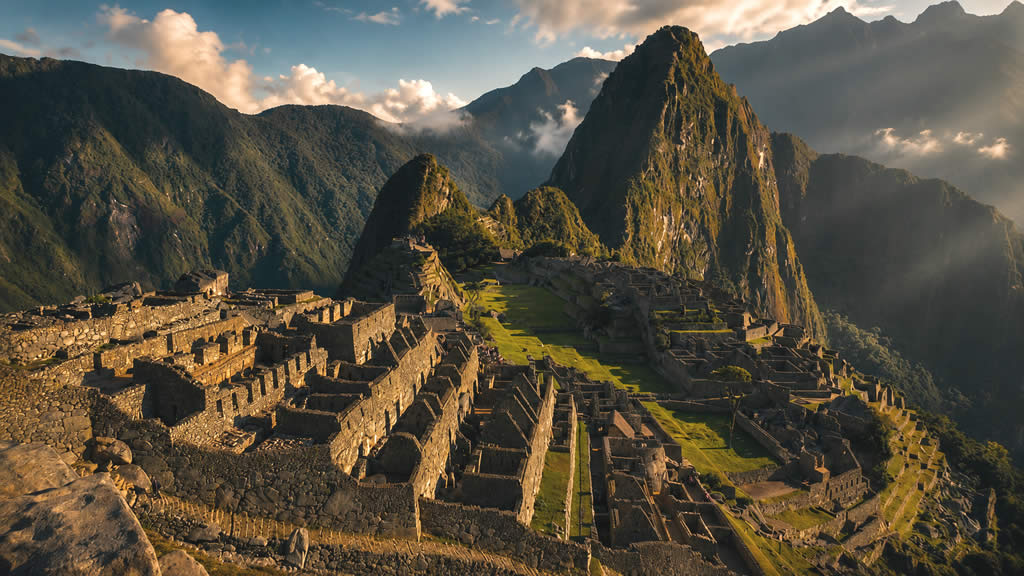
Today there are different concepts about entrances when you want to visit Machu Picchu that oft lead to some confusion to our travelers, here we explain you the differences:[penci_fancy_heading _text_align=”left” p_title=”Citadel or Sanctuary (LLaqta):” turn_on_title=”yes” _title_typo=”font_family:%3A” _title_fsize=”20px” _subtitle_typo=”font_family:%3A” _desc_typo=”font_family:%3A” title_color=”#3cc154″][/penci_fancy_heading]The Citadel or Sanctuary of Machu Picchu, are the Inca ruins itself, this is what we see in all pictures, that have made this Peruvian attraction so famous. There are buses from Machu Picchu Pueblo that take you to the entrance of the Sanctuary, where you will check your entrance ticket according to your booked schedule.
The citadel is located to 2.490 meters high and takes the name of the “Mountain” where it is located; in other words, the name of the “citadel itself“ still unknown.[penci_fancy_heading _text_align=”left” p_title=”Huayna Picchu Peak:” turn_on_title=”yes” _title_typo=”font_family:%3A” _title_fsize=”20px” _subtitle_typo=”font_family:%3A” _desc_typo=”font_family:%3A” title_color=”#3cc154″][/penci_fancy_heading]The famous Huayna Picchu peak is one of the mountains that is located in front of Machu Picchu citadel, and which can be climbed using a path that departs from the Citadel itself.
At the top there are some ruins and you will have an amazing view of the citadel and the area and if you want more, there is also another trail up to the temple of the moon.
This mountain is located to 2,720 mts and is only allows the entry of 400 people per day, in two groups of 200 persons (07:00 AM and 10:00 AM). For this reason the tickets must be bought in advance. The ascent takes approximately two hours, and the trail to the temple of the moon, or the Great Cavern, are about 4 hours.

Some facts:

  • It is known as the ‘Young Mountain’. Walking along its trails is recognized as one of the most incredible short walks on the planet.
  • The trails are steep and narrow. They were built on one side of the mountain. They can be terrifying for people afraid of heights.
  • If you suffer from vertigo or acrophobia, it’s best to avoid to walk to this mountain.

[penci_fancy_heading _text_align=”left” p_title=”Machu Picchu Mountain:” turn_on_title=”yes” _title_typo=”font_family:%3A” _title_fsize=”20px” _subtitle_typo=”font_family:%3A” _desc_typo=”font_family:%3A” title_color=”#3cc154″][/penci_fancy_heading]Now you know that the “Inca city” is located on the mountain of Machu Picchu at 2,490 meters; but the mountain has an altitude of 3.061 meters. So now you have the possibility to walk to the TOP of the Mountain “Machu Picchu”.
From there the view is also spectacular and has the big advantage that allow 600 persons per day in 2 time schedule 09:00AM and 10:00AM, still not so popular as Huayna Picchu peak so the tickets do not run out so fast; but an incredible view is guaranteed.[penci_fancy_heading _text_align=”left” p_title=”¿Aguas Calientes = Machu Picchu Pueblo?” turn_on_title=”yes” _title_typo=”font_family:%3A” _title_fsize=”20px” _subtitle_typo=”font_family:%3A” _desc_typo=”font_family:%3A” title_color=”#3cc154″][/penci_fancy_heading]Aguas Calientes, currently known as Machu Picchu Pueblo; It is the nearest town to the ruins. This town can only be reached by train or by walking. This is the town where the trains arrive from Cusco or Ollantaytambo for the tour to Machu Picchu, there are hotels for visitors, restaurants and you can do some shopping.
Now! From Machu Picchu Pueblo are the departures of the buses that drive up to Citadel, This drive takes about 20 to 25 minutes. Machu Picchu Pueblo is located at 2,040 meters and its name before (Aguas Calientes = Hot water) comes from the hot springs that are close to the town.

Machu Picchu:

The citadel of Machu Picchu is maybe the main reason that thousands of visitor travel to Peru and also appears in the top destinations list by U.S. News.

It is ranked as the eighth best place to visit. Machu Picchu was discovered by Hiram Bingham in 19, the ruins are today part of the UNESCO World Heritage sites, and since 2007 is one of the New Seven Wonders of the world.
2 FacebookTwitterPinterestEmail
Culture & TraditionsFeatured

Quechua Travel Words: Useful words for a great Peru experience

by Giardino Tours April 21, 2024

When you travel to Peru for the first time,  you will immediately realize that our country has a rich and admirable indigenous heritage. This makes Peru a beautiful and diverse destination.

For travellers who want to learn more and connect with indigenous Andean communities and their culture, it is a great help to know a little bit of the Quechua language. If you greet someone in quechua during your trip, no doubt the answer will be smiles among the people you visit and a more pleasant feeling of “welcome”.

The Quechua language called „Runasimi“ in Quechua means: runa ‘people’ + simi ‘speech,’ is a family of some 45 closely-related languages spoken in the Andean region of South America by close to 8 million people.

“If Latin is said to be the language of the angels, then Quechua is the language for expressing the subtleties of existence on Earth. That is why it is still alive.”

– Demetrio Túpac Yupanqui (New York Times- 2008 – Armed With a Pen, and Ready to Save the Incas’ Mother Tongue)

Beautiful words in Quechua!

Quechua is a official language in Peru, along with Spanish and Aymara. In rural areas, it is used for everyday communication in informal contexts. Since most Native speakers of Quechua are illiterate in their native language, it remains largely an oral language. In formal contexts, such as government, administration, commerce, education, and the media, Spanish is used. The only cultural domain where Quechua is used extensively is traditional Andean music.

„One example of this important momentum is the 2015 adoption of Indigenous Andean principles in Quechua, by the United Nations General Assembly: The principles of Ama Sua (“you shall not steal”), Ama llulla (“you shall not lie”) and Ama Quella (“you shall not be lazy”) were distinguished by the international body.   – Penn Arts & Sciences / United Nations Secretary-General.

“Quechua is such a beautiful language,” said Ms. Ambía, a retired teacher and social worker. “I want to help preserve it. I want for people to feel proud of our heritage, to feel proud about our culture.”  –  Elva Ambía (The Wall Street journal – 2014 – Reviving a Fading Language Called Quechua )

Some useful words in Quechua for those who travel to Peru

If you find yourself in the jungle, or in the central or southern part of the Andes in Peru, you will find that the language varies, but in general with these words you will have a good chabnce of comunication. Remember that Quechua and Spanish have somewhat similar phonetics (ex.: the double /l/ or “ll” sound like an English /y/).If you meet somebody fort he First time:

Rimaykullayki: It is the most widespread form of greeting, this amounts to: good morning, good afternoon and good night of Spanish. It literally means “I speak to you politely.”

Chaskillaykim: It literally means “I answer the greeting.”

If you meet a friend or you already know the person:

Imaynallam?:  How are you?

Allinllanchu:  Are you ok?

Allinllam:  I’m well, thank you.

Somaq mihuna: That means: „This is amazing food“ If somebody hears you say this at their restaurant or food stand, they will be very happy.

Sulpayki: Thank you  (The most important Word in the world!)

Tinkunanchiskama: I will see you later, farewell)

Paqarin kama: See you tomorrow

Tupananchikama: Goodbye in general.

Allin P’unchay: Good morning

Allin Sukha: Good afternoon

Allin Tuta: Good night

Did You Know?

These words came into English from Quechua via Spanish:

coca:  kuca, the native name of the plant
condor:  kuntur, the native name for the bird
guano:  huanu ‘dung’
jerky:  ch’arki ‘dried flesh’
llama:  llama, the native name of the animal (with Spanish spelling)
puma:  puma, native name of the animal
vicuña:  wikuna, the native name of the animal

Are you starting  planning a journey to Peru? Contact our team of expert travel advisors and lets together organize your perfect trip. 🙂
Giardino Tours – Blog


#ITravelwithGiardino #OneTripManyExperiences

3 FacebookTwitterPinterestEmail
FeaturedPeru Great Destinations

Tour Arequipa: The fascinating stone city of Choqolaqa

by Giardino Tours January 31, 2024

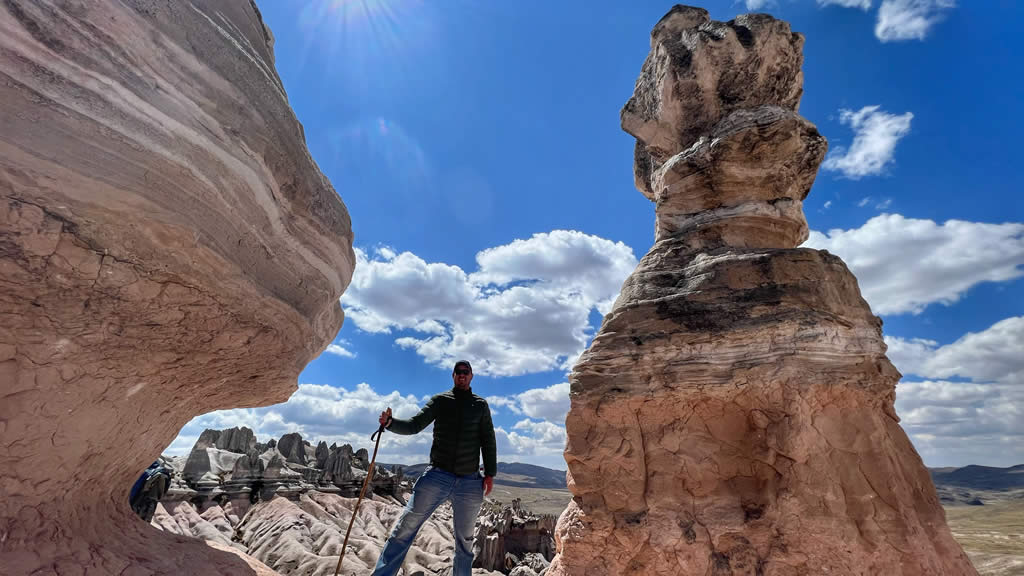
In Choqolaqa the capriciousness of nature and wind made shaped the gigantic rocks, that resemble figures of every conceivable form, which made this place an interesting destination for those who like to explore nature, and why not… a little bit of an adventure.

The journey starts from the city of Arequipa or Colca canyon and it is highly recommended that you travel to this destination with a serious Tour Operator.

Route from Arequipa to Choqolaqa

If you start from Arequipa the journey will go toward Tisco town, which is the closest village to the “Choqolaqa Geopark” and the drive takes approximately 5 hours. Tisco village has about 1850 inhabitants and is located at 4188 meters above sea level.

The Tisco village is a fascinating “journey into the past” where you can interact with the local vicuña breeders, walk through its traditional streets with their thatched-roof houses, or visit its beautiful colonial church dating back to the year 1650.

The hike to the stone city “Choqolaqa” from Tisco takes about 2 hrs, however if you are with a transport  it is possible that you drive closer to a view point from which the walk to the stones will be about  1 hr.

According to ancestral stories told by the locals, Choqolaqa was a city of large palaces, streets, avenues and zoos. But the locals also say that this city and its inhabitants disobeyed the “Apus” (The Gods) who therefore turned this whole city into pure stone.

The “Geopark” extends over an area of 25 hectares. Once there the landscape takes us to another world! The area invites to the imagination and mysticism as every rocky formation reveals stone figures with forms of women, angels, animals like seals, elephants, or condors; as well as castles, towers, streets and more.

Until now local people use Choqolaca as a religious center for different ancestral rituals, where you can appreciate the local traditions and way of life.

Please don’t forget that this is a natural territory with great ancestral traditions protected by their villagers. For this reason, we ask you to take the tour with a Responsible Tour Operator or, if you go by yourself, please follow all instructions from the locals.

It is important that you are very respectful of the religious and cultural traditions of the communities that live in this wonderful place.

WE ARE HERE TO HELP YOU DISCOVER PERÚ!

@GiardinoToursPeru

#ITravelwithGiardino #OneTripManyExperiencies1

2 FacebookTwitterPinterestEmail
Culture & TraditionsFeaturedTravel Tips

FOOD in Arequipa: 8 delicious Dishes that Are Worth a Trip to Arequipa, Peru

by Giardino Tours July 7, 2021

FOOD in Arequipa: 8 delicious Dishes that Are Worth a Trip to Arequipa, Peru

In January 2015 the UNESCO recognized Arequipa city as one of the 66 World’s creative cities in gastronomy.

The certificate was delivered by the Unesco representative in Peru, Ernesto Fernández, who highlighted that Arequipa city is one of the 66 cities in the world that were declared creative cities in gastronomy.

According to the Arequipa Picantera Society (Picanteria is the name of traditional restaurants in Arequipa), the number of dishes that this region offers would reach about 194 (40 entrees, 22 types of soups, 70 stews and 62 desserts and drinks). For this reason, this city has earned a deserved culinary fame, both among locals and travelers.
Without a doubt, Arequipa’s cuisine has in the “Picanterías” the sanctuaries of knowledge and flavor, which treasure centuries of tradition, creativity and innovation because they are the authentic guarantors of the future of this emblematic Peruvian regional cuisine.
If you are planning to visit Arequipa and you don’t want to miss dishes that will delight your palate, we show you this list with some of our typical dishes. – Enjoy them!

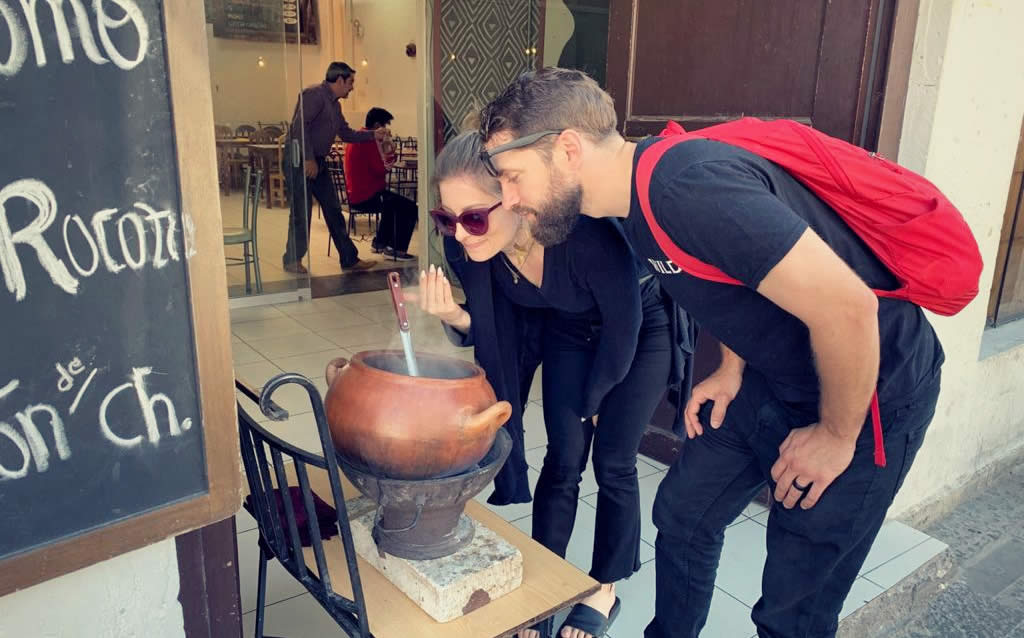
1.- El Rocoto Relleno (The stuffed Rocoto).

One of the most emblematic dishes of Arequipa is “Rocoto relleno”

This is a type of stuffed pepper. But unlike other recipes that are based on sweet peppers, this dish uses ROCOTO, a red pepper that is ten times hotter than the famous jalapeño.

These rocotos are so spicy that to reduce the itchiness they are cooked in water and vinegar, however this does not take away totally the spicy flavor that also contains a first-class taste and aroma.

The filling is based on a mixture of meat, butter, cream and nuts. It is also often topped with a slice of melted cheese. The most typical thing is that it is accompanied by a piece of potato cake (Pastel de papa).

2.- El “Americano”  (The American)

The “American” is a very traditional dish in Arequipa and although currently it is presented in many forms and combinations in the traditional Picanterías, the original recipe presents a conjunction of 4 hot spices: a portion of rice, meat stew, pumpkin chili pepper, brambles of legs and a torreja, served in a single plate one after another.

The delicious Arequipeño meat stew is one of the most common dishes and can be prepared from various types of meat, but the one served in the “americano dish” is beef, onion, carrot, potatoes and red chili, accompanied with white rice.The stew can also be replaced by the locro (a spicy made with mash potatoes). Nowadays the American is also served with a stuffed hot pepper or a noodle cake.

3.- Chupe de Camarones  (Shrimp great soup).

This soup prepared with shrimp is a very powerful dish and with a great taste.

It is based on Shrimp accompanied by onion, tomato, beans, garlic. Yellow potatoes, corn, boiled eggs, rice, cheese, and milk are added to the soup.

This dish is typical throughout the coastal area of Peru; However, the Arequipeño Chupe de camarones is simply the king of all of them.

4.- Soltero de Queso (Chees fresh salad)

This entrée is used also as a garnish.

This salad is based in fresh cheese, hot peppers, onion, olives, beans and tomato. The most common is to find this typical dish seasoned with vinegar, parsley, salt and pepper.

This “salad” is a popular main dish for dinners in Arequipa and sometimes it is accompanied by boiled potato slices.

5.- Adobo Arequipeño

Adobo arequipeño, also known as adobo de chancho, is a traditional dish from Arequipa.

Normally it is tha Sunday brunch dish at Arequipa’s local picanterías. Amazing taste and very popular among the locals and visitors.

How maybe you already know, the term “adobo” is derived from the Spanish word adobar, meaning marinade and you will find many adobos around the world. But Arequipa’s adobo is quite different from the other adobos in the world.The arequipeño dish is a soupy pork stew, slow-simmered with chicha de jora, spicy rocoto pepper, aji panca, garlic, onions, oregano, cumin, and other herbs and spices. It is made in a clay pot to take advantage of all its flavor and It is cooked overnight.

Currently in the Cayma district it is possible to enjoy this dish every day in its famous picanterías (typical food establishments) Don’t forget to ask also for your “pan de tres puntas” (Bread with 3 cornes).

6.- Ocopa Arequipeña – Spicy traditional sauce

Ocopa Arequipena is a simple dish consisting of cooked and sliced potatoes covered in a Ocopa sauce.

Yes! IT IS THE SAUCE that gives it that special touch to this dish, since it is made from yellow hot pepper, onions, garlic, huacatay (a typical local herb), roasted peanuts, walnuts, cheese and breadcrumbs.

Bu, what make the big different to the taste? – It is the Huacatay (called black mint) is an endemic herb from Peru, it belongs to the mint family, I could say that it has a touch of bitterness like mint, but it has simply a unique flavor and aroma.

🙂 Boiled eggs, whole olives and lettuce leaves can be added to the unique “Ocopa arequipeña”.

7.- El Escribano – “The writer or Notary”

“El Escribano” is considered the ancestor of many dishes in Arequipa and its name comes from the tradition of the type of diners.

It is said that the origin of this dish dates back to colonial times. The judges, lawyers and especially the “Escribano (or writer)”, who exercised the functions of our current Notaries, went to the picanterías to eat something very quickly before the next session or at the end of their daily workday.

Sometimes they arrive to early or to late and did not always find food ready, so the spicy dishes would put on the table with a little of what was in all typical Arequipa cuisine; potatoes, tomatoes and of course the spicy rocoto, making sure that is very spicy so the diners become thirsty and consumed a lot of chicha (Traditional drink), while the main meal arrived.They say that some of the diners came up with the idea of mixing everything they had on hand and made their version of salad and so, this improvised dish, became part of the menu in the picanterías. As most of the diners were Notaries, they baptized it with that name, although it was also served to other members of the legal service and later to the general public.

8.- La Chicha de Guiñapo (Traditional drink)

As you’re traveling in Peru and visit traditional restaurants you may encounter a interesting drink called “Chicha de Jora”. This beverage is dating back thousands of years. Chicha is a timeless and iconic drink that every visitor to Peru should taste at least once.

La chicha de Jora is made similarly to other types of beer: by germinating corn, extracting malt sugars, boiling the wort, and then fermenting.

BUT…. In Arequipa you will find another version of the Chicha and this is the “Chica de Guiñapo”.

Chicha de guiñapo is the signature variety of Arequipa and uses a special type of maize (Purple) which only grows in that region. It is fermented for a couple of days, which gives it a low alcohol content of around 2-3%.

The taste is light and sweet, and it so perfect to any of of the spicy food of the unique Arequipa gastronomy.[vc_zigzag]

And do you get curious? We got to open your appetite?


Arequipa is a destination that will fill you with surprises and beautiful experiences, not only not only for its incredible geographical areas, parks and culture heritage, but will also be a feast for the good palate.
visit Arequipa in peru
We are waiting for you!

Giardino Blog

#ITravelwithGiardino #OneJourneyManyExperiences


Other links:

Embroidery in the Colca Valley a Cultural Heritage of the Nation

The interdimensional gate Aramu Muru. Fascination & mystery.

Chan Chan mud city, keeps surprising the world!

1 FacebookTwitterPinterestEmail
Colca CanyonCulture & TraditionsFeaturedTravel Tips

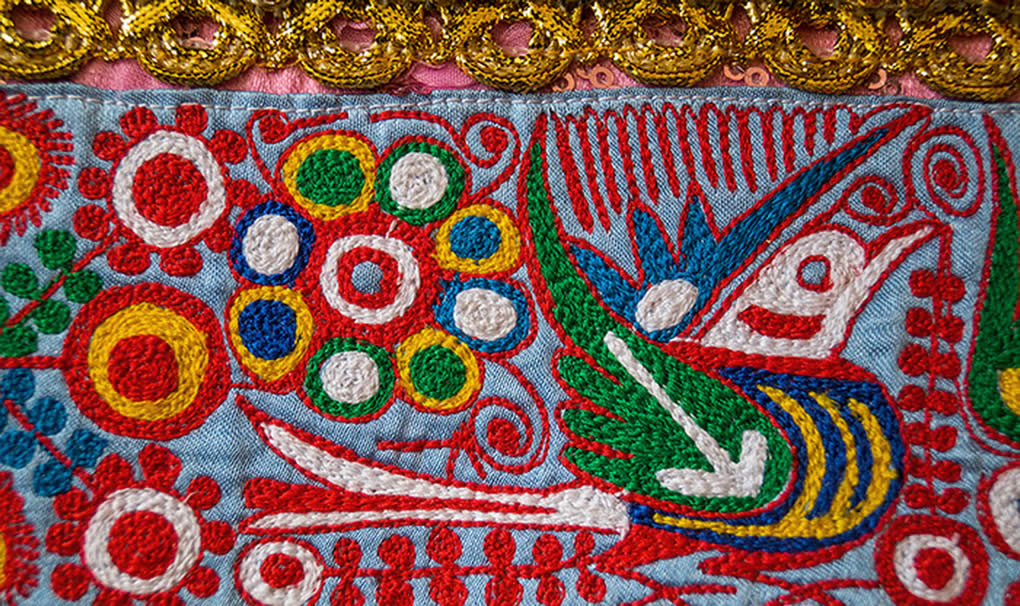
Embroidery in the Colca Valley a Cultural Heritage of the Nation

by Giardino Tours June 25, 2021
“On August 17th, 2018, was published on the newspaper “El Peruano” the knowledge and practices associated with embroidery in the Colca Valley a Cultural Heritage of the Nation”

“The recognition was granted for its important technical richness, historical, traditional and artistic value of the iconographic and symbolic contents that they communicate, which are strongly rooted in the Collagua and Cabana worldview, as part of a process of empowering identity of the culture of the population of the Colca valley. ” – Andina 2018

If you are going to visit the Colca canyon, you will be surprised not only by the affection, the spectacular views of the valley, the depths of one of the deepest canyons in the world, the flight of the condor, the joy and gastronomy of its people, but in addition, the parade of colors of their crafts, especially that of their traditional costumes, which represent the identity, love, art and pride of the region.

Undoubtedly it can be affirmed that the craftsmanship of the Colca valley is extraordinary, due to the high development achieved, but very particularly that development is appreciated in its textile art of embroidery.

Through folklore, the Colca people express their culture through symbolic representations related to ecology, their cultural, social, geographical and historical environment and, therefore, are important elements of cultural identity and / or ethnic heritage.

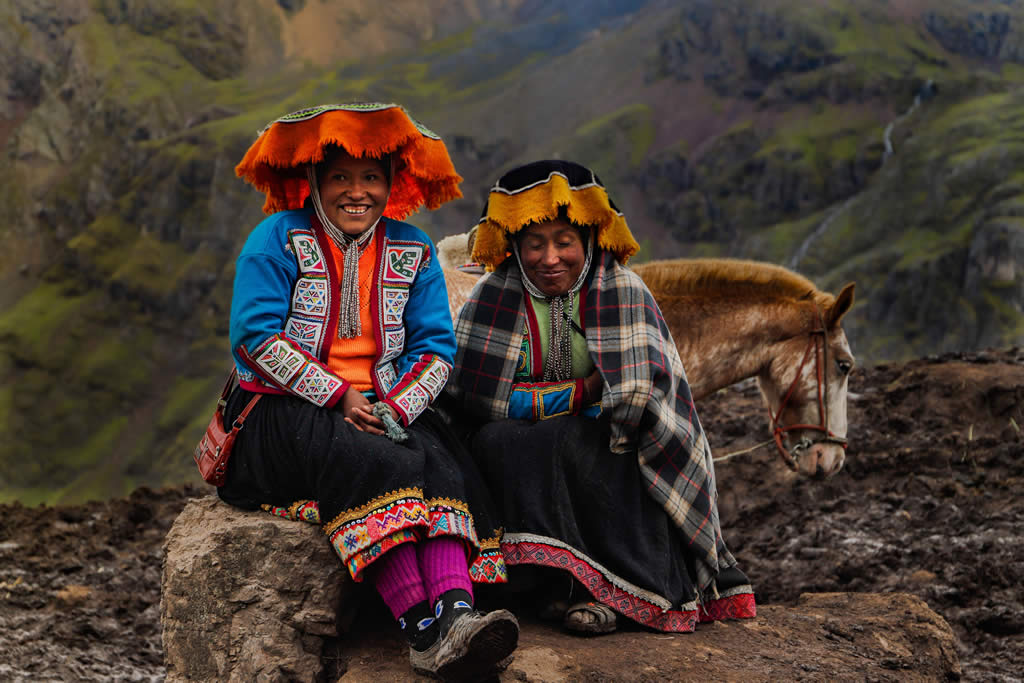
We will find skirts, shirts, hats, blankets, sweaters, chullos (hats), gloves, stockings, scarves, ponchos and other beautifully embroidered fabrics which all reflect the uses and customs of the men and women of Colca valley and their close relationship with nature.

This art also reflects the spirituality of the local people, where the iconography and polychrome, with colorful works, shows the richness and art of the Andean cosmo-vision.

The technique for embroidery work is called the “maquinasca” (sewing machine), which is a widely known technique in the southern Andean region. The artists take the machine and begin to embroider hearts, chamomile and cantuta flowers, sparrows, etc.

In addition, and according to the client’s requirements, other representative products of the region such as “trout” can be added to the work. Sometimes, to give it a more elegant touch, the artists complement their work with industrial fabrics, gold and silver silks and ornaments of different colors.But beyond the craft itself, as a result of a work, at the center of all this is the human factor, the craftsman, who with their artistic hands turns every product into unique pieces in which they express their creativity and imagination but supported by the realities of their daily and ancestral life.

And this is the most prominent factor in the inevitable association of tourism with the crafts of the destinations that we visit.

All type of Crafts offers to the travelers the opportunity to take home “the stories”. Each Souvenir is more than a thing, is the “memory” that transform itself to a open book, that talk to us with all the symbols through which the territories visited murmur magical stories to travelers and their environment.

Today’s traveler not only wants to see places but also to experience them, feel that they are part of their life for a moment, living the culture, their artisans and their manifestations.

The magnificent Colca region has many reasons for you to visit it, but without a doubt, it is also the place that allows you to bend time, find calm and awaken in each one of us the passion for life details.

Write down the “Colca canyon” among your great travel destinations, here you will find thousands of reasons to live the legend! And consider to spend more then one night to enjoy experiences full of emotions, respect and learning.

We are waiting for you!

Giardino Blog

#ITravelwithGiardino #OneJourneyManyExperiences


Other links:

8 highlights of Arequipa – Tips to enjoy Peru’s prettiest city

Peru Packing List post Covid-19: 5 Items that You Need to take to your Peru Trip

Peru Travel Restrictions Covid-19: Updates to Government of Peru

0 FacebookTwitterPinterestEmail
Culture & TraditionsFeaturedLake TiticacaPeru Great Destinations

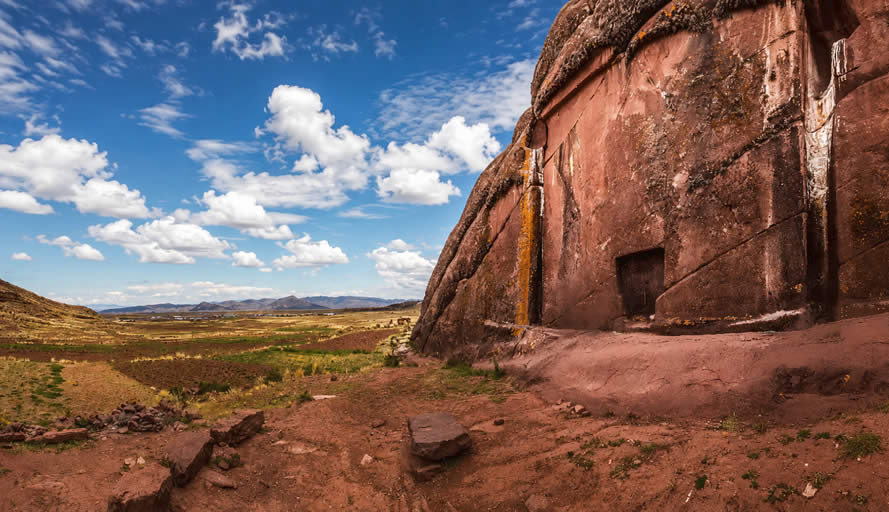
The interdimensional gate Aramu Muru. Fascination & mystery.

by Giardino Tours June 21, 2021
“A portal, that according to a legend allowed the Inca’s priests to be transported to different places of the Inca Empire and even to any place of  the world” The interdimensional gate Aramu Muru also known as: Hayu Marca means: “City of spirits or” Willka Uta: “Place of the sun or gate of the gods.”
Location:

“La Puerta” (The door) is located 35 kilometers from the city of Puno (Lake Titicaca area), in south area of the district of Ilave in the province of Collao and 1 hour and 10 minutes by car from Puno city. This enigmatic place It is located also near a fascinating stone forest and the terrain is cold and quite dry.

The portal has the shape of a square with 7 meters on each side and it is carved in a unique rock. So far no in-depth archaeological study has been conducted that can reveal the date when the first settlers began to consider this door “a sacred place”.

Data:

For many, Aramu Muru door is a place where a lot of energy is concentrated, our body and soul are immediately nourished, also you get a feeling of to be in a safe place, where the body feels free and all the pressures of that daily life go away.  A place where you encounter peace. For many people this is a good place to meditate on our daily and spiritual lives. To find the answers to many questions and return home with more hope and energy.

But lets us to talk a bit more about the legends of the area, that will lead us to understand why it is considered a mystical and special place.

According to story-telling and legends, when the Spanish arrived in the Inca empire, there was a priest named Aramu Muro, who belonged to the monastery of the 7 rays and was responsible for the initiation ceremony and worship of the God; The “Inti” (the Sun).

Legends said that Aramu Muru was the one who took the golden solar disk kept in Koricancha tempel (Sun tempel in Cusco) and fled from the Spanish conquers to some place save place in the Juli Province (Lake Titicaca). Then, he reached the sacred door and placed the Sun disk on the door, using it as a door key, and opened the door. After that, he cross the portal and disappeared behind it.Nowadays; locals carry out rituals of all kinds at the door of Aramu Muru, to ask for peace, to say thank you to the Gods or ask for hope.

Also the door is a very attractive spot for many esoteric groups, that visit the place hoping that maybe the door will be opened, and they have a chance to see a bit to the world of the Gods.

“The legend says that this door opens only for those people who are spiritually ready to connect to the spirit of Lake Titicaca.”

But without doubt, Aramu Muru is a place surrounded by mystery, where people comment that they have had sightings of strange lights and claim to have had visions of stars or columns of fire, or to have heard sounds and have even felt the presence of a tunnel behind the door.Interesting is also that just on the other side of the mountain, Archeologist have found the remains of what seems to be a tunnel that connected the cities of Tiahuanaco (Bolivia)  and Cusco city. They think that this tunnel was used by the Incas to move around the areas. According to Inca traditions and legends, this tunnel was built before the Inca empire arrive in the area, and only was used by the Incas.

The question is…  if the Incas were not the builders of this tunnel, then who were they?

There are many interesting and fascinating stories and legends that surround the mystical world of ancient Peru, such as the legend of Lake Titicaca, from where Manco Cápac and Mama Ocllo (Founders of the Inca empire) emerged and in which “La isla de la Luna” (Moon island) is located, in this island you will find similar doors.  Or the ceremonial center of “Ñaupa Iglesia” in Cusco city, in the province of Urubamba, where you can also find a similar wall or door and many rituals take place.

Certainly many questions that we cannot answer yet.

When to visit Aramu Muru?

The best time to visit Aramu Muru is in August because the earth is said to be more willing to accept offerings. But the truth is that July and August are the months where most people visit it to explore, make same hiking, rituals etc.So, what do you think?  Do you dare to visit places enclosed with so much mystery?

Whatever the reason is that you visit Aramu Muru, you will certainly be fascinated, for the natural beauty that surrounds Lake Titicaca, the varied geography, the legends or the spiritual energy that undoubtedly recharges us in this beautiful area of ​​Peru.

We are ready to take you on this adventure

And you?

We will wait for you!!!GIARDINO BLOG

#OneTripManyExperiences #ITravelwithGiardinoOther links:

Protecting Our Planet Starts with You – 9 Things You Can Do

Quechua Travel Words: Useful words for a great Peru experience

Tour Arequipa: The Cathedral & 5 curious facts that you should know

0 FacebookTwitterPinterestEmail
FeaturedPeru Great DestinationsTravel Tips

Santa Catalina Monastery: What you need to know for your Tour in Arequipa

by Giardino Tours March 3, 2021
Have you ever heard of a city within a city?
In Arequipa we find a clear example of this, an architectural wonder that captivates those who visit it.

“The monastery of Santa Catalina occupies a territory of 20,426 m2 and was opened on September 10, 1579, just 39 years after the foundation of Arequipa city”

This incredible monument is located in the historic center of Arequipa. It served as a cloister for Dominican nuns from the 16th to the 18th centuries, and still houses a small religious community today.

The complex is built from volcanic ashlar stone and is organized into cloisters, houses, patios, square, a gallery and a small chapel.

History

Viceroy Francisco Toledo granted the licenses for the foundation of the “Private Monastery of Nuns of the Order of Santa Catalina de Siena”, however the foundation was in charge of a person outside the religious sphere.

This person was María de Guzmán, widow of Don Diego Hernández de Mendoza, who donated all her properties in order to create the beautiful place that we  can enjoy now.

Today16 nuns still living in the Monastery, who offer advice, sell articles made by themselves and above all, they pray constantly for the peace of the world.

In 1944 the monastery was recognized by the National Institute of Culture as the national heritage of Arequipa and Peru, and in year 2000 it was also with Arequipa city recognized as a cultural heritage of humanity (UNESCO).

It should be noted that it was not until 1970 that the monastery was opened to the public. Its multiple restorations have made it one of the city’s greatest cultural attractions today.

The monastery of Santa Catalina is considered a citadel within another city, because in this there are: six streets, three cloisters, a square, the church, the gardens, the cells, the courtyard of silence, the kitchen, a laundry, the church , vaults and even a small exclusive cemetery for the nuns of the monastery.

“This convent should not be missed, even if it has had an overdose of colonial buildings. Occupying an entire block and guarded by imposing high walls, it is one of the most fascinating religious buildings in Peru ”- Lonely Planet.

Architecture

“When you walk through the monastery of Santa Catalina it is very clear to us why it is the main monument of Arequipa architecture”

The monastery clearly presents the three styles of architecture that we can find in Arequipa city, the baroque, neoclassical and neocolonial.  It was built using the volcanic stone of ashlar and joined by lime, sand and pozzolana.

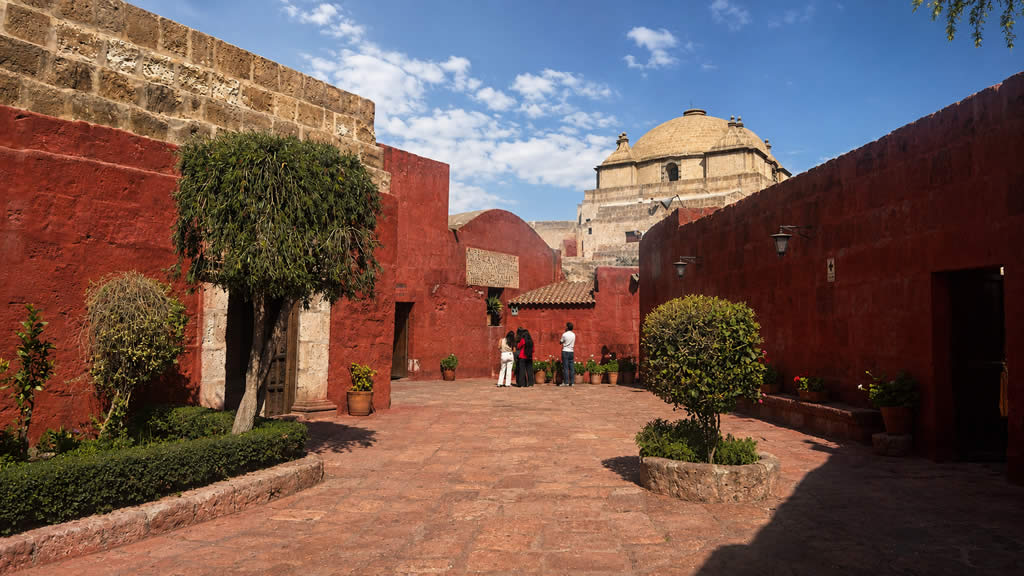
When you are entering to the monastery, the intense colored walls stand out at first glance. According to the Architect Marizol Velasquez Gutierres (specialty in art), the color used in the architecture of the Santa Catalina Monastery is not the natural color of the material (ashlar stone), but the color based on pigments that has the property of changing its appearance (wall painting).

“According to its use, it can be classified as flat wall painting and decorative wall painting. In the Monastery of Santa Catalina  coexist both, inside and outside the spaces, which configure it as an urban complex “

The colors that we can find in the monastery are indigo, blue, predominantly in the cloister of the Naranjos, the red ocher color for most of the streets, the white color for the novitiate cloister and the interior of the cells, the color orange ocher for the entrance and the main cloister, among others.

Velasquez Gutierrez also indicates this image was not always the same over time, because the quality of the color allows changing the appearance of the architecture according to fashions, remodeling, extensions, maintenance and also for health reasons, as evidenced in the polychromies hidden in the walls.

On the other hand, the decorative wall paintings of the interiors contain religious and floral designs and are the result of technical, social, historical and environmental facts.

How to visit Santa Catalina Monastery:

From March 1 you can visit the monument in the following ways:

1.- Virtual Tour: Virtual Tour with 7 chapters about its history. You can book a virtual visit of the place through the official website of the Monastery of Santa Catalina.

It is a way to anticipate the excitement of your next visit in which you can directly appreciate the majesty of the place.

2.- Direct visit to the Monument: From March 1st you can visit the Monastery with a fixed date and hour using the service of booking of the Monastery website.

*If you want to book a specialized guide please call 958 348 214

Open: Monday to Saturday from 09:00 to 17:00. – * LAST ENTRY 4:00 p.m.

Closed to the public  Easter Friday, December 25 and January 1


IMPORTANT INFORMATION – COVID -19

The Monastery of Santa Catalina has developed a strict biosafety protocol, to enjoy a safe and pleasant visit. You can read all the protocolo here .

The sale of tickets will be online and with reservation of time. Payments can be made with Visa, Mastercard, American Express, Dinners Club, Unionpay and Maestro.

Giardino Tours Blog

@GiardinoToursPeru

#ITravelwithGiardino #OneTripManyExperiences


Sources

Gutierrez, M. V. (27 de Enero de 2020). Universidad Catolica San Pablo.
Monasterio de Santa Catalina. (septiembre de 2020). Monasterio de Santa Catalina.
Lonely Planet_ArequipaOther Links:

Colca canyon Travel Guide: 7 Questions about Colca Tours

Peru Private Tours: 7 fantastic reasons to take a Private Service

Arequipa Treasures: Salinas and Aguada Blanca National Reserve

5 FacebookTwitterPinterestEmail
FeaturedPeru Great Destinations

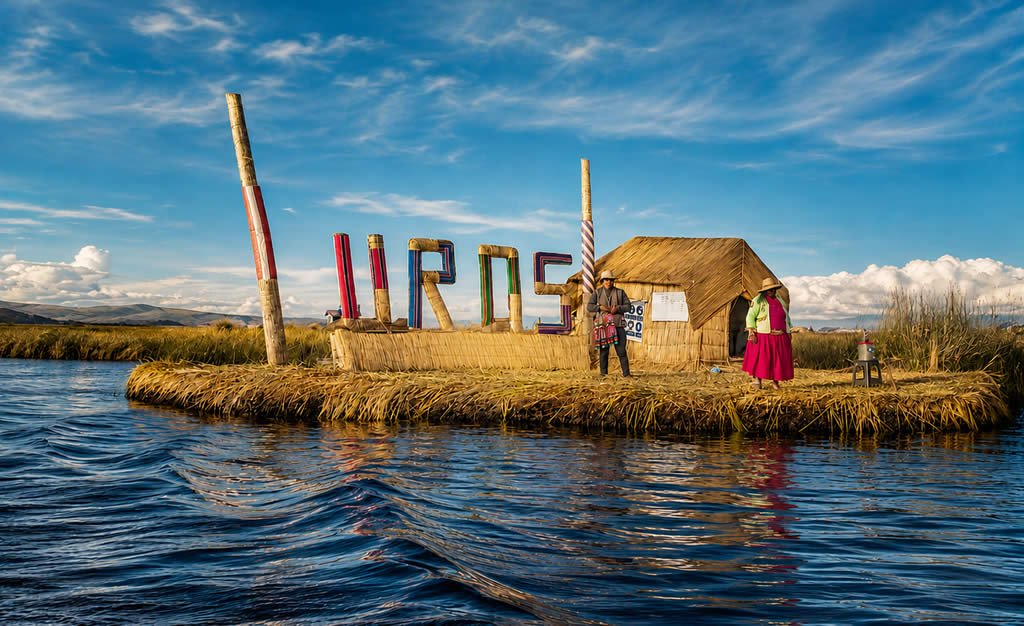
Discover Uros, the floating islands on lake Titicaca and how to book a Tour

by Giardino Tours February 24, 2021
The floating islands of UROS are located inside the bay of Lake Titicaca only 14 Km. (about 9 miles) away from the city of Puno (20 to 30 minutes of navigation time). These human-made islands constructed from reeds are without doubt one of the fascinating half-day Tours from Puno on Lake Titicaca. – Perú.
How the islands are made?

The floating islands are constructed from many layers of the totora reeds, which are constantly replenished from the top as they rot from the bottom, so the ground is always soft and dry as much as possible. (When you visit the islands please be careful not to put your foot through any rotten sections!)

Nowadays, the reeds are still very important material for the Uros. They eat the reeds, build boats and houses with them, feed their few animals with reeds, and they use the reeds to make fire and cook.

We can say that the Totora are the backbone of Uros’ life.

Each islet is home to between one and ten Uros families. Also in some islets children are able to attend kindergarten and elementary school . However, older children must continuing their education in Puno city.

That make the future of Uros, their traditions and way of life uncertain.

Origen of the name

“URU” was the name of a very particular ethnic group that co-existed in lake Titicaca with the Inkas, Aymaras and possibly with older civilizations.

Today some theories claim that in the name “Uru” derives from the Pukina language; (also spelled Puquina) and it is already mentioned that this may have been the native and secret language of the Incas, and has remained hidden for hundreds of years.

The first clue to this language is given by the Inca Garcilaso de la Vega in his Royal Comments. In this work, the author tells us the following:

“The Incas had another particular language that spoke between them, that the other Indians did not understand it nor was it lawful for them to learn it, as divine language,”

He also adds that according to information from their sources, this language “had been totally lost, because, The particular republic of the Incas perisched and their language perished too.“

According to documents it is known that the Spanish Empire decreed in 1575 as the official languages of the kingdom of Peru, three languages: Quechua, ayumara and puquina. Languages that were to be learned primarily by Spanish priests for evangelizing purposes.

Rodolfo Cerrón Palomino, Peruvian linguist, explains that the Spanish people had a quite pragmatic approach. So, seeing that the mayority of people already spoke Quechua or Aymara, they did not see the use in creating documents in Pukina language. “We lost a great opportunity to have materials for this language,” laments Palomino.

The Uros People

In fact, it is believed that the Uros people were one of the first ethnic groups populating the Andean region. Contrary to the claim by many authors that the Uros’ ethnic group is extinguished; a recent study of the genetic structure of the Quechua and Aymara groups of lake Titicaca has found that today’s UROS people preserve part of the original gene of ancient Uros.

These people were simple fishermen, bird hunters and recoletc eggs from the reeds and preferred to remain isolated from the other civilizations. Their search for isolation may be one reason why they decided to live in mobile boats on the lake.

When the Spanish chroniclers encountered the UROS by the end of the XVI century, the UROS people were still living on the lake in small reed-boats that they used as floating houses. Only in the early 60s, the Uros started to build small artificial islands with reeds for bigger homes.Today the Uros Islands are floating on the Peruvian side of Lake Titicaca, a few miles from Puno city. On the past the islands used to be closer to the middle of the lake Titicaca, but they moved or rebuilt the islands closer to the shore after a devastating storm in 1986.

Uros is a gem on Titicaca lake; thanks to existing Uros people, we can still imagine and appreciate the way of life of an ancient ethnic group on the Andean area of Lake Titicaca.

How to book the Tour to Uros Islands
  • The best way to visit the Uros Islands is a guided tour from Puno city. All guided tours depart to Uros every day specially during dry season.
  • Most boats depart in the morning between 7 and 8 AM. The ride take about 20 minutes to the islands.
  • The city of Puno is easily accessible from Cusco, Arequipa, and La Paz, Bolivia.
  • Cusco and Puno are well connected with transportation options. From Arequipa, Colca Canyon tours can continue onto Puno by van. Buses run daily to and from La Paz.
  • Each tour of Uros begins with a demonstration on how the islands are made. After that, the islanders invite their guests to visit a home built from the same Totora reeds.

The islanders always present their handicrafts to tourists towards the end of each tour. While some visitors find this annoying, it is important to keep in mind that a large percentage of their income comes from selling souvenirs to tourists.

Travel Tips

  • The best time to visit the Uros Islands is during the dry season from April to November.
  • Bring your passport for a souvenir stamp on one of the main islands (additional cost of 1 sol per stamp).
  • Each tour to Uros Islands visits two islands. IN the tour you will have the option to take a handmade reed boat from first island to the second island (15-20 minute ride). This boat ride costs an additional 10 soles per person. This payment goes directly to the family that owns the boat.
  • Important: Remember that Uros Islands and Lake Titicaca sit at 12,500 feet (3,810 meters) above sea level. It is best to acclimatize by first visiting cities in lower altitudes such as Arequipa or Cusco before heading to Lake Titicaca.
  • Fort he Tour to Uros and specially for tours in the andean area; bring sun protection, warm layers, comfy shoes.
  • The best time to depart on Tours to Lake Titicaca is in the morning. Therefore, we recommend staying in a Puno hotel one night before visiting the lake.

Giardino Tours

Fuentes:

Wikipedia / www.pucp.edu.pe / Lonely Planet@GiardinoToursPeru

#ItravelwithGiardino #OneTripManyExperiences

3 FacebookTwitterPinterestEmail

More Articles/Más Artículos

  • Colca Canyon Tour: Introducing the awesome Colca Canyon
  • Peru Trip: Altitude mountain sickness and 6 easy tips to avoid it
  • Peruvian Carnivals: Magic, culture & celebration
  • Arequipa Tour: 2 surprising curiosities about this destination!
  • Colca Sour: An unique Cactus cocktail
  • Peru 2 love’s story tellings and myths
  • Enigmatic Sillustani & best way to book a Tour
  • Amazing Tour Maras Salt ponds in Cusco (Virtual)
  • Tips for a Responsible Peru Travel Experience!
  • Colca canyon Travel Guide: 7 Questions about Colca Tours
  • Facebook
  • Twitter

@2021 - All Right Reserved. Designed and Developed by PenciDesign


Back To Top
Giardino Tours Blog
  • Go to Giardino Tours
  • English
  • Español