Top Posts
Cusco Tour: 3 differences between Machu Picchu, Mountain...
Quechua Travel Words: Useful words for a great...
Tour Arequipa: The fascinating stone city of Choqolaqa
Tour Arequipa: Stunning Salinas and Aguada Blanca N.R....
Protecting Our Planet Starts with You – 9...
8 highlights of Arequipa – Tips to enjoy...
FOOD in Arequipa: 8 delicious Dishes that Are...
Embroidery in the Colca Valley a Cultural Heritage...
The interdimensional gate Aramu Muru. Fascination & mystery.
Pacaya Samiria Reserve: A world destination not to...
  • Go to Giardino Tours
  • English
  • Español
Giardino Tours Blog
TRANSFORMING TRAVELS INTO MEMORABLE STORIES
Tag:

Adventure

FeaturedPeru Great DestinationsTravel Tips

Cusco Tour: 3 differences between Machu Picchu, Mountain & Huayna Picchu

by Giardino Tours February 4, 2025

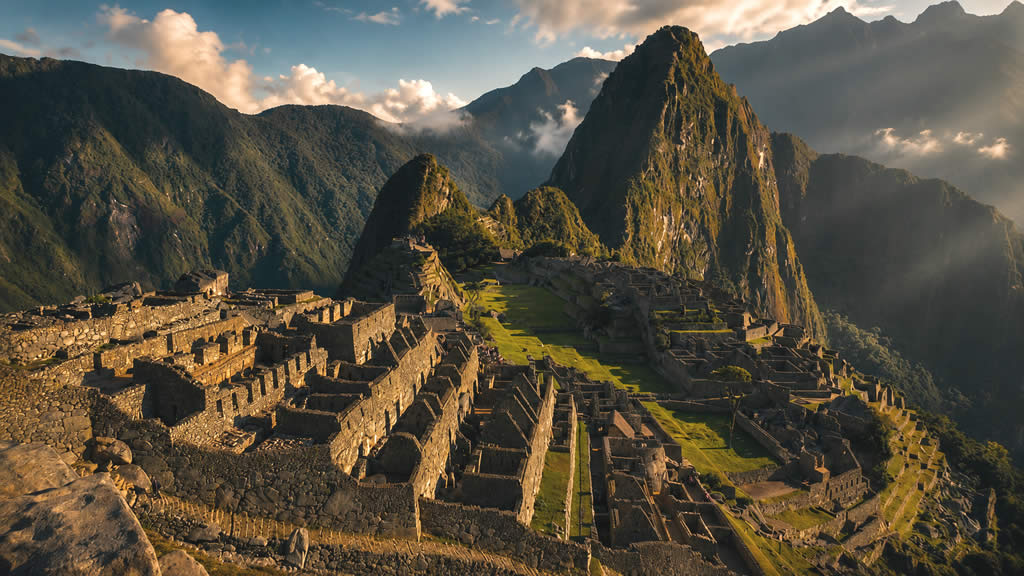
Today there are different concepts about entrances when you want to visit Machu Picchu that oft lead to some confusion to our travelers, here we explain you the differences:[penci_fancy_heading _text_align=”left” p_title=”Citadel or Sanctuary (LLaqta):” turn_on_title=”yes” _title_typo=”font_family:%3A” _title_fsize=”20px” _subtitle_typo=”font_family:%3A” _desc_typo=”font_family:%3A” title_color=”#3cc154″][/penci_fancy_heading]The Citadel or Sanctuary of Machu Picchu, are the Inca ruins itself, this is what we see in all pictures, that have made this Peruvian attraction so famous. There are buses from Machu Picchu Pueblo that take you to the entrance of the Sanctuary, where you will check your entrance ticket according to your booked schedule.
The citadel is located to 2.490 meters high and takes the name of the “Mountain” where it is located; in other words, the name of the “citadel itself“ still unknown.[penci_fancy_heading _text_align=”left” p_title=”Huayna Picchu Peak:” turn_on_title=”yes” _title_typo=”font_family:%3A” _title_fsize=”20px” _subtitle_typo=”font_family:%3A” _desc_typo=”font_family:%3A” title_color=”#3cc154″][/penci_fancy_heading]The famous Huayna Picchu peak is one of the mountains that is located in front of Machu Picchu citadel, and which can be climbed using a path that departs from the Citadel itself.
At the top there are some ruins and you will have an amazing view of the citadel and the area and if you want more, there is also another trail up to the temple of the moon.
This mountain is located to 2,720 mts and is only allows the entry of 400 people per day, in two groups of 200 persons (07:00 AM and 10:00 AM). For this reason the tickets must be bought in advance. The ascent takes approximately two hours, and the trail to the temple of the moon, or the Great Cavern, are about 4 hours.

Some facts:

  • It is known as the ‘Young Mountain’. Walking along its trails is recognized as one of the most incredible short walks on the planet.
  • The trails are steep and narrow. They were built on one side of the mountain. They can be terrifying for people afraid of heights.
  • If you suffer from vertigo or acrophobia, it’s best to avoid to walk to this mountain.

[penci_fancy_heading _text_align=”left” p_title=”Machu Picchu Mountain:” turn_on_title=”yes” _title_typo=”font_family:%3A” _title_fsize=”20px” _subtitle_typo=”font_family:%3A” _desc_typo=”font_family:%3A” title_color=”#3cc154″][/penci_fancy_heading]Now you know that the “Inca city” is located on the mountain of Machu Picchu at 2,490 meters; but the mountain has an altitude of 3.061 meters. So now you have the possibility to walk to the TOP of the Mountain “Machu Picchu”.
From there the view is also spectacular and has the big advantage that allow 600 persons per day in 2 time schedule 09:00AM and 10:00AM, still not so popular as Huayna Picchu peak so the tickets do not run out so fast; but an incredible view is guaranteed.[penci_fancy_heading _text_align=”left” p_title=”¿Aguas Calientes = Machu Picchu Pueblo?” turn_on_title=”yes” _title_typo=”font_family:%3A” _title_fsize=”20px” _subtitle_typo=”font_family:%3A” _desc_typo=”font_family:%3A” title_color=”#3cc154″][/penci_fancy_heading]Aguas Calientes, currently known as Machu Picchu Pueblo; It is the nearest town to the ruins. This town can only be reached by train or by walking. This is the town where the trains arrive from Cusco or Ollantaytambo for the tour to Machu Picchu, there are hotels for visitors, restaurants and you can do some shopping.
Now! From Machu Picchu Pueblo are the departures of the buses that drive up to Citadel, This drive takes about 20 to 25 minutes. Machu Picchu Pueblo is located at 2,040 meters and its name before (Aguas Calientes = Hot water) comes from the hot springs that are close to the town.

Machu Picchu:

The citadel of Machu Picchu is maybe the main reason that thousands of visitor travel to Peru and also appears in the top destinations list by U.S. News.

It is ranked as the eighth best place to visit. Machu Picchu was discovered by Hiram Bingham in 19, the ruins are today part of the UNESCO World Heritage sites, and since 2007 is one of the New Seven Wonders of the world.
2 FacebookTwitterPinterestEmail
Peru Great Destinations

Tambopata National Reserve: How to visit this amazing destination

by Giardino Tours March 22, 2021

The Tambopata National Reserve is the dream place for any nature lover, It is one of the most precious biodiverse areas of our Peru.

The Tambopata National Reserve (RNTMB) is located south of the Madre de Dios River in the Tambopata and Inambari districts of the Tambopata province, in Madre de Dios department. It has an extension of 274 690.00 hectares and its most common ecosystems are aguajales, swamps, pacales and river side forests, whose natural characteristics allow local people to take advantage of natural resources.

Tambopata is home of 632 species of birds, 1200 species of butterflies, 169 species of mammals and hundreds of species of trees and plants. On the other hand, it is also home of many local communities such as the Ese Eja native community with thousands of indigenous families residing in that place.

We present here the best-known tourist routes for Tambopata Natural reserve.

Sandoval Lake

This is the most visited tourist destination in the Reserve and with good reason.

If your plan is to spend a relaxing moment full of peace and connection with nature, this lake is the perfect destination. It is considered the most beautiful lake in the Peruvian jungle with 3 km long by 1 km wide and a depth between half a meter and 3 meters.

In its waters you will find a large family of giant otters that can be seen hunting or resting on the logs. There is also an observatory tower for a panoramic view and due to its richness of mangroves and palm trees you can observe a large number and variety of birds that makes the place a truly paradise.

Macaw clay lick

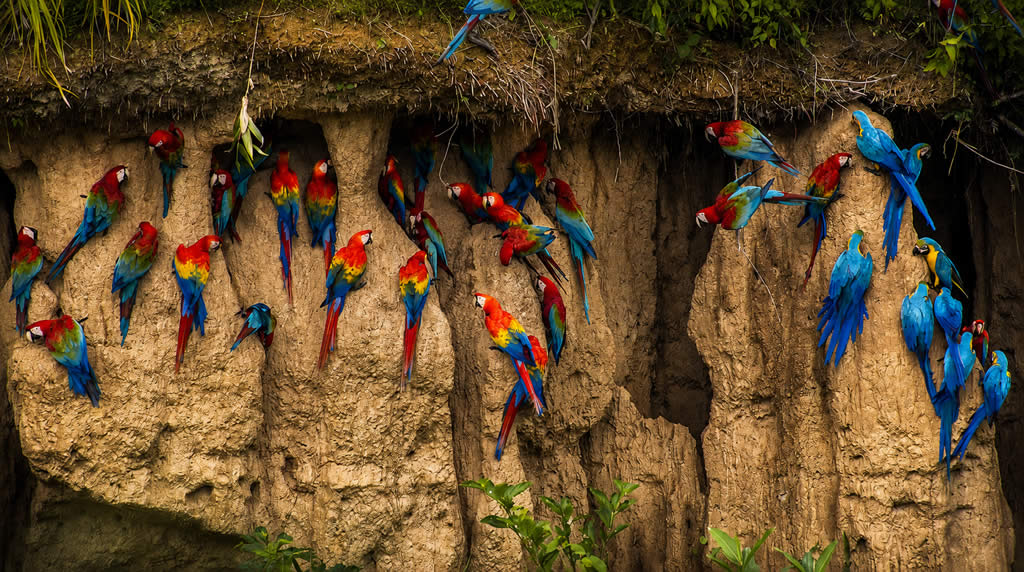
Who has not shared in Instagram photo where the Macaws are stapled to the wall and are a feast of colors? – Well in this Collpa you can live the experience live and make it one of “your photos”.

This visit to the Macaw Clay Lick offers an impressive show of color and sound (Special between 5:30 and 9:00 am). The clay licks are low cliffs caused by the erosion of the rivers which exposes mineral salts and organic components which are used by the great diversity of macaws and parrots as a complement to their diet.

There are several clay licks, but the best known and frequented by travelers are “El chuncho” and “Colorado”, their access is by river (canoe) and along the way you also will enjoy the diversity of the nature observing sachavacas, ronsocos, squirrels, monkeys and others.

Indigenous communities

The best thing about traveling is getting to know new cultures and traditions. The communities that inhabit this reserve are already partly used to the visitors and many of their members are part of the reserve’s protection programs.

With the communities we will be able to share their traditions and culture in a respectful way, thus living a very pleasant experience. Within these communities are the Eje Esa, the Harakbut and the Matsigenka, among others.

Activities:

The reserve offers programs of all kinds and for all types of travelers: Specialized tourism, family tourism, programs for children, adventure tourism, botanical, etc .

The reserve offers everything that a nature and adventure lover loves: walks, river rides, search for the river wolf, piranha fishing, talks for children about Biodiversity, night walks, Observatories, bike rides etc . Check here the activity offers of some of the most sustainable Lodges and choose the one you like the most.

How to visit and what should I consider for a healthy experience in Tambopata Natural Reserve?

The first thing you should do is find out about the lodges, research centers and Lodges that offer complete sustainable programs within the reserve.

Remember that it is important that your trip does not generate a negative impact, but rather helps us to promote responsible tourism.

We as travelers have great power “Your trip with the right company not only gives you a spectacular experience, but also contributes to making the reserve sustainable and protected.

The starting point is the city of Puerto Maldonado (From Lima and Cusco you can arrive by plane) Once there, a representative of the Lodge where you have made your reservation, will be waiting for you to transfer the boat to your respective Accommodation and thus start to your purchased program.

  • Tour Programs in the Jungle normally include Full board service, so it is important that you bring with you only what you need for the excursions and personal medication.
  • Electric power in most lodges is operated by generators that are turned on in the morning, around lunch, and for dinner. When you arrive at your hostel, the staff will inform you the electricity time schedule. Do not forget that the 0 V voltage will not work in Peru, in Peru we use the 220V.
  • The Weather conditions in general is hot and humid. In Tambopata, the average daytime temperature is between 78F and 93F (24C and 31C). The nighttime average is between 66F and 78F (20C and 24C).
  • Most travel agencies or Lodges have an office in Puerto Maldonado where you can leave the luggage that you do not want to take with you for the expedition in the jungle.
  • Also a great tip is to bring spare batteries (we recommend that you bring 3 spare batteries).
  • Make sure you have enough storage on your card, because most people take more photos than what they expect.
Due to the pandemic, all lodges in the Amazon forest now must apply a strict bio-security protocol. Please check direct with your lodge or with your travel consultant  about this information and verify that the regulations are being followed.
It is important to take care not only of your health, but also the health of all people in the communities that you’ll visit.

Check here our Travel List and Tips for a Trip to Peru with all Information that you will need before the trip ;)Ready to visit Tambopata? – An amazing experience is waiting for you!

Giardino Tours – Blog


#ITravelwithGiardino #OneTripManyExperience


Sources:

Monica. (23 de febrero de 2020).  / Sernap: Reserva de Tambopata.


Other links that may interesting for you:

Peru Packing List post Covid-19: 5 Items that You Need to take to your Peru Trip

Tips for a Responsible Peru Travel Experience![vc_gmaps link=”#E-8_JTNDaWZyYW1lJTIwc3JjJTNEJTIyaHR0cHMlM0ElMkYlMkZ3d3cuZ29vZ2xlLmNvbSUyRm1hcHMlMkZlbWJlZCUzRnBiJTNEJTIxMW0xNCUyMTFtOCUyMTFtMyUyMTFkNTY5MzkzMi41MjE4NzMwNTElMjEyZC03My4zMjI4NzczNzAzMjUlMjEzZC05Ljc3ODQzNTI2MzcyNzAxMiUyMTNtMiUyMTFpMTAyNCUyMTJpNzY4JTIxNGYxMy4xJTIxM20zJTIxMW0yJTIxMXMweDAlMjUzQTB4NjlkNzc4MmM2ZTRiNjU5OCUyMTJzUmVzZXJ2YSUyNTIwTmFjaW9uYWwlMjUyMFRhbWJvcGF0YSUyMTVlMCUyMTNtMiUyMTFzZW4lMjEyc2RlJTIxNHYxNjE2NDE1MTk1NTc2JTIxNW0yJTIxMXNlbiUyMTJzZGUlMjIlMjB3aWR0aCUzRCUyMjYwMCUyMiUyMGhlaWdodCUzRCUyMjQ1MCUyMiUyMHN0eWxlJTNEJTIyYm9yZGVyJTNBMCUzQiUyMiUyMGFsbG93ZnVsbHNjcmVlbiUzRCUyMiUyMiUyMGxvYWRpbmclM0QlMjJsYXp5JTIyJTNFJTNDJTJGaWZyYW1lJTNF”]

5 FacebookTwitterPinterestEmail
Peru Great Destinations

Taquile Island: Details and great Tips for your Tour

by Giardino Tours March 1, 2021

Taquile Island, another jewel of Titicaca Lake

Set within Lake Titicaca, Taquile Island has a colorful history and a distinct culture.

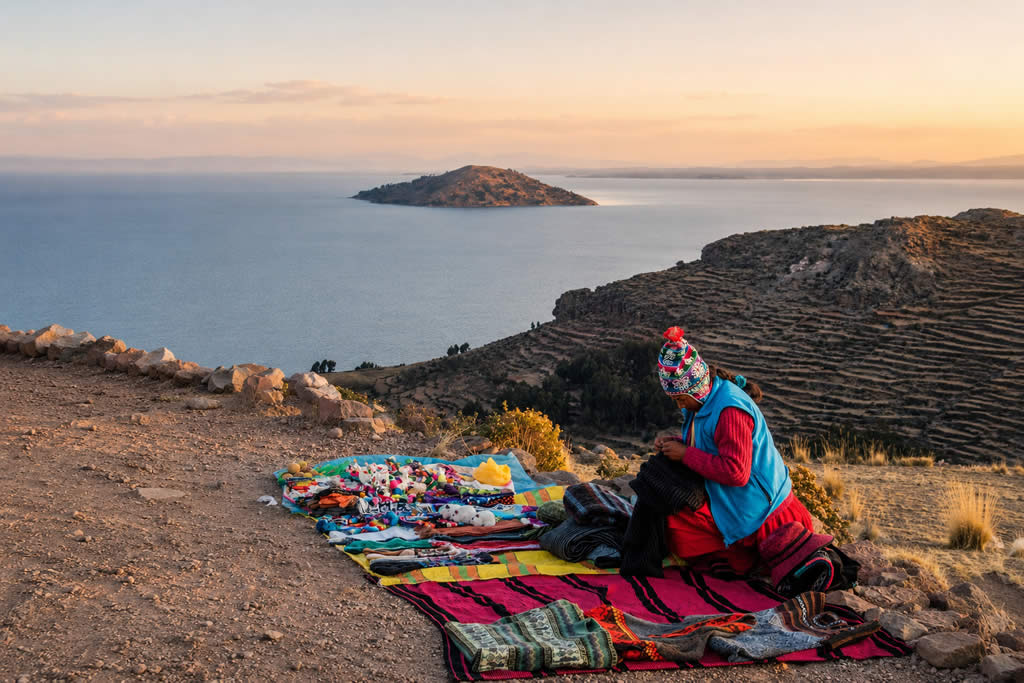
Taquileans are so well-known for intricate and well-made handwoven textiles that in 2005 the United Nations Educational, Scientific and Cultural Organization (UNESCO) declared them to be a “Masterpiece of Oral and Intangible Heritage.” These textiles are a character-defining element of their culture .

Taquile: Nature, culture and knitters

Taquile island is home of a Quechua population of about 2,000 people who are mainly farmers, fishermen and above all renowned weavers.

By the age of seven, boys are proficient knitters. In fact, the entire family is involved in knitting or weaving. Children knit “chullos” (hats), gloves and finger puppets of condors and llamas, common animals of the Andes. Women hand-spin the soft fleece of the sheep and alpaca into fine yarn for sweaters and blankets.

The island offers beautiful landscapes of hills, stone archways and, of course, the blue water of lake Titicaca around it.

The locals grow crops like corn, beans and quinoa on the pre-Incan terraces that cover its hilly terrain. Thanks to a largely vegetarian diet, the locals are said to live an average of 90-100 years.

The island is largely untouched by modernity with not even a bicycle to be seen in the island.

In July, villagers observe the Feast of Santiago Apostol with music and dancing. Whether celebrating weddings or religious holidays, there is always a reason to enjoy the folk music and dance that is an important part of island life.

Taquileños run their society based on community collectivism and on the Inca moral code „ama sua, ama llulla, ama qhilla“ (Quechua for “do not steal, do not lie, do not be lazy”).

The island has a radio station and is equipped with generators. Islanders have elected to use solar panels to generate energy.

Location:

Taquile Island is located 36 Km (22 miles) away from the city of Puno. It takes a 2 and half-hour boat ride to arrive in the island’s main dock.

The island highest elevation is 4100 m (13451 feet); it has a length of 5 Km (3.10 miles) and a width of 1.5 Km (0.93 miles). To walk across the island takes about two hours.

Tours to Taquile island

You can enjoy Taquile in 2 forms:

A full day Excursion:

These tours has a departure in Puno and begin with a visit to the floating island Uros before continuing to Taquile.

During the visit to Taquile visitors follow enjoyable paths that gradually take them to the main village or to other more remote sectors of Taquile. These other paths of access to the main village allow you to catch spectacular views of Lake Titicaca.

Many tours try to avoid climbing up the 535 stairs that take the visitors to the main village, but it is unavoidable to walk the stairs down to go back to the main dock.  So it is very important you have a good physical condition and good boots to walk.

Also a demonstration of traditional Andean weaving is the highlight of this visit.

A 2 days Excursion with a Overnight in Taquile:

If you decide for an overnight experience in Taquile Island,  (Normally with a previous visit to Uros floating islands) you can take your time and visit interesting sights with a host family, such as monuments to Pachamama (Mother Earth) , which are especially fascinating during Taquile’s wild festivals.

Enjoy the sunset and sunrise. 😉

Staying with a family gives you the chance that a local family will open its doors to you and you’ll get a glimpse into the Taquile lifestyle and the family’s dynamics, all topped off with a delicious homemade meal.

Additionally, you must know that the island’s tourism is operated exclusively by its inhabitants, so you’ll get first-hand knowledge from locals who know the area.

We highly recommend that you book your tours with a serious and formal travel agency. Please get informed about the company where you are going to take your tour in order to ensure that the tours are realized in a sustainable way and if handling is in accordance with the respect of the local rules and activities of the island.

@GiardinoTours

#ITravelwithGiardino #OneTripManyExperiences

3 FacebookTwitterPinterestEmail
FeaturedPeru Great Destinations

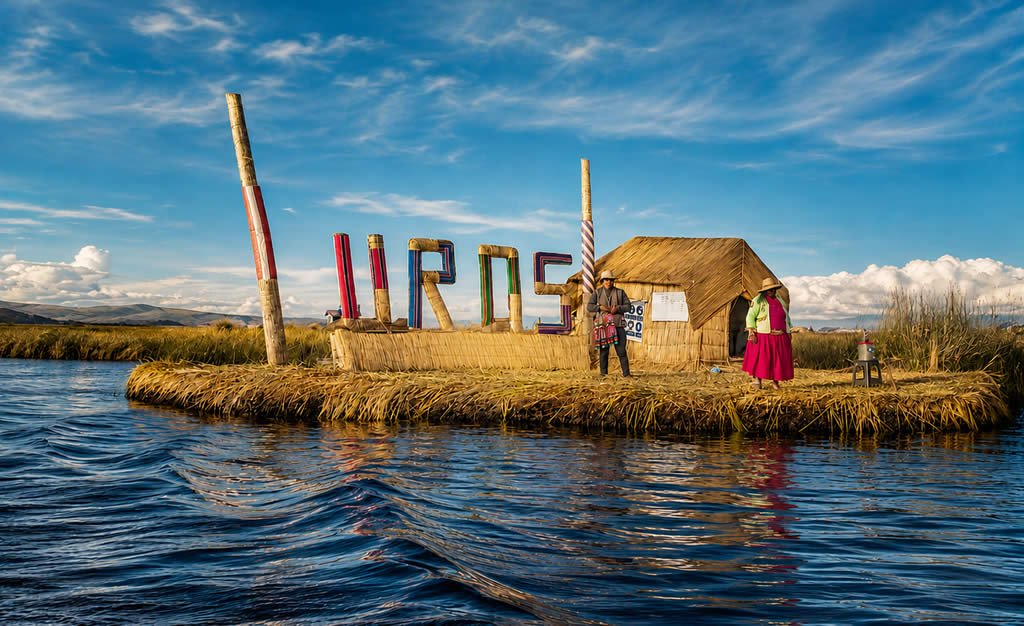
Discover Uros, the floating islands on lake Titicaca and how to book a Tour

by Giardino Tours February 24, 2021
The floating islands of UROS are located inside the bay of Lake Titicaca only 14 Km. (about 9 miles) away from the city of Puno (20 to 30 minutes of navigation time). These human-made islands constructed from reeds are without doubt one of the fascinating half-day Tours from Puno on Lake Titicaca. – Perú.
How the islands are made?

The floating islands are constructed from many layers of the totora reeds, which are constantly replenished from the top as they rot from the bottom, so the ground is always soft and dry as much as possible. (When you visit the islands please be careful not to put your foot through any rotten sections!)

Nowadays, the reeds are still very important material for the Uros. They eat the reeds, build boats and houses with them, feed their few animals with reeds, and they use the reeds to make fire and cook.

We can say that the Totora are the backbone of Uros’ life.

Each islet is home to between one and ten Uros families. Also in some islets children are able to attend kindergarten and elementary school . However, older children must continuing their education in Puno city.

That make the future of Uros, their traditions and way of life uncertain.

Origen of the name

“URU” was the name of a very particular ethnic group that co-existed in lake Titicaca with the Inkas, Aymaras and possibly with older civilizations.

Today some theories claim that in the name “Uru” derives from the Pukina language; (also spelled Puquina) and it is already mentioned that this may have been the native and secret language of the Incas, and has remained hidden for hundreds of years.

The first clue to this language is given by the Inca Garcilaso de la Vega in his Royal Comments. In this work, the author tells us the following:

“The Incas had another particular language that spoke between them, that the other Indians did not understand it nor was it lawful for them to learn it, as divine language,”

He also adds that according to information from their sources, this language “had been totally lost, because, The particular republic of the Incas perisched and their language perished too.“

According to documents it is known that the Spanish Empire decreed in 1575 as the official languages of the kingdom of Peru, three languages: Quechua, ayumara and puquina. Languages that were to be learned primarily by Spanish priests for evangelizing purposes.

Rodolfo Cerrón Palomino, Peruvian linguist, explains that the Spanish people had a quite pragmatic approach. So, seeing that the mayority of people already spoke Quechua or Aymara, they did not see the use in creating documents in Pukina language. “We lost a great opportunity to have materials for this language,” laments Palomino.

The Uros People

In fact, it is believed that the Uros people were one of the first ethnic groups populating the Andean region. Contrary to the claim by many authors that the Uros’ ethnic group is extinguished; a recent study of the genetic structure of the Quechua and Aymara groups of lake Titicaca has found that today’s UROS people preserve part of the original gene of ancient Uros.

These people were simple fishermen, bird hunters and recoletc eggs from the reeds and preferred to remain isolated from the other civilizations. Their search for isolation may be one reason why they decided to live in mobile boats on the lake.

When the Spanish chroniclers encountered the UROS by the end of the XVI century, the UROS people were still living on the lake in small reed-boats that they used as floating houses. Only in the early 60s, the Uros started to build small artificial islands with reeds for bigger homes.Today the Uros Islands are floating on the Peruvian side of Lake Titicaca, a few miles from Puno city. On the past the islands used to be closer to the middle of the lake Titicaca, but they moved or rebuilt the islands closer to the shore after a devastating storm in 1986.

Uros is a gem on Titicaca lake; thanks to existing Uros people, we can still imagine and appreciate the way of life of an ancient ethnic group on the Andean area of Lake Titicaca.

How to book the Tour to Uros Islands
  • The best way to visit the Uros Islands is a guided tour from Puno city. All guided tours depart to Uros every day specially during dry season.
  • Most boats depart in the morning between 7 and 8 AM. The ride take about 20 minutes to the islands.
  • The city of Puno is easily accessible from Cusco, Arequipa, and La Paz, Bolivia.
  • Cusco and Puno are well connected with transportation options. From Arequipa, Colca Canyon tours can continue onto Puno by van. Buses run daily to and from La Paz.
  • Each tour of Uros begins with a demonstration on how the islands are made. After that, the islanders invite their guests to visit a home built from the same Totora reeds.

The islanders always present their handicrafts to tourists towards the end of each tour. While some visitors find this annoying, it is important to keep in mind that a large percentage of their income comes from selling souvenirs to tourists.

Travel Tips

  • The best time to visit the Uros Islands is during the dry season from April to November.
  • Bring your passport for a souvenir stamp on one of the main islands (additional cost of 1 sol per stamp).
  • Each tour to Uros Islands visits two islands. IN the tour you will have the option to take a handmade reed boat from first island to the second island (15-20 minute ride). This boat ride costs an additional 10 soles per person. This payment goes directly to the family that owns the boat.
  • Important: Remember that Uros Islands and Lake Titicaca sit at 12,500 feet (3,810 meters) above sea level. It is best to acclimatize by first visiting cities in lower altitudes such as Arequipa or Cusco before heading to Lake Titicaca.
  • Fort he Tour to Uros and specially for tours in the andean area; bring sun protection, warm layers, comfy shoes.
  • The best time to depart on Tours to Lake Titicaca is in the morning. Therefore, we recommend staying in a Puno hotel one night before visiting the lake.

Giardino Tours

Fuentes:

Wikipedia / www.pucp.edu.pe / Lonely Planet@GiardinoToursPeru

#ItravelwithGiardino #OneTripManyExperiences

3 FacebookTwitterPinterestEmail
Travel Tips

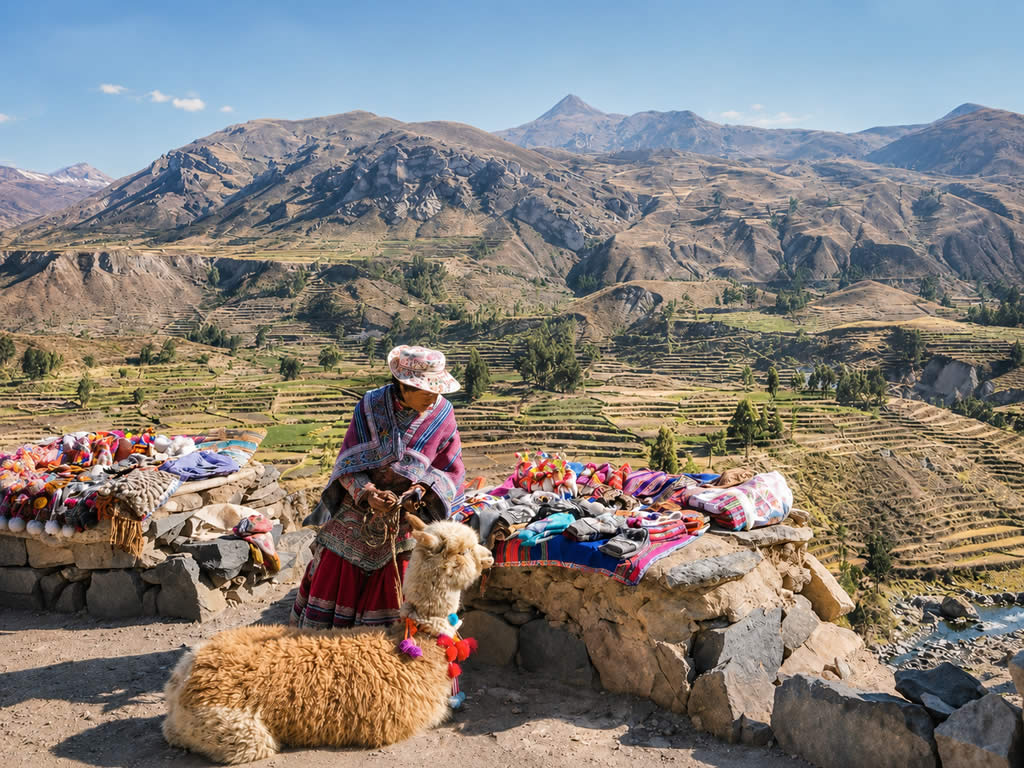
Colca canyon Travel Guide: 7 Questions about Colca Tours

by Giardino Tours February 17, 2021
Colca canyon Travel Guide:  Find here the answers to frequently asked questions when you organize your trip to the Colca Canyon in Arequipa; Perú.  Colca canyon information that You Really Need To Know.

1.- Will I see Condors?

The Colca canyon is the “best place” in South America to see the Andean Condor. In our Colca canyon tours we will visit different viewing points to increase the chances to experience them closely.  If you get lucky they will fly just above your head! Remember that there is no guarantee that the condors will be seen, but in most cases it is possible to observe them at close range. 🙂

2.- Can I continue by land from Colca valley to Puno on Lake Titicaca?

Yes, this is possible!  And it is the most recommended itinerary to save time, because you do not have to return to Arequipa city.

If you are traveling alone: The Buses depart from Chivay plaza every day between 12 to 13:30 PM (approximately). It is recommended that you buy your bus ticket one day in advance. You must be at the bus station at least 40 minutes before Bus departure.In our organized Colca canyon excursions: In our Colca Tours the last day (Second day or Third day depending on your type of tour) you will return to Chivay town about 12:00 PM where you will have time for your lunch before taking our Giardino Transport and keep driving to Puno city (With stops on the route for pictures).

This transfer to Puno could be organized also with a Tourist Bus Company that offers this service. The coordination and logistic will be in our hands, so you don’t need to be worry and only relax and enjoy the tour!

You will be arriving in Puno about 7:00 PM (19:00hrs) and the drop off will be in your hotel (If it is located in city center), if your hotel is located out side of city center an extra charge can be added for transfer to your hotel.

3.- Can I start the Colca canyon 2 days tour from Puno?

YES! This service is possible in our Colca Canyon exclusive private tours!

But in case you want to join  a Group tour to Colca canyon and you are in Puno city; we can manage this provinding you with a transfer or Bus ticket from Puno to Chivay town; where you can join the Group Tour and keep the tour program until Arequipa city.

The transport or Bus will pick you up from your hotel between 6:00 to 6:15 am arriving at Chivay town approximately at noon, where you will join our Colca canyon Classic Tours  and keep the program according to the itinerary.

The excursions will end in Arequipa city in your hotel.

4.- I do not want to take all of my luggage to the tour. Where can I leave my luggage?

For excursion to Colca canyon with return to Arequipa city, hotels and hostels will normally store luggage in their safety deposit for free until you check-in again in your return.

In case your trip keep forward to Puno city, please inform us at the time of the Tour reservation so we can organized you with a group with similar schedule and provide with a transport with enough luggage space.

5.- I am afraid about altitude sickness: Is it a problem?

Altitude sickness can catch many travelers and normally we recommend that clients stay at least one night in Arequipa city in order to help to get to altitude.

To drink Coca Tea the frist day that you arrive to Arequipa will be very helpful! Also it is important to avoid alcoholic drinks and try to drink a lot of water.

In our tours to the Colca canyon our transportation provides “oxygen” in case of need.

6.- I want to do a Trek into the Colca canyon  but I am not traveling with any camping equipment.

If you travel solo: If you want to get down to the canyon it is only important that you have a very good physical condition and good orientation. In some villages as well as in the area near the Colca river are basic lodges where you can overnight. The lodges also offer dinner and lunch.

It is important that you get information about the route, take some maps or a GPS. Please keep on the marked routes and close to the villages. Don’t look for an adventure on unmarked routes. We strongly recommend taking a local guide.

If you take our Trekking Tours: For our organized tour only a good physical condition and a light personal backpack are required. Walking shoes and personal items.
The overnights during tour take place in basic rustic lodges at the bottom of the Canyon (provide bed, blankets and bathroom).

But it can get cold at nights and there is not heating, so it is important that you take with you warms clothes for the night and also light clothes for the day because can get very hot. – Very good Trekking shoes or boots is important.

7.- Family trips to Colca Canyon: Is right to travel with kids?

YES! It is great!  The Colca Valley is ideal for families especially if you are traveling with children.

Most travelers focus on hiking or to observe the condors on the canyon walls. However, children can enjoy a lot exploring the traditional villas during the short walks, bathing in  the hot springs pools, feeding animals, helping on the farms or sharing activities with locals.This is an extraordinary way to learn and share what the speed of the city has taken away from us; the harmony of nature and the ability to amaze us!
Activities such as feeding baby alpacas, horseback riding, hiking, artisanal textiles, games etc. are offered in family programs to the colca valley.

Ready to travel to one of the most beautiful natural landscapes in Peru?

Colca Canyon Travel Guide_ Giardino Tours


@GiardinoToursPeru

#ITravelwithGiardino #OneTripManyExperiences

3 FacebookTwitterPinterestEmail
Culture & Traditions

Peru 2 love’s story tellings and myths

by Giardino Tours February 12, 2021

Love always contains a great mystery, because for each person, people and time love has been interpreted and manifested in different forms.

But today we are going to tell you about 2 romantic peruvian love’s story tellings related to ancient Peruvian traditions. These are popular stories in which fantastic or supernatural events are related, as if they were real events. Many of them are created by the community and are transmitted from parents to children, from generation to generation, that is why they are part of our culture and to the memory of Peruvians and are usually related to the beliefs and folklore of a certain region in Peru.

Love’s story tellings of Huascarán and Huandoy mountains.

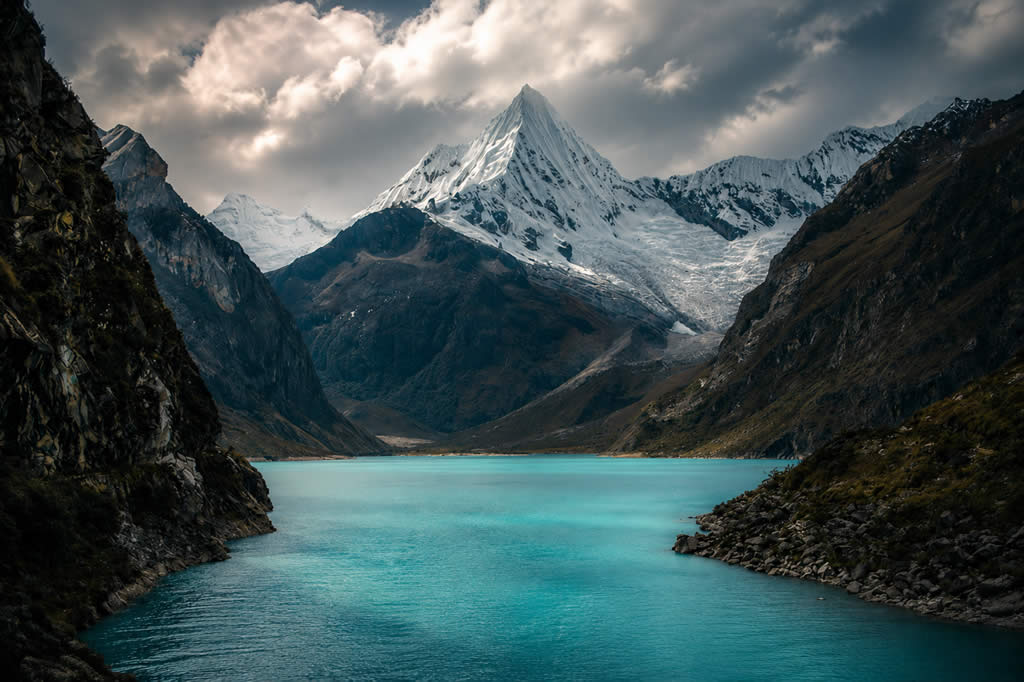
This romantic love’s story telling takes place in time of the Inca Empire, when the people of Cusco expanded their dominions through the Callejón de Huaylas. In this region (located in Ancash) there are more than 20 snow-capped peaks that exceed 6000 m.a.s.l. and the highest mountain in Peru and the intertropical zone is the Huascarán.
The legend said that there was a laborious and peaceful tribe in “Callejon de Huaylas” where one day a very badly wounded soldier arrived with a message to the Great chief. The man informed that some warriors from Cusco had sacked his town without mercy and that they were heading towards the village.
Looking at the situation the great chief ordered his warriors to go in search of the leader of the Cusco army, proposing a peaceful negotiation. And so it happened. Days later, the soldiers returned to the tribe with a Cusqueño warrior “Huáscar”, the most recognized warrior of the invading tribe of Cusco.Shortly afterwards, someday the strong Huáscar met on his path a beautiful young woman with long black hair, big eyes and a beautiful smile; she was the daughter of the great chief of the tribe; her name was Huandy.


As in every romantic story, the warrior Huascar and the beautiful girl fell in love, but this was a “forbidden” love. So the lovers decided to run away together.

Furious for the offense realized by Huascar and his daughter, the Great Chief ordered their capture. Once in prison, the great Chief humiliated them in public and then tied them to wooden logs, placed in such a way that they could see each other as they died.

The warrior Huascar hoped that his people (the Incas) would arrive and rescue them. However, when the Cusco army arrived, they supported the decision of the Great chief.
Without hope and prisoner of great impotence, Huascar swore revenge on all of them and thus both lovers began to cry full of pain. The legend said that both lovers cried until they were completely dry. From the tears of Princess Huandy, Lake Chinancocha was formed, also known as “the female lagoon” and from the tears of Huáscar, Lake Orcococha, also known as “the male lagoon”. (Also known as Lagunas Llanganuco)
The god “Inti” (the Sun) observing what happened and in pain also, sent a lot of rain, thunder, lightning and hailstorm to all the area. The legend said that it was so much and for so long time that the bodies of the lovers were covered, thus forming the snow-covered mountain Huascarán (for Huáscar) and the snow-covered mountain Huandoy (for Huandy) .

This love’s story tellings said specially among the local people of the Callejón de Huaylas, that in 100 or 200 years the snow-capped mountains will remain without snow and Huáscar and Huandy will resurrect and meet again to live their love forever. (Cardenas, 2020)

Love’s story tellings of the Huacachina oasis – Ica

In the middle of the coastal desert of the Pacific Ocean, in the Ica region, there is a beautiful oasis “La Huacachina”. A Oasis of green waters and around which there is abundant vegetation composed of palm trees, eucalyptus and huarangos, the same that are used for migrant birds that usually pass through This region.  That makes it one of the most beautiful and striking tourist spots in Peru, however, its beauty also contains a myth related to unconditional and infinite love.
Huacachina,means the “crying woman” in the Quechua language. The legend said that in this lagoon an Inca princess named Huacca China was born (Her name means “the one who makes people cry.”).They said that the princess fell in love with a young warrior of the empire who died shortly after they met. It is said that when the princess was informed of the tragedy, she went to the place where they had met for the first and c and cried intensely; then, while crying, she looked through her hand mirror and saw young man who was looking at her; the young man tried to get closer to her, but she got scare and began to run through the desert.According to legend, her clothes shaped the dunes that surround the oasis and the mirror got broken, giving shape to the lagoon.

After that the princess enters the lagoon and becomes a mermaid and the tradition tells that this mermaid appears every night on full moon to sing old songs to her lover.

Apart for knowing now these love’s story tellings, for sure now when you travel to Huaraz (Ancash) or to the Huacachina Oasis, you will look at every detail with different eyes …

And perhaps through the eyes of those “lovers”.


GIARDINO TEAM@GiardinoToursperu

#ItravelwithGiardino #OneTripManyExperiences

2 FacebookTwitterPinterestEmail

More Articles/Más Artículos

  • Colca Canyon Tour: Introducing the awesome Colca Canyon
  • Peru Trip: Altitude mountain sickness and 6 easy tips to avoid it
  • Peruvian Carnivals: Magic, culture & celebration
  • Arequipa Tour: 2 surprising curiosities about this destination!
  • Colca Sour: An unique Cactus cocktail
  • Peru 2 love’s story tellings and myths
  • Enigmatic Sillustani & best way to book a Tour
  • Amazing Tour Maras Salt ponds in Cusco (Virtual)
  • Tips for a Responsible Peru Travel Experience!
  • Colca canyon Travel Guide: 7 Questions about Colca Tours
  • Facebook
  • Twitter

@2021 - All Right Reserved. Designed and Developed by PenciDesign


Back To Top
Giardino Tours Blog
  • Go to Giardino Tours
  • English
  • Español