Top Posts
Quechua Travel Words: Useful words for a great...
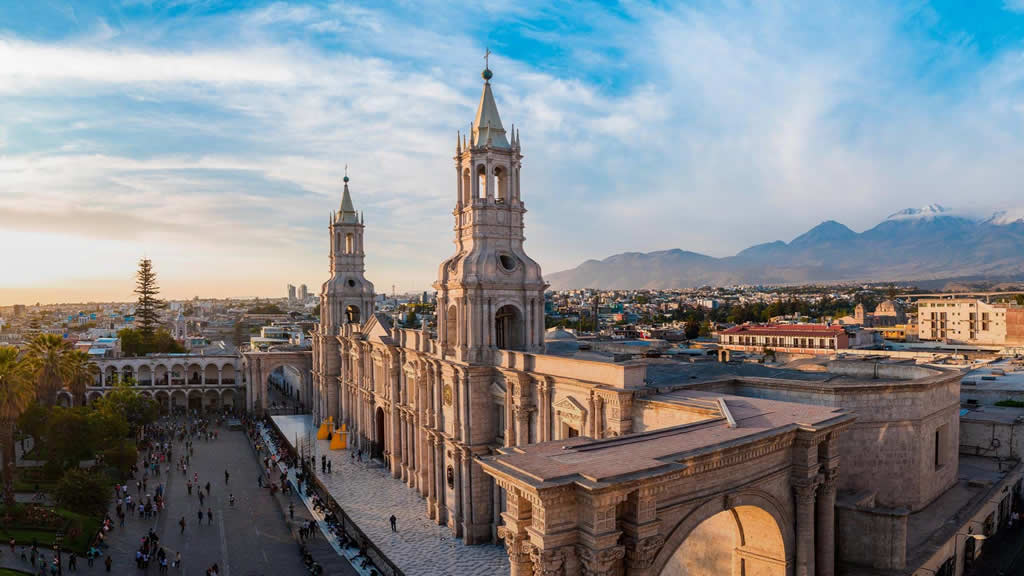
Tour Arequipa: The fascinating stone city of Choqolaqa
Tour Arequipa: Stunning Salinas and Aguada Blanca N.R....
Protecting Our Planet Starts with You – 9...
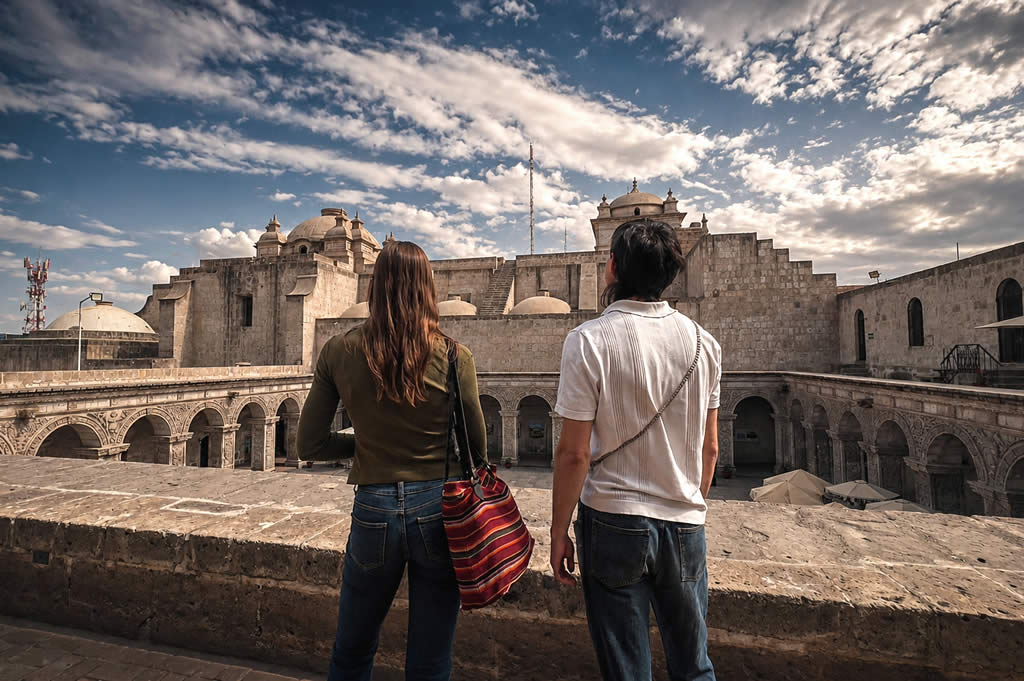
8 highlights of Arequipa – Tips to enjoy...
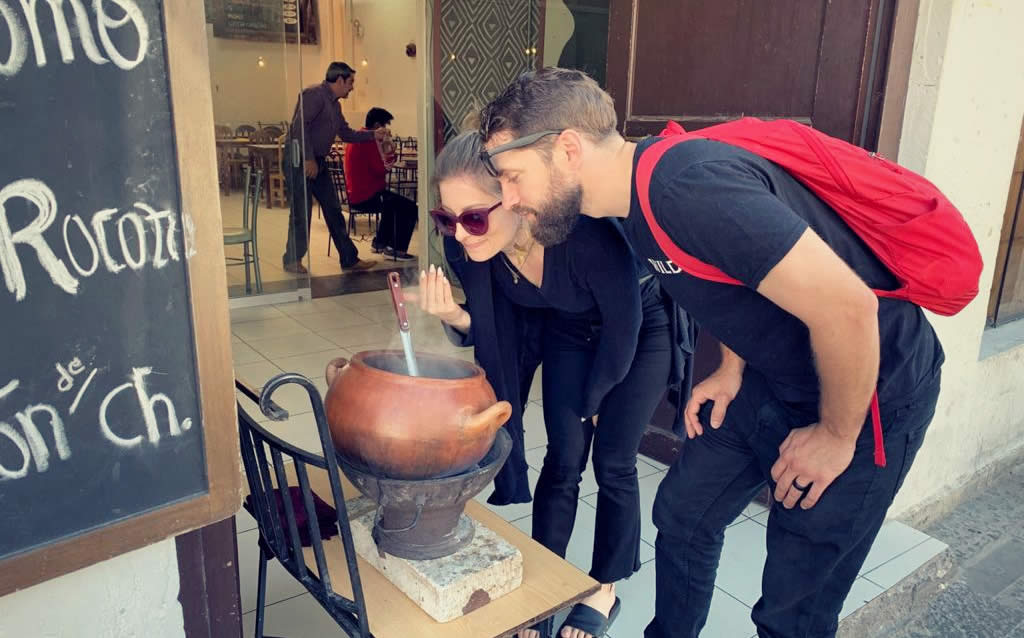
FOOD in Arequipa: 8 delicious Dishes that Are...
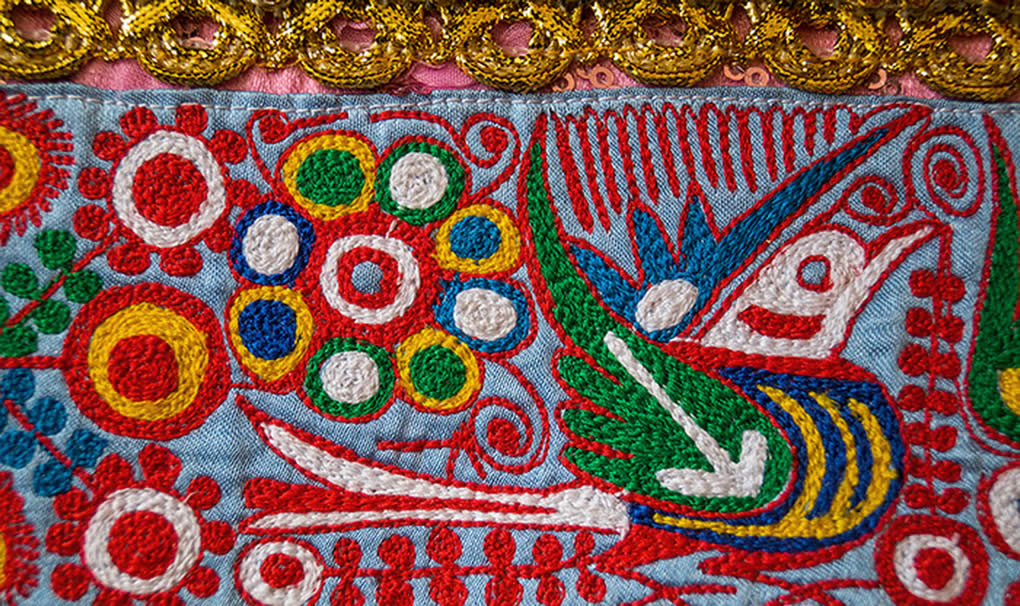
Embroidery in the Colca Valley a Cultural Heritage...
The interdimensional gate Aramu Muru. Fascination & mystery.
Pacaya Samiria Reserve: A world destination not to...
Tambopata National Reserve: How to visit this amazing...
  • Go to Giardino Tours
  • English
  • Español
Giardino Tours Blog
TRANSFORMING TRAVELS INTO MEMORABLES STORIES
Tag:

Arequipa

Peru Great Destinations

Tour Arequipa: The fascinating stone city of Choqolaqa

by Giardino Tours January 31, 2024

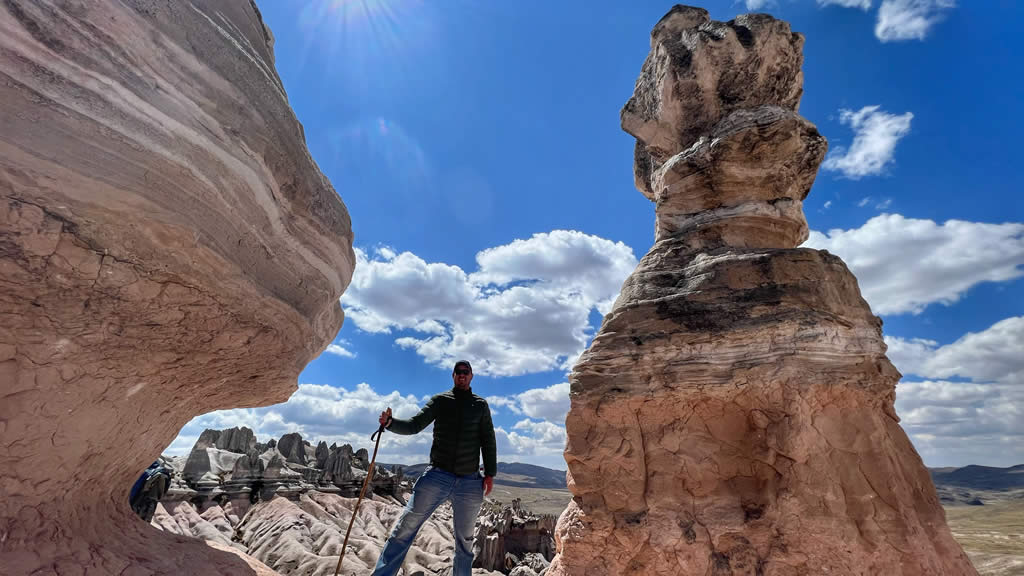
In Choqolaqa the capriciousness of nature and wind made shaped the gigantic rocks, that resemble figures of every conceivable form, which made this place an interesting destination for those who like to explore nature, and why not… a little bit of an adventure.

The journey starts from the city of Arequipa or Colca canyon and it is highly recommended that you travel to this destination with a serious Tour Operator.

Route from Arequipa to Choqolaqa

If you start from Arequipa the journey will go toward Tisco town, which is the closest village to the “Choqolaqa Geopark” and the drive takes approximately 5 hours. Tisco village has about 1850 inhabitants and is located at 4188 meters above sea level.

The Tisco village is a fascinating “journey into the past” where you can interact with the local vicuña breeders, walk through its traditional streets with their thatched-roof houses, or visit its beautiful colonial church dating back to the year 1650.

The hike to the stone city “Choqolaqa” from Tisco takes about 2 hrs, however if you are with a transport  it is possible that you drive closer to a view point from which the walk to the stones will be about  1 hr.

According to ancestral stories told by the locals, Choqolaqa was a city of large palaces, streets, avenues and zoos. But the locals also say that this city and its inhabitants disobeyed the “Apus” (The Gods) who therefore turned this whole city into pure stone.

The “Geopark” extends over an area of 25 hectares. Once there the landscape takes us to another world! The area invites to the imagination and mysticism as every rocky formation reveals stone figures with forms of women, angels, animals like seals, elephants, or condors; as well as castles, towers, streets and more.

Until now local people use Choqolaca as a religious center for different ancestral rituals, where you can appreciate the local traditions and way of life.

Please don’t forget that this is a natural territory with great ancestral traditions protected by their villagers. For this reason, we ask you to take the tour with a Responsible Tour Operator or, if you go by yourself, please follow all instructions from the locals.

It is important that you are very respectful of the religious and cultural traditions of the communities that live in this wonderful place.

WE ARE HERE TO HELP YOU DISCOVER PERÚ!

@GiardinoToursPeru

#ITravelwithGiardino #OneTripManyExperiencies1
2 FacebookTwitterPinterestEmail
Peru Great Destinations

Tour Arequipa: Stunning Salinas and Aguada Blanca N.R. & the Best way Visit It

by Giardino Tours January 30, 2024
The Salinas and Aguada Blanca National Reserve is one of the most important natural attractions of the city of Arequipa. This attraction, next to the Colca Valley, are the two most impressive ecosystems in the region.
Salinas and Aguada Blanca National Reserve

The Salinas and Aguada Blanca National Reserve was established in 1979 as a place for the protection of vicuñas, but today it also represents the main water reserve of the city of Arequipa and surroundings.

The reserve is distinguished by the presence of the majestic volcanoes Ubinas, Pichupichu, Misti and Chachani on the southwest part, and by the snow-capped Chuccura and Huarancante on the north side and  has an area of 366,936 hectares. And an altitude  between 3500 and 6000 meters.

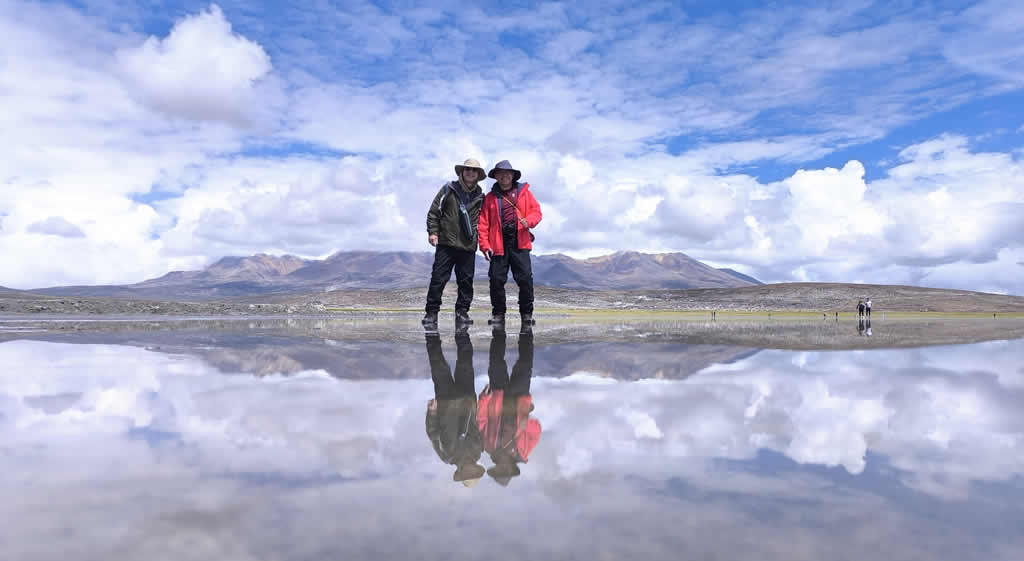
The high Andean plains, dotted with beautiful lagoons and wetlands, complete the icy landscape of most of the territory inhabited mainly by South American camelids and by a large number of terrestrial and aquatic birds.

Objetive

Protect habitats that offer optimal conditions for the development of populations of vicuña, taruca, common parihuana, Andean parihuana and James parihuana. Protect forests from queñual.

Fauna/Flora

The vertebrates are represented by 207 species, of which 37 are mammals and 158 birds. Also the presence of 5 species of reptiles, 4 amphibians and 3 fish has also been reported. The herbivores characteristic of the fauna are the camelids of South America: Llama, alpaca, vicuña and guanaco.

Also here you will find the Tarucas, viscachas, puma, the andean cat, the andean fox, etc.  Among the resident birds we have  the Andean huallata or goose, the mountain duck and the flamingos or parihuanas.

And talking about the flora of the Reserve, you will find about  358 species of plants.The Salinas and Aguada Blanca National Reserve has a good network of roads that allow access to much of the protected natural area.

An ideal and easy way to observe part of the Natural Reserve (Pampa cañahuas area) is during the 2 days excursion to the Colca canyon.

There are also other excursions to the Reserve such as a visit to the Salinas lagoon, the Mauca rock formations or visit to Pillones and Puruña in the area of Pampa Cañahuas, the cave paintings of Sumbay and more.

Clima

The Salinas and Aguada Blanca National Reserve  has very low average temperatures ranging from 2° to 8° C. Extensive thermal fluctuations occur, both day and night, as well as between shade and sun exposure. It has annual precipitation averages of 200 to 600 mm, mainly from January to March, a period in which 65 per cent of the rains fall. Frost occurs almost all year round and can reach -20°C.

All these characteristics, together with their capricious rock formations, their archaeological remains, the rich living culture of their present inhabitants and their easy accessibility, make it one of the most valuable protected natural areas of the country.

The megadiversity of the reserve makes it one of the treasures of Arequipa region.
Peru is beautiful and megadiverse!


Giardino Tours – Blog.

@GiardinoToursperu

#ItravelwithGiardino #OneTripManyExperiences


Links that may be interesting:

Tips for a Responsible Peru Travel Experience!

Arequipa: The stone city Choqolaca

Santa Catalina Monastery: What you need to know for your Tour in Arequipa

3 FacebookTwitterPinterestEmail
Peru Great DestinationsTravel Tips

8 highlights of Arequipa – Tips to enjoy Peru’s prettiest city

by Giardino Tours January 25, 2024

Arequipa Tour

In 1500s, the Hispanic-Peruvian chronicler Garcilaso de la Vega wrote the story of how Inca King Mayta Capac stopped his troops in the valley of the Chili river dazzled by the beauty of the place saying “Ari qepay” – That in Quechua language means something like “yes, You can stay” or “stay here”. With those words, said de la Vega, the city of Arequipa was born.

Well, we do not want to exaggerate being to much romantic, but for sure we have understood the symbolic message of this story.

Arequipa is not a city to pass quickly on the route during your trip to Peru; once here you are going to say “let’s stay here”

1.- Enjoy the gorgeous historical centre of Arequipa

Arequipa’s main attraction is unequivocally the magnificent historical centre, which owes its beauty and significance to more than just its impeccable off-white facades.

The architectural style of most structures, built in volcanic rock, shows an unprecedented and harmonious blend of European and native indigenous elements and techniques, which resulted in a spectacular display of exquisitely-decorated mansions, courtyards, cloisters and churches.

Peruvian architect and writer Hector Velarde couldn’t have described it better: “the architecture of Arequipa is all about the marriage between conqueror and conquered, it’s a true fusion. It is the perfect colonial architecture, maybe the most complete of all Mestizo-American architectures”

  • Plaza de Armas (The best photos are during Sunset)
  • Casa Tristan del Pozo
  • Casa Moran
  • Plaza San Lazaro
  • Plaza and Church San Francisco.
  • Church and cloister of La Compañía de Jesus
  • Streets of Arequipa City center that close into the Main Square

2.- Mundo Alpaca

If you think that to visit “Mundo alpaca” is only a shopping store with live alpacas, it is wrong! Mundo Alpaca it’s actually a small and very well-organized “Alpaca Boutique and Museum”.

Live the experience of the “Alpaca and Vicuña” and learn about the tradition, process and history of its fibers and the wonderful textiles of the Andes.

Here you will not only interact with the Alpacas but also you will travel to the past through the textile history that you will appreciate in its ” Museo Textil Pre-Columbian Amano – Michell”, which exhibits valuable textile pieces from pre-Columbian cultures.

To close the experience you will visit the Boutique where you can find excellent and top quality products for you and your family.

3.- San Camilo Market

Take your time to stroll down the different alleys, which are neatly organized by product type. You will be amazed by the quantity of products and colors. Walk through the alleys of herbs, meats, breads, fruits, cheeses etc… Walk through the juice alley and taste a good glass of fresh juice (the best juices we’ve ever tasted) and on the second floor visit the sale of flowers, textiles and also look some restaurants for locals.

Here you will discover the huge variety of potatoes that Peru offers.

Do you know that Peru has more than 3,500 varieties of potato, the largest in the world, and there are more than 700,000 families that live from its cultivation in 19 producing regions?

4.- Walk to the Yanahuara scenic lookout

For a wonderful view of this city and its volcanoes, there is no better place than the Yanahuara Lookout. On a clear day (which in Arequipa is almost 300 days a year) you will have photos of the city and its volcanoes as a postcard, from some elegant arches made arches made from the same volcanic rock used in the historical city center (Sillar).

Note that the arches have some inscriptions, which are quotes from famous Arequipan writers.

Take time to explore the Plaza. Church and some close streets and get in the Plaza a delicious “Queso helado” a kind of Traditional ice cream of this city.

5.- The Recoleta Convent

Only a 10-minute walk from the Plaza de Armas crossing the Río Chili over pleasant Puente Bolognesi on the way to Yanahuara, you will find the Recoleta convent museum.

It was founded in 1648 by Franciscan friars and rebuilt after many earthquakes. The peaceful Franciscan convent contains impressive cloisters with sillar columns, patios and lovely gardens.

Bibliophiles will delight walking around the Convent’s huge library, which contains more than 20,000 dusty books and maps; including rare published texts from the 15th century. The library is open for supervised visits, just ask at the entrance if you visit.

The convent museum includes several collections that are good to visit. One room is a collection of pre-Inca culture artifacts, including funereal masks, textiles, and totems; in another are mummies and a series of paintings of the 12 Inca emperors. Also is interesting to observe that the missionaries were understandably fascinated by prehistoric-looking fish, crocodiles, piranhas, and the clothing of indigenous communities.

6.- Santa Catalina Monastery

This incredible monument is located in the historic center of Arequipa. It served as a cloister for Dominican nuns from the 16th to the 18th centuries, and still houses a small religious community today.

The monastery occupies a territory of 20,426 m2 and was opened on September 10, 1579, just 39 years after the foundation of Arequipa city.

The whole complex is built from volcanic ashlar stone “Sillar” and is organized into cloisters, houses, patios, square, a gallery and a small chapel.

This monastery shouldn’t be missed!

7.-  Santa Teresa Monastery

This gorgeous 17th-century Carmelite convent is open to the public as a “living museum”; so called because several of the objects and rooms continue to be used as it was over 3 centuries ago.

The colonial-era buildings are justifiably famed for their decorative painted walls and restored rooms filled with priceless objects of art, murals, precious metalwork, paintings and other historical artifacts.

The museum is located in the city centre of Arequipa, a few bloks from the main square on calle Melgar 303.

PS: You must visit the Candy Shop: where you can taste cakes and desserts made daily by the nuns with ancient recipes. Also in the shop you will Souvenirs and craft items such as parsley and roses soap made from the roses of the monastery, Apple Vinegar and Bee Honey.

This monastery is also another gem of Arequipa!

8.- The Library  “Mario Vargas Llosa.”

Mario Vargas Llosa was born in Arequipa, Peru in 1936. He is the author of fifteen novels, including La Ciudad de los Perros (The Time of the Hero) (1963), La casa verde (The Green House) (1966), and La guerra del fin del mundo (The War of the End of the World) (1981).  He has also written three short story collections, including Los jefes (The Leaders) (1959), as well as several collections of essays. His books have been translated into more than thirty languages.

In 2010, Vargas Llosa was awarded the Nobel Prize for Literature.

So, there is no doubt that Arequipa city is proud of Its son, who now resides in Spain.

The Mario Vargas LLosa library is located in a Colonial house in the historical center of Arequipa and offers 7,900 titles ranging from fiction, history, social sciences and magazines, but the number keep growing.

“Through books we can see what we don’t have and we would like to have, thanks to books we will fight prejudice and see how absurd and irrational differences are. Literature makes us more human, makes us more reasonable, literature makes us more free, breaks borders,” – Mario Vargas Llosa on the inauguration of the Library.

What do you think?

We invite you to Discover Arequipa and live the experience of the White City of Peru

Giardino Tours – Blog

#ItravelWithGiardino #OneTripManyExperiencesInteresting related links:

Tour Arequipa: The Cathedral & 5 curious facts that you should know

Tour Arequipa: The fascinating stone city of Choqolaca

Tour Arequipa: Stunning Salinas and Aguada Blanca N.R. & the Best way Visit It[vc_gmaps link=”#E-8_JTNDaWZyYW1lJTIwc3JjJTNEJTIyaHR0cHMlM0ElMkYlMkZ3d3cuZ29vZ2xlLmNvbSUyRm1hcHMlMkZlbWJlZCUzRnBiJTNEJTIxMW03MCUyMTFtMTIlMjExbTMlMjExZDc2NTUuMTY0OTU5Nzc5OTUlMjEyZC03MS41NDE2MjY1MjM3NTM0JTIxM2QtMTYuMzk1MjE3ODA0NzIwOTUlMjEybTMlMjExZjAlMjEyZjAlMjEzZjAlMjEzbTIlMjExaTEwMjQlMjEyaTc2OCUyMTRmMTMuMSUyMTRtNTUlMjEzZTIlMjE0bTUlMjExczB4OTE0MjRhNTlmZmFlMjk5OSUyNTNBMHhjNDE5ZjQ5ZDFmOWNkMjcwJTIxMnNQbGF6YSUyNTIwZGUlMjUyMEFybWFzJTI1MjBBcmVxdWlwYSUyNTJDJTI1MjBBcmVxdWlwYSUyNTJDJTI1MjBQZXJ1JTIxM20yJTIxMWQtMTYuMzk4ODA4NCUyMTJkLTcxLjUzNjkwNTYlMjE0bTUlMjExczB4OTE0MjRiNGRiM2FiMTM0NSUyNTNBMHhhYTNkNjY1NWExZTUxNzE0JTIxMnNNZXJjYWRvJTI1MjBTYW4lMjUyMENhbWlsbyUyMTNtMiUyMTFkLTE2LjQwMzAyNTElMjEyZC03MS41MzQ5NjQzOTk5OTk5OSUyMTRtNSUyMTFzMHg5MTQyNGE1MTY5NmIxNWU3JTI1M0EweGFmOGMwNjRiZDVlNjliMDIlMjEyc1NhbnRhJTI1MjBUZXJlc2ElMjUyQyUyNTIwQXJlcXVpcGElMjUyQyUyNTIwUGVydSUyMTNtMiUyMTFkLTE2LjM5NjU5MDUlMjEyZC03MS41MzE4OTQxJTIxNG01JTIxMXMweDkxNDI0YTRmZTFhZTJkODUlMjUzQTB4ODRhYTFjNzU5M2YxM2NjZSUyMTJzTXVuZG8lMjUyMEFscGFjYSUyMTNtMiUyMTFkLTE2LjM5MjkyMzElMjEyZC03MS41MzU0NTM5JTIxNG01JTIxMXMweDkxNDI0YjFkY2Q5ZDAzMjElMjUzQTB4OGQ4N2Y0ZTkzYTQzOGU3ZSUyMTJzWWFuYWh1YXJhJTI1MkMlMjUyMFlhbmFodWFyYSUyNTIwRGlzdHJpY3QlMjUyQyUyNTIwUGVydSUyMTNtMiUyMTFkLTE2LjM4NzQxMDYlMjEyZC03MS41NDE5Mjk0JTIxNG01JTIxMXMweDkxNDI0YTUwNThjYTU5YTklMjUzQTB4NjIyZTBhOWQ1MGYxZThlZCUyMTJzQmlibGlvdGVjYSUyNTIwUmVnaW9uYWwlMjUyME1hcmlvJTI1MjBWYXJnYXMlMjUyMExsb3NhJTIxM20yJTIxMWQtMTYuMzk1NTk3MiUyMTJkLTcxLjUzNDkxODglMjE0bTUlMjExczB4OTEwNzM3ZDk0YTg0MDZiZCUyNTNBMHg2OWY3NWFkOWJkMzA1OTAlMjEyc1NhbnRhJTI1MjBDYXRhbGluYSUyNTIwTW9uYXN0ZXJ5JTIxM20yJTIxMWQtMTYuMzk1MjgyODk5OTk5OTk4JTIxMmQtNzEuNTM2NzkwNzk5OTk5OTklMjE0bTUlMjExczB4OTE0MjRhNWU5ODZhOTA1MSUyNTNBMHgyZjYwNGRlYTk1YmM2MjlmJTIxMnNNb25hc3RlcmlvJTI1MjB5JTI1MjBNdXNlbyUyNTIwZGUlMjUyMGxhJTI1MjBSZWNvbGV0YSUyMTNtMiUyMTFkLTE2LjM5MzkwMzIlMjEyZC03MS41NDE0Nzg1OTk5OTk5OSUyMTRtNSUyMTFzMHg5MTQyNGE1OWZmYWUyOTk5JTI1M0EweGM0MTlmNDlkMWY5Y2QyNzAlMjEyc1BsYXphJTI1MjBkZSUyNTIwQXJtYXMlMjUyMEFyZXF1aXBhJTI1MkMlMjUyMFR1dHVydXR1JTI1MkMlMjUyMEFyZXF1aXBhJTI1MkMlMjUyMFBlcnUlMjEzbTIlMjExZC0xNi4zOTg4MDg0JTIxMmQtNzEuNTM2OTA1NiUyMTVlMCUyMTNtMiUyMTFzZW4lMjEyc2RlJTIxNHYxNjE3MTA3ODY5NjQzJTIxNW0yJTIxMXNlbiUyMTJzZGUlMjIlMjB3aWR0aCUzRCUyMjYwMCUyMiUyMGhlaWdodCUzRCUyMjQ1MCUyMiUyMHN0eWxlJTNEJTIyYm9yZGVyJTNBMCUzQiUyMiUyMGFsbG93ZnVsbHNjcmVlbiUzRCUyMiUyMiUyMGxvYWRpbmclM0QlMjJsYXp5JTIyJTNFJTNDJTJGaWZyYW1lJTNF”]

4 FacebookTwitterPinterestEmail
Culture & TraditionsTravel Tips

FOOD in Arequipa: 8 delicious Dishes that Are Worth a Trip to Arequipa, Peru

by Giardino Tours July 7, 2021

FOOD in Arequipa: 8 delicious Dishes that Are Worth a Trip to Arequipa, Peru

In January 2015 the UNESCO recognized Arequipa city as one of the 66 World’s creative cities in gastronomy.

The certificate was delivered by the Unesco representative in Peru, Ernesto Fernández, who highlighted that Arequipa city is one of the 66 cities in the world that were declared creative cities in gastronomy.

According to the Arequipa Picantera Society (Picanteria is the name of traditional restaurants in Arequipa), the number of dishes that this region offers would reach about 194 (40 entrees, 22 types of soups, 70 stews and 62 desserts and drinks). For this reason, this city has earned a deserved culinary fame, both among locals and travelers.
Without a doubt, Arequipa’s cuisine has in the “Picanterías” the sanctuaries of knowledge and flavor, which treasure centuries of tradition, creativity and innovation because they are the authentic guarantors of the future of this emblematic Peruvian regional cuisine.
If you are planning to visit Arequipa and you don’t want to miss dishes that will delight your palate, we show you this list with some of our typical dishes. – Enjoy them!

1.- El Rocoto Relleno (The stuffed Rocoto).

One of the most emblematic dishes of Arequipa is “Rocoto relleno”

This is a type of stuffed pepper. But unlike other recipes that are based on sweet peppers, this dish uses ROCOTO, a red pepper that is ten times hotter than the famous jalapeño.

These rocotos are so spicy that to reduce the itchiness they are cooked in water and vinegar, however this does not take away totally the spicy flavor that also contains a first-class taste and aroma.

The filling is based on a mixture of meat, butter, cream and nuts. It is also often topped with a slice of melted cheese. The most typical thing is that it is accompanied by a piece of potato cake (Pastel de papa).

2.- El “Americano”  (The American)

The “American” is a very traditional dish in Arequipa and although currently it is presented in many forms and combinations in the traditional Picanterías, the original recipe presents a conjunction of 4 hot spices: a portion of rice, meat stew, pumpkin chili pepper, brambles of legs and a torreja, served in a single plate one after another.

The delicious Arequipeño meat stew is one of the most common dishes and can be prepared from various types of meat, but the one served in the “americano dish” is beef, onion, carrot, potatoes and red chili, accompanied with white rice.The stew can also be replaced by the locro (a spicy made with mash potatoes). Nowadays the American is also served with a stuffed hot pepper or a noodle cake.

3.- Chupe de Camarones  (Shrimp great soup).

This soup prepared with shrimp is a very powerful dish and with a great taste.

It is based on Shrimp accompanied by onion, tomato, beans, garlic. Yellow potatoes, corn, boiled eggs, rice, cheese, and milk are added to the soup.

This dish is typical throughout the coastal area of Peru; However, the Arequipeño Chupe de camarones is simply the king of all of them.

4.- Soltero de Queso (Chees fresh salad)

This entrée is used also as a garnish.

This salad is based in fresh cheese, hot peppers, onion, olives, beans and tomato. The most common is to find this typical dish seasoned with vinegar, parsley, salt and pepper.

This “salad” is a popular main dish for dinners in Arequipa and sometimes it is accompanied by boiled potato slices.

5.- Adobo Arequipeño

Adobo arequipeño, also known as adobo de chancho, is a traditional dish from Arequipa.

Normally it is tha Sunday brunch dish at Arequipa’s local picanterías. Amazing taste and very popular among the locals and visitors.

How maybe you already know, the term “adobo” is derived from the Spanish word adobar, meaning marinade and you will find many adobos around the world. But Arequipa’s adobo is quite different from the other adobos in the world.The arequipeño dish is a soupy pork stew, slow-simmered with chicha de jora, spicy rocoto pepper, aji panca, garlic, onions, oregano, cumin, and other herbs and spices. It is made in a clay pot to take advantage of all its flavor and It is cooked overnight.

Currently in the Cayma district it is possible to enjoy this dish every day in its famous picanterías (typical food establishments) Don’t forget to ask also for your “pan de tres puntas” (Bread with 3 cornes).

6.- Ocopa Arequipeña – Spicy traditional sauce

Ocopa Arequipena is a simple dish consisting of cooked and sliced potatoes covered in a Ocopa sauce.

Yes! IT IS THE SAUCE that gives it that special touch to this dish, since it is made from yellow hot pepper, onions, garlic, huacatay (a typical local herb), roasted peanuts, walnuts, cheese and breadcrumbs.

Bu, what make the big different to the taste? – It is the Huacatay (called black mint) is an endemic herb from Peru, it belongs to the mint family, I could say that it has a touch of bitterness like mint, but it has simply a unique flavor and aroma.

🙂 Boiled eggs, whole olives and lettuce leaves can be added to the unique “Ocopa arequipeña”.

7.- El Escribano – “The writer or Notary”

“El Escribano” is considered the ancestor of many dishes in Arequipa and its name comes from the tradition of the type of diners.

It is said that the origin of this dish dates back to colonial times. The judges, lawyers and especially the “Escribano (or writer)”, who exercised the functions of our current Notaries, went to the picanterías to eat something very quickly before the next session or at the end of their daily workday.

Sometimes they arrive to early or to late and did not always find food ready, so the spicy dishes would put on the table with a little of what was in all typical Arequipa cuisine; potatoes, tomatoes and of course the spicy rocoto, making sure that is very spicy so the diners become thirsty and consumed a lot of chicha (Traditional drink), while the main meal arrived.They say that some of the diners came up with the idea of mixing everything they had on hand and made their version of salad and so, this improvised dish, became part of the menu in the picanterías. As most of the diners were Notaries, they baptized it with that name, although it was also served to other members of the legal service and later to the general public.

8.- La Chicha de Guiñapo (Traditional drink)

As you’re traveling in Peru and visit traditional restaurants you may encounter a interesting drink called “Chicha de Jora”. This beverage is dating back thousands of years. Chicha is a timeless and iconic drink that every visitor to Peru should taste at least once.

La chicha de Jora is made similarly to other types of beer: by germinating corn, extracting malt sugars, boiling the wort, and then fermenting.

BUT…. In Arequipa you will find another version of the Chicha and this is the “Chica de Guiñapo”.

Chicha de guiñapo is the signature variety of Arequipa and uses a special type of maize (Purple) which only grows in that region. It is fermented for a couple of days, which gives it a low alcohol content of around 2-3%.

The taste is light and sweet, and it so perfect to any of of the spicy food of the unique Arequipa gastronomy.[vc_zigzag]

And do you get curious? We got to open your appetite?


Arequipa is a destination that will fill you with surprises and beautiful experiences, not only not only for its incredible geographical areas, parks and culture heritage, but will also be a feast for the good palate.
visit Arequipa in peru
We are waiting for you!

Giardino Blog

#ITravelwithGiardino #OneJourneyManyExperiences


Other links:

Embroidery in the Colca Valley a Cultural Heritage of the Nation

The interdimensional gate Aramu Muru. Fascination & mystery.

Chan Chan mud city, keeps surprising the world!

1 FacebookTwitterPinterestEmail
Colca CanyonCulture & TraditionsTravel Tips

Embroidery in the Colca Valley a Cultural Heritage of the Nation

by Giardino Tours June 25, 2021
“On August 17th, 2018, was published on the newspaper “El Peruano” the knowledge and practices associated with embroidery in the Colca Valley a Cultural Heritage of the Nation”

“The recognition was granted for its important technical richness, historical, traditional and artistic value of the iconographic and symbolic contents that they communicate, which are strongly rooted in the Collagua and Cabana worldview, as part of a process of empowering identity of the culture of the population of the Colca valley. ” – Andina 2018

If you are going to visit the Colca canyon, you will be surprised not only by the affection, the spectacular views of the valley, the depths of one of the deepest canyons in the world, the flight of the condor, the joy and gastronomy of its people, but in addition, the parade of colors of their crafts, especially that of their traditional costumes, which represent the identity, love, art and pride of the region.

Undoubtedly it can be affirmed that the craftsmanship of the Colca valley is extraordinary, due to the high development achieved, but very particularly that development is appreciated in its textile art of embroidery.

Through folklore, the Colca people express their culture through symbolic representations related to ecology, their cultural, social, geographical and historical environment and, therefore, are important elements of cultural identity and / or ethnic heritage.

We will find skirts, shirts, hats, blankets, sweaters, chullos (hats), gloves, stockings, scarves, ponchos and other beautifully embroidered fabrics which all reflect the uses and customs of the men and women of Colca valley and their close relationship with nature.

This art also reflects the spirituality of the local people, where the iconography and polychrome, with colorful works, shows the richness and art of the Andean cosmo-vision.

The technique for embroidery work is called the “maquinasca” (sewing machine), which is a widely known technique in the southern Andean region. The artists take the machine and begin to embroider hearts, chamomile and cantuta flowers, sparrows, etc.

In addition, and according to the client’s requirements, other representative products of the region such as “trout” can be added to the work. Sometimes, to give it a more elegant touch, the artists complement their work with industrial fabrics, gold and silver silks and ornaments of different colors.But beyond the craft itself, as a result of a work, at the center of all this is the human factor, the craftsman, who with their artistic hands turns every product into unique pieces in which they express their creativity and imagination but supported by the realities of their daily and ancestral life.

And this is the most prominent factor in the inevitable association of tourism with the crafts of the destinations that we visit.

All type of Crafts offers to the travelers the opportunity to take home “the stories”. Each Souvenir is more than a thing, is the “memory” that transform itself to a open book, that talk to us with all the symbols through which the territories visited murmur magical stories to travelers and their environment.

Today’s traveler not only wants to see places but also to experience them, feel that they are part of their life for a moment, living the culture, their artisans and their manifestations.

The magnificent Colca region has many reasons for you to visit it, but without a doubt, it is also the place that allows you to bend time, find calm and awaken in each one of us the passion for life details.

Write down the “Colca canyon” among your great travel destinations, here you will find thousands of reasons to live the legend! And consider to spend more then one night to enjoy experiences full of emotions, respect and learning.

We are waiting for you!

Giardino Blog

#ITravelwithGiardino #OneJourneyManyExperiences


Other links:

8 highlights of Arequipa – Tips to enjoy Peru’s prettiest city

Peru Packing List post Covid-19: 5 Items that You Need to take to your Peru Trip

Peru Travel Restrictions Covid-19: Updates to Government of Peru

0 FacebookTwitterPinterestEmail
Peru Great Destinations

Tour Arequipa: The Cathedral & 5 curious facts that you should know

by Giardino Tours March 5, 2021

Arequipa Cathedral

Did you know that the history of a city begins with its cathedral?

Throughout its almost five centuries of antiquity the catedral has enclosed different myths, stories and relics that can only be felt closely by visiting this monument, which was built in sillar stone in center of the Main square of Arequipa.

The Cathedral of Arequipa was built immediately after the city was founded in 1540 but the current design only began in 1612 and culminated in 1656.

It is currently one of the main buildings of neoclassical style with architectural influence of neo-Renaissance and Gothic styles in the city.

Here we tell you five curious facts that you should know about this monument for your next visit.

1.- Arequipa’s cathedral was destroyed 10 times:

This was due to natural tragedies such as earthquakes and fires. The first tragedy was the earthquake in 1583 and the last in 2001 with an earthquake of 8.1 on the Richter scale, that made that the left tower fall completely.

This tower was rebuilt in 2002.

2.-Inside the cathedral we can find a religious museum:

A Museum that treasures 400 years of religious history of Arequipa.

The museum offers precious jewels and historical relics, within them the gold and silver filament clothing of the Archbishop of Arequipa Sebastián Goyeneche (1818).

We also find Gregorian chants in Latin from 1722 and a census carried out in 1813 and others.

3. We can find a tubular organ made from Loret in 1854

In the cathedral of Arequipa we can find a tubular organ made in 1854 in Belgium by Francois Bernar Loret in perfect condition.

The organ of the cathedral of Arequipa is 12 meters high and has 1206 tubes, it contains three sculptures at the top, one of them represents King David and on the sides two apocalyptic angels.

It should be noted that only conservation work has been done but the organ was not damaged by all the earthquakes.  So lucky 🙂

The Loret organ is currently under special maintenance. It consists of being played every Tuesday and Thursday from 15:00 to 16:00 hrs. And Saturday 17:00 a.m. to 18:00 p.m.

4. The cathedral clock:

The Clock is located under the bell tower and is a model similar to the Big Ben clock in England and was created precisely in London in 1854.

The uniqueness of this relic lies in the number 4 since instead of use the Roman symbols with the regular number “IV” this is represented as “IIII”. This was done so that there is no confusion between “VI” and “IV”.

Another important detail is the hole on the side of the number nine of the clock, which was originated when in 1950 a bullet went through the glass sphere during the Arequipa revolution.

5.- There is a cemetery under the cathedral:

Under the lustrous marble floor of the Cathedral of Arequipa a hidden catacomb is found.

We must remember that at that time, it was customary to bury bishops and also the wealthiest people under the churches; how we can read in the book of the historian Guillermo Galdos Rodríguez “A city for history, a history for the city, Arequipa in the 16th century ”.

But it was after the 2001 earthquake that some journalists and researchers managed better to check and sniff these areas, where they found some exposed human skeletal
remains.

The anthropologist Manuel Huanqui Hurtado was one of those who was there, recording the bones found in videos. Also they found that he catacombs were also connected to another places such as nearby houses and with the main Plaza.

What you should know to vist the Catedral of Arequipa?

First you should know that in addition to what we mentioned here, the Cathedral of Arequipa offers other jewels such as the Main altar, made in white Italian carrara marble by Felippo Moratilla.

Also it has an impressive pulpit, which is a real marvel carved in wood by the French master Buisine Rigot. It dates from 1879 and in it you will be able to see the demon crushed by the Divine Word.

In addition, in the central central nave we find beautiful carvings representing the twelve apostles.

Do not forget to appreciate the great lamp brought from Seville to Arequipa.

The entrance to the Cathedral is free.

But we recommend to visit the Its religious museum:  Open hours: 10 am- 4:15 pm. here you must pay a entrance fee (S/10 soles).

The visit to the museum culminates with the walk to the bell tower of the Cathedral. A unique opportunity to contemplate from this point and height, and from its city center,the city of Arequipa and the volcanoes that surround it.

Ready to visit our beautiful city?

It will be a pleasure!

GIARDINO TOURS – BLOG

@GiardinoToursPeru

#ItravelwithGiardino #OneTripManyexperiences


Sources:
Adepia 2017: El reloj de la catedral.
El Pueblo: 2015 “verdades y misterios de los cementerios dela catedral” – Mamani Lino.
Moreno historiadora de Arte: “Descubrimos la impresionante catedral de Arequipa“
Vizcardo Janet Rpp- Noticias: „Los secretos del Museo de la Catedral de Arequipa“
Museo de la catedralOther interesting Links about Arequipa:

Santa Catalina Monastery: A city within Arequipa

Arequipa Treasures: Salinas and Aguada Blanca National Reserve

Arequipa: 2 fascinating curiosities about this destination!

Arequipa: 2 fascinating curiosities about this destination!

2 FacebookTwitterPinterestEmail
Peru Great DestinationsTravel Tips

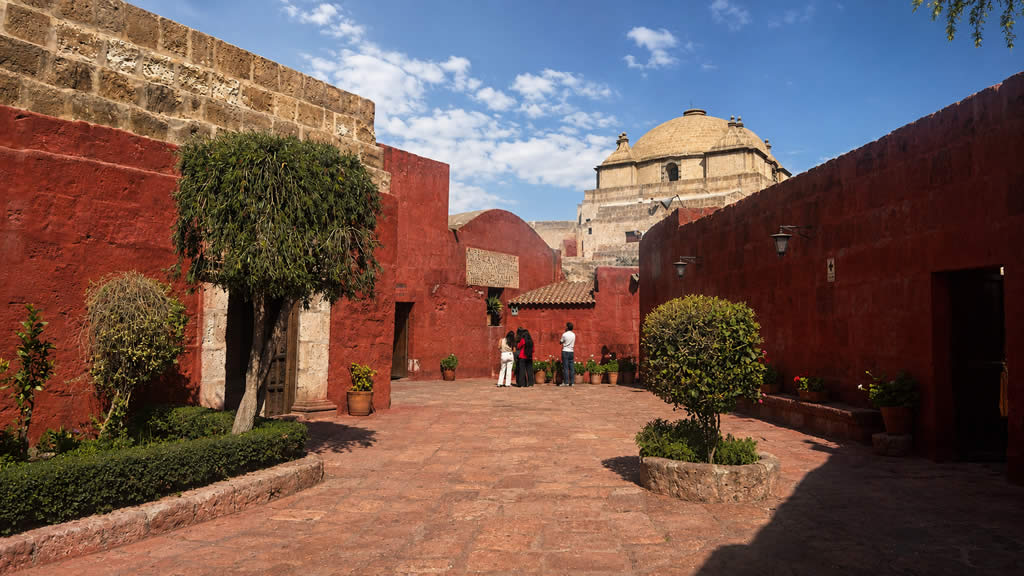
Santa Catalina Monastery: What you need to know for your Tour in Arequipa

by Giardino Tours March 3, 2021
Have you ever heard of a city within a city?
In Arequipa we find a clear example of this, an architectural wonder that captivates those who visit it.

“The monastery of Santa Catalina occupies a territory of 20,426 m2 and was opened on September 10, 1579, just 39 years after the foundation of Arequipa city”

This incredible monument is located in the historic center of Arequipa. It served as a cloister for Dominican nuns from the 16th to the 18th centuries, and still houses a small religious community today.

The complex is built from volcanic ashlar stone and is organized into cloisters, houses, patios, square, a gallery and a small chapel.

History

Viceroy Francisco Toledo granted the licenses for the foundation of the “Private Monastery of Nuns of the Order of Santa Catalina de Siena”, however the foundation was in charge of a person outside the religious sphere.

This person was María de Guzmán, widow of Don Diego Hernández de Mendoza, who donated all her properties in order to create the beautiful place that we  can enjoy now.

Today16 nuns still living in the Monastery, who offer advice, sell articles made by themselves and above all, they pray constantly for the peace of the world.

In 1944 the monastery was recognized by the National Institute of Culture as the national heritage of Arequipa and Peru, and in year 2000 it was also with Arequipa city recognized as a cultural heritage of humanity (UNESCO).

It should be noted that it was not until 1970 that the monastery was opened to the public. Its multiple restorations have made it one of the city’s greatest cultural attractions today.

The monastery of Santa Catalina is considered a citadel within another city, because in this there are: six streets, three cloisters, a square, the church, the gardens, the cells, the courtyard of silence, the kitchen, a laundry, the church , vaults and even a small exclusive cemetery for the nuns of the monastery.

“This convent should not be missed, even if it has had an overdose of colonial buildings. Occupying an entire block and guarded by imposing high walls, it is one of the most fascinating religious buildings in Peru ”- Lonely Planet.

Architecture

“When you walk through the monastery of Santa Catalina it is very clear to us why it is the main monument of Arequipa architecture”

The monastery clearly presents the three styles of architecture that we can find in Arequipa city, the baroque, neoclassical and neocolonial.  It was built using the volcanic stone of ashlar and joined by lime, sand and pozzolana.

When you are entering to the monastery, the intense colored walls stand out at first glance. According to the Architect Marizol Velasquez Gutierres (specialty in art), the color used in the architecture of the Santa Catalina Monastery is not the natural color of the material (ashlar stone), but the color based on pigments that has the property of changing its appearance (wall painting).

“According to its use, it can be classified as flat wall painting and decorative wall painting. In the Monastery of Santa Catalina  coexist both, inside and outside the spaces, which configure it as an urban complex “

The colors that we can find in the monastery are indigo, blue, predominantly in the cloister of the Naranjos, the red ocher color for most of the streets, the white color for the novitiate cloister and the interior of the cells, the color orange ocher for the entrance and the main cloister, among others.

Velasquez Gutierrez also indicates this image was not always the same over time, because the quality of the color allows changing the appearance of the architecture according to fashions, remodeling, extensions, maintenance and also for health reasons, as evidenced in the polychromies hidden in the walls.

On the other hand, the decorative wall paintings of the interiors contain religious and floral designs and are the result of technical, social, historical and environmental facts.

How to visit Santa Catalina Monastery:

From March 1 you can visit the monument in the following ways:

1.- Virtual Tour: Virtual Tour with 7 chapters about its history. You can book a virtual visit of the place through the official website of the Monastery of Santa Catalina.

It is a way to anticipate the excitement of your next visit in which you can directly appreciate the majesty of the place.

2.- Direct visit to the Monument: From March 1st you can visit the Monastery with a fixed date and hour using the service of booking of the Monastery website.

*If you want to book a specialized guide please call 958 348 214

Open: Monday to Saturday from 09:00 to 17:00. – * LAST ENTRY 4:00 p.m.

Closed to the public  Easter Friday, December 25 and January 1


IMPORTANT INFORMATION – COVID -19

The Monastery of Santa Catalina has developed a strict biosafety protocol, to enjoy a safe and pleasant visit. You can read all the protocolo here .

The sale of tickets will be online and with reservation of time. Payments can be made with Visa, Mastercard, American Express, Dinners Club, Unionpay and Maestro.

Giardino Tours Blog

@GiardinoToursPeru

#ITravelwithGiardino #OneTripManyExperiences


Sources

Gutierrez, M. V. (27 de Enero de 2020). Universidad Catolica San Pablo.
Monasterio de Santa Catalina. (septiembre de 2020). Monasterio de Santa Catalina.
Lonely Planet_ArequipaOther Links:

Colca canyon Travel Guide: 7 Questions about Colca Tours

Peru Private Tours: 7 fantastic reasons to take a Private Service

Arequipa Treasures: Salinas and Aguada Blanca National Reserve

5 FacebookTwitterPinterestEmail
Culture & TraditionsPeru Great Destinations

Arequipa Tour: 2 surprising curiosities about this destination!

by Giardino Tours February 10, 2021

The famous “White City” of Arequipa enjoys Its own currency and special passport.

If you travel to Perú and you will visit the white city of Arequipa; you have to know that in “few cities of the world” there are people that love so much their land as the “Arequipeños”.

First you should know that those born in Arequipa are called “Characatos” and here we explain you why.

Characato is the name of one of the most popular and traditional districts of the city and is the origin of many customs and cultural expressions typical of the city. In Arequipa, it is considered that a “Characato” is a very hardworking person, who is always in a good mood and loyal to his traditions. Also this is a person that raises its voice to greet its friends and family or to welcome visitors and always offering, as an act of friendship, a glass of good Chicha (Typical Drink made of fermented corn).

Moreover, the characato is a person proud to have been born at the foot of not one, but three volcanoes: the Misti, the Chachani and the Pichu Pichu. “This is the reason why each characato (Arequipeño) is unique and special in the world” Then, you shouldn’t be surprised that the people born in Arequipa say that they don’t get angry, they, erupt as a volcano because in their veins flow “volcanic blood”

Another interesting detail is that the “Characato” is mainly manifested in the character of the “loncco”, a person that lives and work in the countryside of the city and speaks with a mixture of quechuismos (Quechua is the name of the Inca’s language) and barbarisms, which makes him a unique character in every sense.

Initially the expression “loncco” was used to point that work tools that had lost the edge of their edges. This word “Loncco” also began to be used to point out people who did not work well or were not so talented to work in the field. With the time that word “Loncco” became popular in Arequipa to point to the “chacarero” (Man who works in the field) a rude and tough man who lives in the countryside; a hardworking person that always speaks loudly.

Here some typical expressions of a “Loncco”
  • Alalau: Expression that means that it is very cold.
  • Acacau: when something burns or is very hot.
  • Atatau: Feeling that something produces disgust.
  • Calincha: A girl who behaves like a boy.
  • Chascoso(a): Someone who hasn’t combed his/her hair.

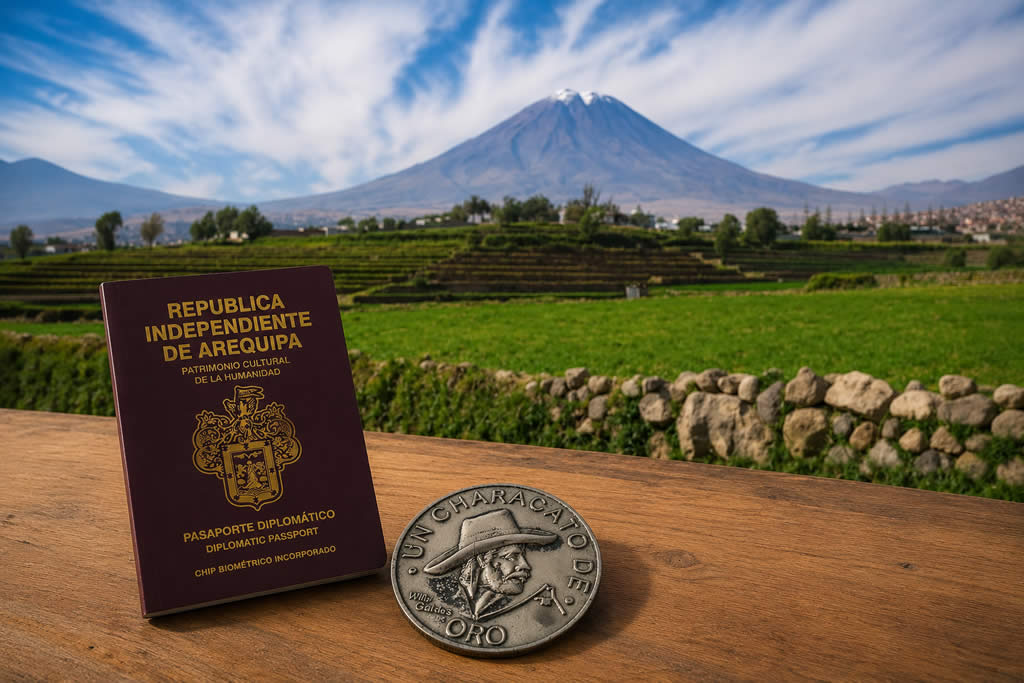
Seeing all these points doesn’t surprise too that Arequipa is the only city in Peru that has its own currency “the Golden Characato” and its own “Passport”. These two acts have no legal value in Peru but certainly allow us to understand the originality of the Arequipeños and this spirit to feel that they are unique.


The passport of the “Independent Republic of Arequipa” is one of the most requested souvenirs by national and international tourists and the “Characato de oro” permit us to enjoy a souvenir of a “currency” that “never devalues”.

The Arequipa Passport:

The Passport: The passport of the “Independent Republic of Arequipa” originated during the war Perú– Chile. At the time that Lima was occupied by the invading army, Arequipa city was declared capital of the Republic and immediately the passport was established as a security measure. But today the passport is a document without any legal value and is a souvenir where you can read inside of its pages funny and typical Arequipeño phrases. You can also custo

The “Characato de Oro”:

Details of the “golden characato”: The Golden Characato is a currency typical from Arequipa and was born as a sign of gratitude to all its visitors. It is printed with the figure of a “loncco” (Now you know what means “loncco”) and the Misti volcano. The “Golden Characato is so important for the locals that the first day that open to the market; the “Characatos” were sold out.
mize it by typing your name and personal data. They have become so famous and popular that it is already part of the local culture.As you see; Arequipa is not only a must-see destination in Perú for its beautiful colonial architecture, its incredible landscapes and its exquisite gastronomy; it offers an endless number of cultural traditions and the incomparable human warmth and hospitality of the characatos!

Ready to visit Arequipa?

We are waiting for you…. 🙂

@GiardinoToursPeru
#OneTripManyExperiences #TravelWithGiardino

2 FacebookTwitterPinterestEmail

More Articles/Más Artículos

  • Quechua Travel Words: Useful words for a great Peru experience
  • Tour Arequipa: The fascinating stone city of Choqolaqa
  • Tour Arequipa: Stunning Salinas and Aguada Blanca N.R. & the Best way Visit It
  • Protecting Our Planet Starts with You – 9 Things You Can Do
  • 8 highlights of Arequipa – Tips to enjoy Peru’s prettiest city
No comments to show.
  • Facebook
  • Twitter

@2021 - All Right Reserved. Designed and Developed by PenciDesign


Back To Top
Giardino Tours Blog
  • Go to Giardino Tours
  • English
  • Español